Ethiopia: A Land of Ancient Heritage and Modern Ambition
Located in the Horn of Africa, the Federal Democratic Republic of Ethiopia is a nation defined by its deep historical roots, diverse ethnic tapestry, and strategic importance in East Africa. From being a cradle of early human ancestors to hosting the headquarters of the African Union, Ethiopia blends ancient traditions with a rapidly evolving modern economy.
The country is characterized by its unique geography, ranging from the rugged peaks of the Simien Mountains to the vast lowlands, creating a variety of climates and ecosystems that support a rich array of biodiversity.
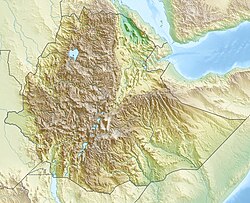
Key Facts
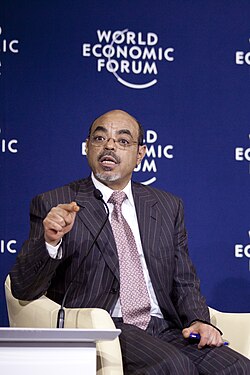
- Capital: Addis Ababa, the financial and political center.
- Population: Estimated at 138,902,185 (2025).
- Official Languages: Amharic, Oromo, Somali, Tigrinya, and Afar.
- Major Religions: Christianity (67.3%) and Islam (31.3%).
- Economy: Driven by agriculture and aviation, with Ethiopian Airlines as its largest company.
- Global Role: A founding member of the African Union (AU).
Geography and Climate
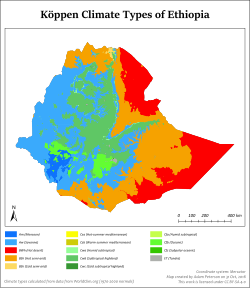
Ethiopia's landscape is highly varied, which is reflected in its Köppen climate classification. The terrain is dominated by the Ethiopian Highlands, which serve as the source for the Blue Nile. The Blue Nile Falls are particularly significant, providing over 86% of the Nile river's water via melted snow from the Simien Mountains.
![The Blue Nile Falls during winter provides over 86% of the Nile river's water, coming from melted snow in the Simien Mountains.[165][166]](/images/cd/9e/cd9efd96b0cee19181426c4dd41ca39cb51535a01a1f508a8188e178a54ddb45.jpg)
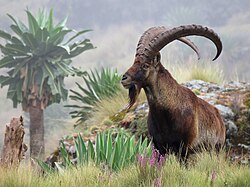
This unique environment supports endemic wildlife, such as the Walia ibex, a national symbol found exclusively in the northern mountains.
A Journey Through History
Prehistory and Antiquity
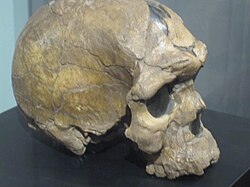
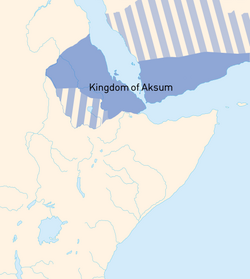
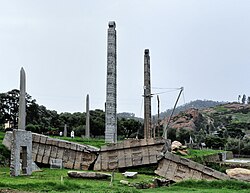
Ethiopia is globally recognized for its prehistoric significance, evidenced by hominid fossils such as Homo sapiens idaltu. In antiquity, the Aksumite Empire emerged as a major naval and trading power, issuing its own currency and erecting massive steles as markers for its emperors.
![Aksumite currency of the Aksumite king Endybis (227–235), British Museum[b]](/images/c5/96/c596929b7cb9cd04bf220bc5d0d6c6b09d71a3f11409f754c393c9d8c5166313.jpg)
The Middle Ages to the Imperial Era
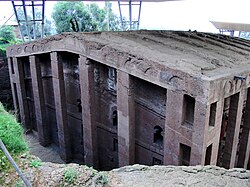
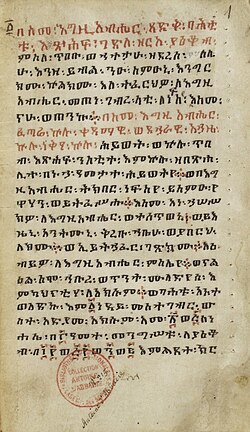
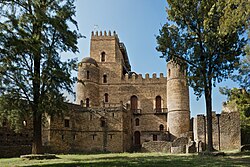
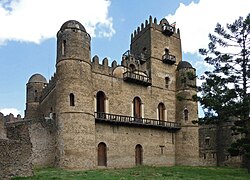
The Middle Ages saw the rise of the Zagwe dynasty, known for constructing architectural marvels like Biete Medhane Alem. Later, the Gondarine period introduced fortified castles, most notably the Fasil Ghebbi complex in the 17th century. The nation's intellectual history is further highlighted by philosophers like Zara Yaqob.
Modern Era and Political Transition
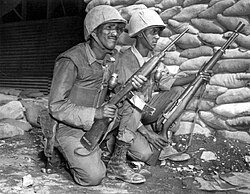
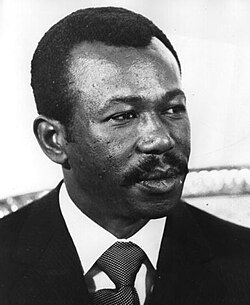
The 20th century was marked by the reign of Emperor Haile Selassie I, who navigated the challenges of Italian colonial rule (1936–1941) and represented Ethiopia on the world stage. Following the monarchy, the Derg era (1974–1991) brought a period of military rule before the establishment of the current Federal Democratic Republic.
![Emperor Haile Selassie I with U.S. president Franklin D. Roosevelt during the end of World War II[clarification needed]](/images/4c/50/4c50cf571abdbe6881e9b299ca8a0f0b21338d95d9958c34dcf933f091dbdffd.jpg)
Government and Politics
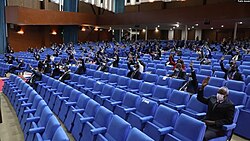
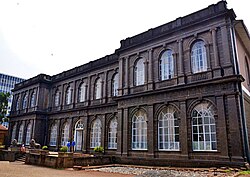
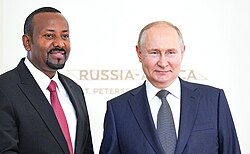
Ethiopia operates as a federal parliamentary republic. The government is led by the Prime Minister, currently Abiy Ahmed, and the President, Taye Atske Selassie. The legislative branch, the Federal Parliamentary Assembly, consists of the House of Federation (upper house) and the House of Peoples' Representatives (lower house).
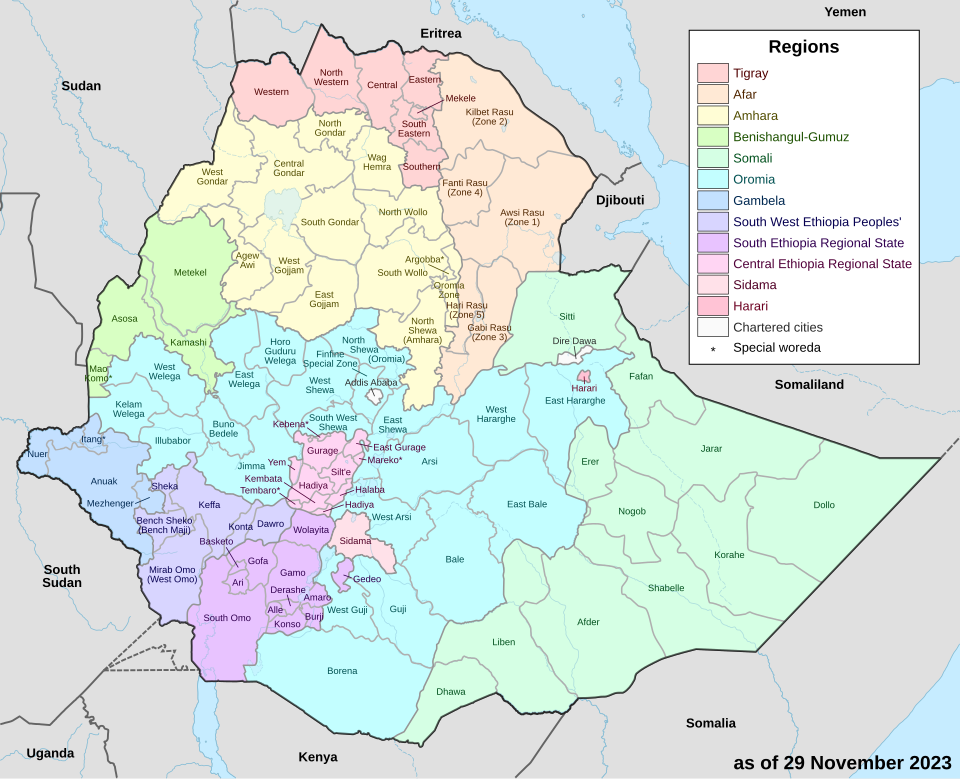
The nation is divided into various regions and zones to accommodate its diverse ethnic groups, including the Oromo, Amhara, Somali, and Tigrayans.
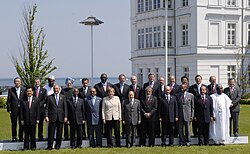
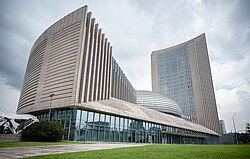
On the international stage, Ethiopia is a diplomatic hub, hosting the African Union Headquarters in Addis Ababa.
Economy and Infrastructure
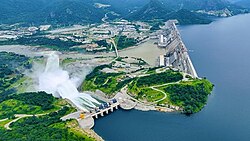
Ethiopia's economy is characterized by a strong agricultural base and significant investments in energy. The Grand Ethiopian Renaissance Dam (constructed 2011–2023) is set to be the largest dam in Africa, aiming to revolutionize the country's energy capacity.
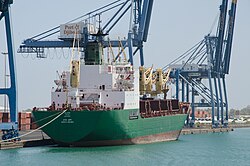
In the transport sector, Ethiopian Airlines stands as a global leader with an annual revenue of $6.1 billion. The country has also invested in logistics and shipping via the Red Sea to facilitate trade.
Urban Development and Social Progress
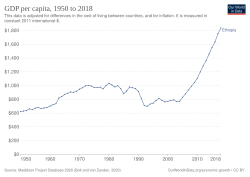
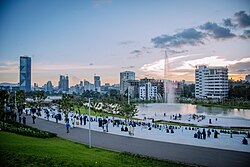
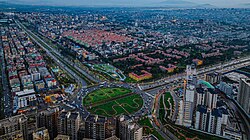
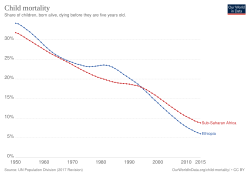
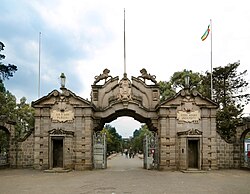
Addis Ababa serves as the financial epicenter with over 6 million residents. Recent urban projects include Sheger Park, the nation's largest park. Socially, Ethiopia has seen a significant decline in child mortality since 1950 and continues to expand its educational infrastructure through institutions like Addis Ababa University.
Culture and Society
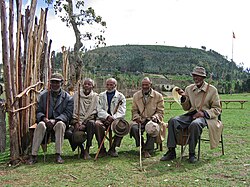
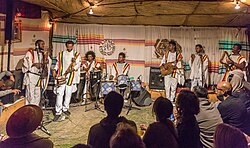
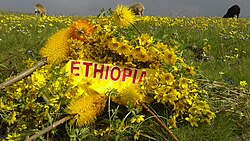
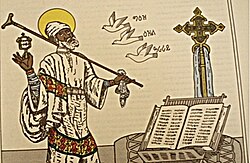
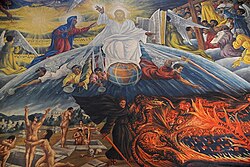
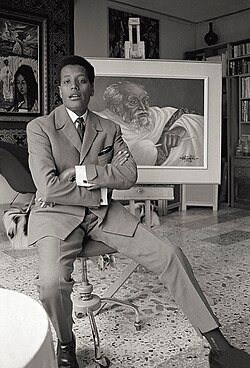
Ethiopian culture is a vibrant blend of diverse ethnic traditions. The Ethiopian Orthodox Tewahedo Church has a profound influence on art and music, exemplified by the sacred works of Yared. The country also follows its own unique calendar, where the New Year, Enkutatash, is celebrated with the blooming of the adey abeba flower.
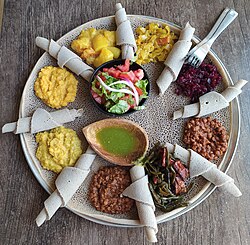
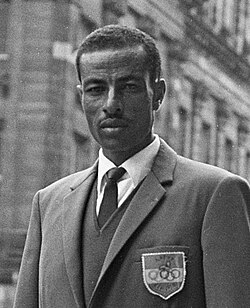
Cuisine is a central part of social life, with injera (a sourdough flatbread) and various wat (stews) being the staple meals. In sports, Ethiopia is world-renowned for long-distance running, pioneered by Olympic gold medalists like Abebe Bikila.
| Category | Detail |
|---|---|
| Total Area | 1,104,300 km² |
| Estimated Population (2025) | 138,902,185 |
| GDP (Nominal 2024) | US$145.03 billion |
| Currency | Birr (ETB) |
| Largest Company | Ethiopian Airlines |
Frequently Asked Questions

What are the official languages of Ethiopia?
The official languages are Amharic, Oromo, Somali, Tigrinya, and Afar.
What is the significance of the Grand Ethiopian Renaissance Dam?
Constructed between 2011 and 2023, it is set to be the largest dam in Africa and is a critical project for the nation's energy and hydropower development.
Which city is the capital of Ethiopia?
Addis Ababa is the capital and the largest city, serving as the country's financial epicenter and the seat of the African Union.
What is the traditional staple food of Ethiopia?
The typical meal consists of injera, a sourdough flatbread, served with various types of wat, which are flavorful stews.
How does the Ethiopian calendar differ from the Gregorian calendar?
Ethiopia uses a unique calendar system where a year can last 13 months, and the New Year (Enkutatash) is celebrated differently than in the West.