Thabo Mbeki: The Architect of the African Renaissance
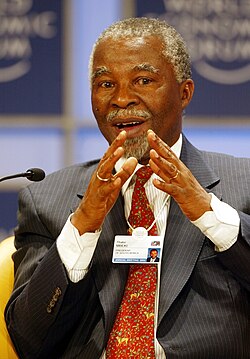
Thabo Mbeki is a distinguished South African politician and economist who played a pivotal role in the transition of South Africa from apartheid to a multi-racial democracy. Serving as the second President of South Africa from 1999 to 2008, Mbeki is best known for his intellectual approach to governance and his vision of an "African Renaissance," aiming to revitalize the continent's political and economic standing on the global stage.
Before ascending to the presidency, Mbeki spent years in exile and served as the Deputy President under Nelson Mandela from 1994 to 1999. His career is marked by a deep commitment to the African National Congress (ANC) and a lifelong pursuit of Pan-Africanism.
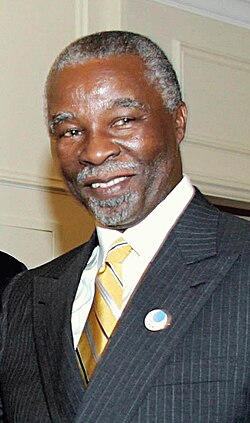
Key Facts
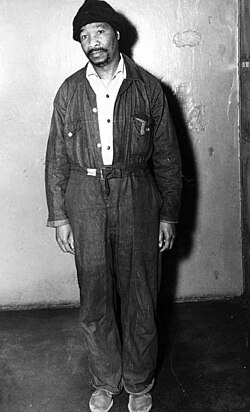
- Presidency: Served as President of South Africa from June 14, 1999, to September 24, 2008.
- Party Leadership: President of the African National Congress (ANC) from 1997 to 2007.
- International Roles: Former Secretary-General of the Non-Aligned Movement and Chairperson of the African Union.
- Education: Alumnus of the University of Sussex.
- Current Role: Chancellor of the University of South Africa (UNISA).
Early Life and the Path to Power
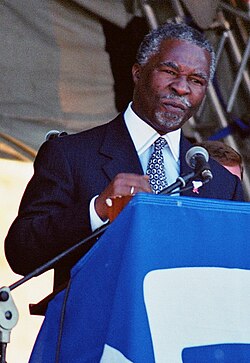
Born on June 18, 1942, in Mbewuleni, Thabo Mvuyelwa Mbeki was born into a family deeply embedded in the struggle against apartheid. His father, Govan Mbeki, was a prominent activist, a legacy that shaped Thabo's early political consciousness.
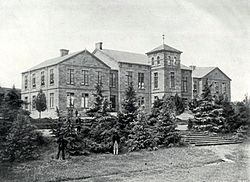
Mbeki's journey was defined by displacement and international exposure. Between 1962 and 1980, he lived in exile across several countries, including England, the Soviet Union, Zambia, Swaziland, and Nigeria. This period allowed him to study economics and political science, providing him with a global perspective that would later define his foreign policy.
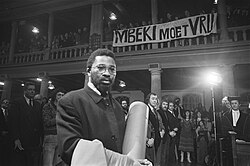
Upon returning to South Africa, Mbeki rose quickly through the ranks of the ANC. He served as the National Chairperson in 1993 and became the Deputy President of South Africa in 1994, working alongside Nelson Mandela to stabilize the new democracy.
The Presidency (1999–2008)
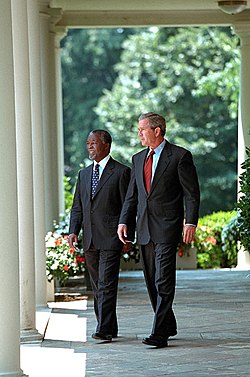
Mbeki assumed the presidency on June 14, 1999. His tenure was characterized by a focus on economic growth and a sophisticated, often intellectual, approach to diplomacy.
Foreign Policy and the Global South
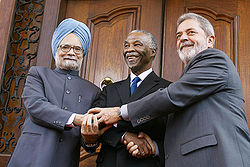
Mbeki sought to elevate Africa's voice in international affairs. He championed South-South cooperation—the collaboration between developing nations in the Global South—and advocated for the reform of the United Nations to better reflect modern geopolitical realities.
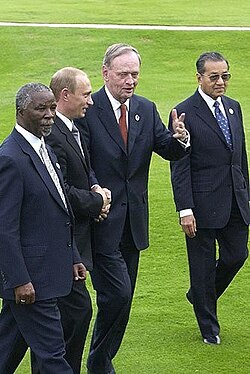
His approach to regional conflicts, particularly in Zimbabwe, was termed "quiet diplomacy." This strategy focused on private negotiations and power-sharing agreements rather than public condemnation, a move that remained controversial throughout his term.
Domestic Challenges and Controversies
Despite economic strides, Mbeki's presidency faced significant hurdles. He was heavily criticized for his handling of the HIV/AIDS epidemic; his skepticism regarding the link between HIV and AIDS led to accusations of denialism, which critics argue delayed the rollout of life-saving antiretroviral treatments.
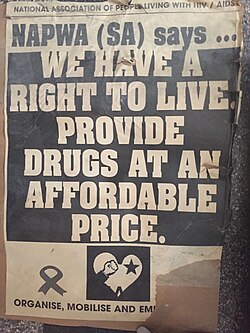
Other challenges included a severe electricity crisis and the outbreak of xenophobic attacks in 2008. Additionally, his administration faced scrutiny over the 1999 Arms Deal, with critics questioning the transparency of the procurement process.
Resignation and Post-Presidency
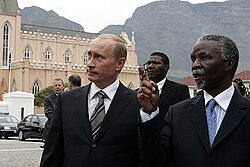
Mbeki's political trajectory shifted during the Polokwane conference, where he lost the ANC presidency to Jacob Zuma. Following a High Court finding regarding his role in the removal of Zuma as Deputy President, Mbeki resigned from the presidency on September 24, 2008, at the request of the ANC.
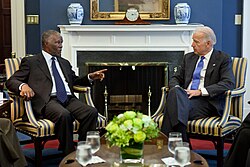
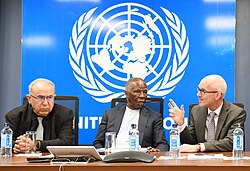
In the years following his resignation, Mbeki has remained an active public intellectual and mediator. He has been involved in international mediation efforts, including work regarding Sudan, and established the Thabo Mbeki Foundation and the Thabo Mbeki Presidential Library to promote research and leadership.
Summary of Political Career
| Office | Tenure | Key Predecessor/Successor |
|---|---|---|
| Deputy President of South Africa | 1994–1999 | Preceded by Alwyn Schlebusch |
| President of the ANC | 1997–2007 | Succeeded by Jacob Zuma |
| President of South Africa | 1999–2008 | Preceded by Nelson Mandela |
| Secretary-General of Non-Aligned Movement | 1999–2003 | Succeeded by Mahathir Mohamad |
| Chairperson of the African Union | 2002–2003 | Succeeded by Joaquim Chissano |
Frequently Asked Questions
Why did Thabo Mbeki resign as President?
Thabo Mbeki resigned in September 2008 following a request from the African National Congress (ANC) after he lost the party's leadership to Jacob Zuma at the Polokwane conference.
What was Mbeki's "African Renaissance"?
The African Renaissance was Mbeki's vision for the socio-economic and political renewal of Africa, emphasizing self-reliance, good governance, and the continent's ability to define its own future without undue external interference.
What was the controversy surrounding Mbeki and HIV/AIDS?
Mbeki was accused of AIDS denialism due to his public questioning of the scientific consensus that HIV causes AIDS, which critics claim led to a delayed government response in providing antiretroviral drugs.
What is "quiet diplomacy" in the context of Mbeki's presidency?
Quiet diplomacy refers to Mbeki's strategy of using private, behind-the-scenes negotiations to resolve political crises in neighboring countries, most notably in Zimbabwe, rather than using public sanctions or condemnation.
What role does Thabo Mbeki hold today?
Mbeki currently serves as the Chancellor of the University of South Africa (UNISA) and continues to engage in international mediation and philanthropic work through his foundation.