Robert Mugabe: The Rise and Fall of Zimbabwe's Longest-Serving Leader
Robert Gabriel Mugabe was a central figure in the 20th-century struggle for African independence and the subsequent governance of Zimbabwe. From his early days as a revolutionary teacher to his decades-long tenure as the nation's leader, Mugabe's trajectory mirrored the complexities of post-colonial Africa—transitioning from a celebrated liberator to a controversial strongman.
Key Facts
- Tenure: Served as Prime Minister (1980–1987) and President of Zimbabwe (1987–2017).
- Political Party: Leader and First Secretary of ZANU–PF from 1975 until 2017.
- International Roles: Served as the 13th Chairperson of the African Union and the 10th Chair of the Non-Aligned Movement.
- Education: Studied at the University of Fort Hare, University of South Africa, and University of London International Programmes.
- End of Rule: Resigned in November 2017 following a coup d'état.
Early Life and the Path to Revolution
Born on February 21, 1924, in Kutama, Southern Rhodesia, Mugabe's early life was shaped by the colonial structures of the era. His academic pursuits took him across borders, where he developed the intellectual framework for his political activism. He was deeply inspired by the pan-Africanist example of Kwame Nkrumah, the leader of Ghana.
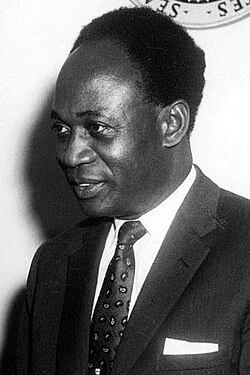
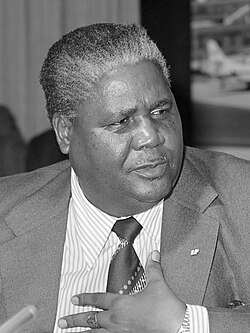
Mugabe's entry into politics was marked by his involvement with several nationalist movements, including the ANCYL, NDP, and ZAPU. However, his path was not linear; he spent a significant portion of the 1960s and early 1970s imprisoned by the white minority government of Southern Rhodesia.
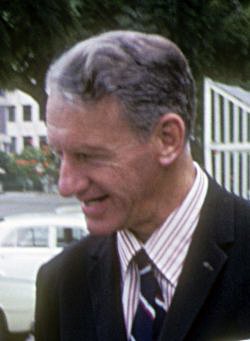
During his incarceration, the political landscape shifted as Ian Smith rose to lead Rhodesia, further entrenching white minority rule and intensifying the drive for independence.
The Struggle for Independence
Upon his release, Mugabe took a leading role in the guerrilla war for independence. He became the leader of the Zimbabwe African National Union (ZANU), coordinating the armed struggle against the Rhodesian government.
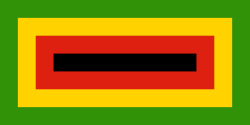
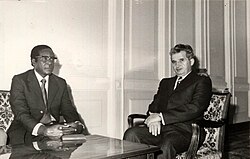
Mugabe sought international support for his cause, engaging with various global leaders, including Romanian communist leader Nicolae Ceaușescu, to secure resources and political backing for the revolution.
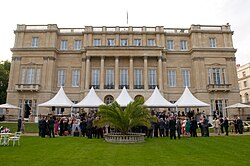
The conflict eventually culminated in the Lancaster House Agreement in 1979, a set of negotiations held in London that paved the way for legal elections and the formal end of white minority rule.
From Premiership to Presidency
Following his victory in the 1980 elections, Mugabe became the first Prime Minister of Zimbabwe. His early years in power were characterized by efforts to manage race relations and build a new national identity. However, internal political friction soon emerged, particularly between ZANU and ZAPU.
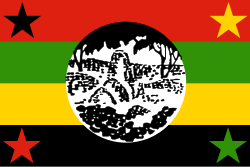
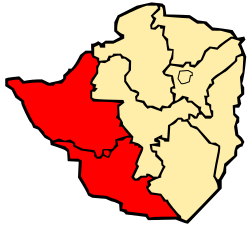
This tension led to the Gukurahundi, a series of violent crackdowns in the western provinces of Matabeleland, which effectively eliminated ZAPU as a political threat.
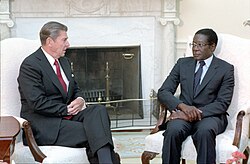
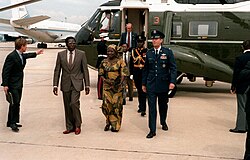
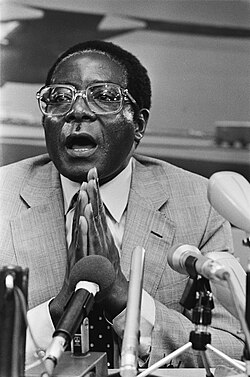
In 1987, Mugabe transitioned from Prime Minister to President, consolidating his power over the state. During the 1980s, he maintained a complex relationship with Western powers, including meetings with US President Ronald Reagan.
Economic Decline and Political Turmoil
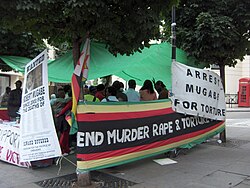
While the early part of his presidency saw constitutional and economic reforms, the period from 1995 to 2000 marked a sharp economic decline. This was exacerbated by the controversial land seizures starting in 2000, where farmland was forcibly taken from white farmers to be redistributed.
These actions led to widespread international condemnation and the rise of the Movement for Democratic Change (MDC), led by Morgan Tsvangirai, which challenged Mugabe's dominance in the 2000 parliamentary elections.
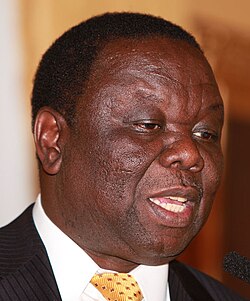
The resulting political instability led to a power-sharing agreement between Mugabe and the MDC from 2009 to 2013, though Mugabe remained the head of state.
Final Years and Legacy
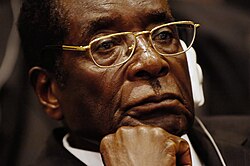
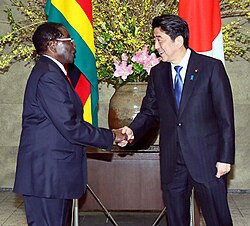
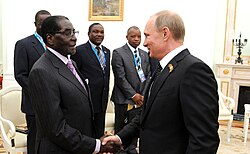
In his later years, Mugabe's health declined, and his grip on power became increasingly tenuous. He continued to meet with global leaders, such as Vladimir Putin and Shinzo Abe, but domestic pressure mounted.
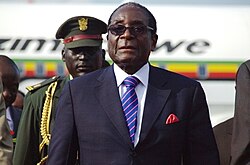
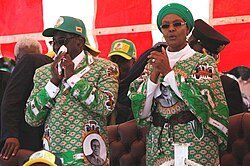
In November 2017, a military-backed coup d'état forced his resignation, ending 37 years of rule. He was succeeded by Emmerson Mnangagwa. Mugabe spent his final years in retirement and passed away on September 6, 2019, in Singapore at the age of 95.
His legacy remains deeply polarized, symbolized by monuments like Heroes' Acre, which was designed by North Korean architects.
![Statues atop the tomb of the Unknown Soldier at Heroes' Acre; the monument was designed by North Korean architects who reported directly to Mugabe.[166]](/images/33/35/3335be178744c4bd007bc81b1104cbc662b1acd9509a73083056834387bbef00.jpg)
Personal Life
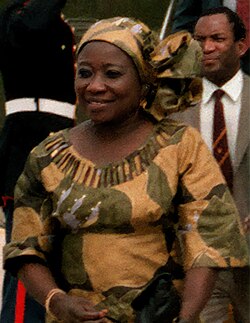
Mugabe was married twice: first to Sally Hayfron in 1961, and later to Grace Marufu in 1996. He had four children, including Bona, Robert Jr., and Bellarmine.
Summary of Robert Mugabe's Political Career
| Role | Period | Key Organization/Entity |
|---|---|---|
| Prime Minister of Zimbabwe | 1980–1987 | Government of Zimbabwe |
| President of Zimbabwe | 1987–2017 | Government of Zimbabwe |
| Leader/First Secretary | 1975–2017 | ZANU–PF |
| Chairperson | 2015–2016 | African Union |
| Chair | 1986–1989 | Non-Aligned Movement |
Frequently Asked Questions
How did Robert Mugabe come to power?
Mugabe led the ZANU party through a guerrilla war against the white minority government of Southern Rhodesia. Following the Lancaster House Agreement in 1979, he won the 1980 elections and became Prime Minister.
What was the Gukurahundi?
The Gukurahundi was a series of violent campaigns in Zimbabwe's western provinces of Matabeleland, aimed at eliminating political opposition from ZAPU and consolidating Mugabe's power.
Why were the land seizures controversial?
Starting around 2000, the government forcibly seized farmland from white farmers for redistribution. This led to severe economic decline and widespread international condemnation.
How did Robert Mugabe's presidency end?
Mugabe's rule ended in November 2017 when he was forced to resign following a coup d'état, after which Emmerson Mnangagwa took power.
Where did Robert Mugabe die?
Robert Mugabe died on September 6, 2019, in Singapore at the age of 95.