United States Entry into World War I: From Neutrality to Intervention
The United States officially entered World War I on April 6, 1917, marking a pivotal shift in a conflict that had already raged for over two and a half years. While the war began in Austria-Hungary, the U.S. initially maintained a stance of neutrality, reflecting a widespread public desire to avoid the carnage of European battlefields. However, a complex blend of economic ties, naval aggression, and diplomatic provocations eventually pushed the nation toward war.
During the early years of the conflict, American public opinion was deeply divided. While some Anglophiles urged support for Great Britain and others sympathized with Germany's struggle against the Russian Tsar, the majority of Americans favored isolation. This sentiment was reinforced by President Woodrow Wilson, who was narrowly re-elected in 1916 on a platform explicitly opposing the war.
![The famous front page / lead story of the American influential "newspaper-of-record" of The New York Times on May 8, 1915 edition, titled "Nation's Course in Doubt", addressing the serious implications of the recent sinking of R.M.S. Lusitania[3]](/images/e6/41/e64121b180dfe50f6b09819f792a12d807ab7729f6a068d449bfbc41470a93b5.png)
The Path to Intervention
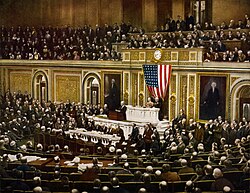
Despite official neutrality, the U.S. was economically entwined with the Entente powers (the Allies). American banks provided massive loans to these nations, which were primarily used to purchase food, raw materials, and munitions from the United States and Canada. While Wilson avoided preparations for a land war, he did authorize a shipbuilding program to strengthen the U.S. Navy.
Public perception began to shift as reports of German atrocities in Belgium surfaced in 1914. The turning point for many occurred in May 1915, when a submarine of the Imperial German Navy torpedoed the RMS Lusitania off the coast of Ireland, killing numerous passengers and fueling the view of Germany as the primary aggressor.
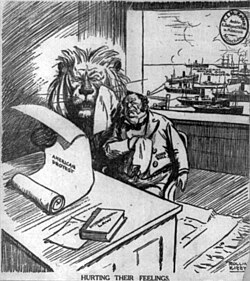
The Naval Blockade and Submarine Warfare
By 1917, the geopolitical landscape had shifted. Germany occupied northern France and Belgium, and the Russian Empire was collapsing under the weight of the February Revolution. However, Germany was suffering from a severe British naval blockade that caused critical shortages of food and fuel.
In a desperate bid to break the British supply chain, Berlin resumed unrestricted submarine warfare—a policy of sinking merchant ships regardless of their nationality. The German high command knew this would likely provoke the United States, but they viewed it as a necessary risk to win the war.
Key Facts
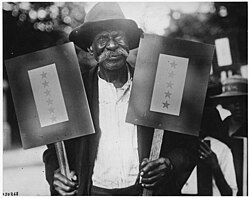
- Entry Date: April 6, 1917.
- Primary Catalyst: Germany's resumption of unrestricted submarine warfare.
- Economic Link: Massive U.S. bank loans to the Entente powers for war materials.
- Key Event: The sinking of the RMS Lusitania in May 1915 shifted public opinion.
- Diplomatic Trigger: The Zimmermann Telegram further pushed the U.S. toward war.
The Cost of Neutrality: Sunk Merchant Ships
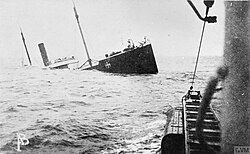
The escalation of submarine warfare led to the loss of numerous American vessels in early 1917. These attacks caused significant loss of life and disrupted international trade, making neutrality untenable.
| Ship Name | Type | Date | US Killed | Total Killed | Sunk By |
|---|---|---|---|---|---|
| Vigilancia | Cargo Ship | Mar 16 | 6 | 15 | U-70 |
| Healdton | Oil Tanker | Mar 21 | 7 | 21 | Unknown |
| Aztec | Cargo Ship | Apr 1 | 11 | 28 | U-46 |
| Illinois | Oil Tanker | Mar 18 | 0 | 0 | UC-21 |
Domestic Divide and Public Sentiment
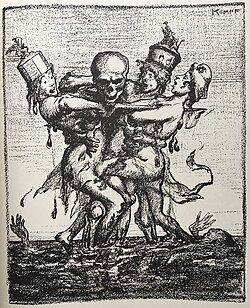
The move toward war was not universally supported. A strong pacifist movement emerged, characterized by the hit song "I Didn't Raise My Boy To Be A Soldier" in 1915, which sold 650,000 copies. This movement represented a quantifiable political reality that the administration had to navigate.
![The song "I Didn't Raise My Boy To Be A Soldier" was a hit in 1915, selling 650,000 copies. Its expression of popular pacifist sentiment "helped make the pacifist movement a hard, quantifiable political reality to be reckoned with."[89]](/images/78/33/783346ee4eb157ae797e97c7b14266879555f1b24ef64e3c12afe80a70a9b5fc.jpg)
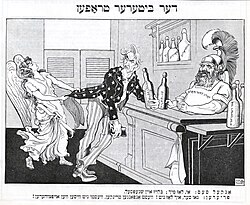
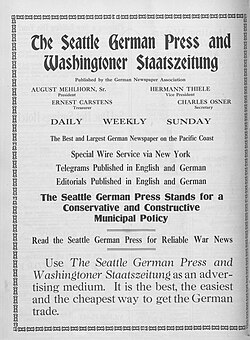
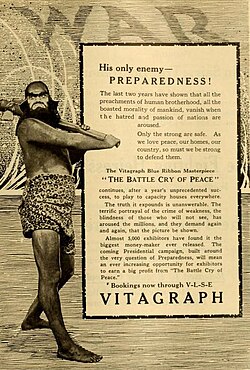
Different ethnic and social groups held varying views. German-Americans often felt torn between their heritage and their new home, while some Jewish and Irish-American communities expressed anti-war sentiments. Conversely, pro-Allied immigrants and the "Preparedness movement" pushed for military readiness.
The Final Push: The Zimmermann Telegram
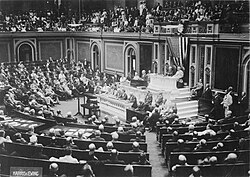
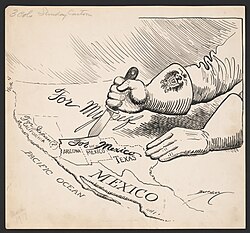
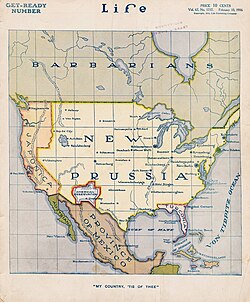
The final blow to American neutrality was the Zimmermann Telegram, a secret communication from Germany proposing an alliance with Mexico against the United States. This provocation, combined with the ongoing sinking of merchant ships, led President Wilson to ask Congress for a declaration of war on April 2, 1917.
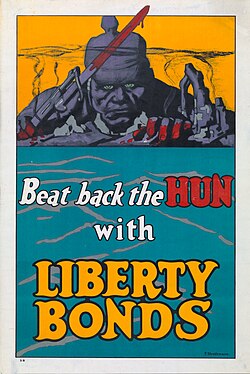
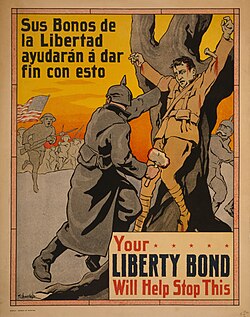
Once war was declared, the U.S. government utilized powerful propaganda to unify the public. War bond posters often portrayed Germany in a negative light to encourage financial support for the military effort.
Frequently Asked Questions
Why did the United States wait until 1917 to enter World War I?
The U.S. initially followed a policy of neutrality due to widespread public isolationism and President Woodrow Wilson's anti-war platform, which helped him win the 1916 election.
What was unrestricted submarine warfare?
It was a German naval strategy of sinking all merchant ships—including those from neutral nations—to break the British economic blockade and cut off supplies to the Entente powers.
How did the sinking of the RMS Lusitania affect the war?
While it did not lead to an immediate declaration of war, the sinking of the Lusitania in 1915 shifted American public opinion, making Imperial Germany appear as the aggressor.
What was the significance of the Zimmermann Telegram?
The telegram was a German proposal for an alliance with Mexico against the U.S., which served as a direct provocation that helped convince the U.S. government to abandon neutrality.
Was there significant opposition to the war within the U.S.?
Yes, there was a robust pacifist movement, as well as opposition from various ethnic groups and political factions who believed the U.S. should remain out of the European conflict.