United Kingdom of Portugal, Brazil and the Algarves
The United Kingdom of Portugal, Brazil and the Algarves was a unique political entity that existed from 1815 to 1825. Born out of the chaos of the Napoleonic Wars, this union represented a rare moment in history where a European colony was elevated to the same status as its mother country. This transatlantic state shifted the center of the Portuguese Empire from Europe to South America, forever altering the trajectory of both nations.
The union was established on December 16, 1815, following the transfer of the Portuguese court to Brazil to escape French invasions. For several years, Rio de Janeiro served as the capital of the entire empire, marking a significant shift in global geopolitical power.
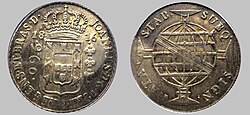
Key Facts
- Duration: 1815–1825.
- Capitals: Rio de Janeiro (until 1821), then Lisbon.
- Monarchs: Maria I (1815–1816) and John VI (1816–1825).
- Population (1820): Approximately 4 million in Brazil and 3 million in Portugal.
- Outcome: Dissolved following Brazil's declaration of independence in 1822 and formal recognition in 1825.
The Reign of King John VI
Following the death of Queen Maria I in Rio de Janeiro on March 20, 1816, Prince John ascended the throne as King John VI. His acclamation took place in Rio de Janeiro on February 6, 1818, cementing the city's role as the heart of the United Kingdom.
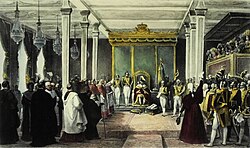
The Return to Europe
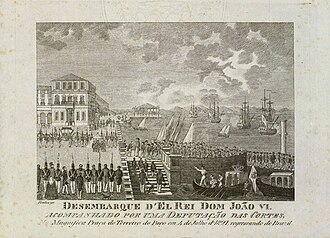
The political landscape shifted with the Liberal Revolution of 1820 in Portugal. Pressure from the Portuguese people forced King John VI to return to Europe. He arrived in Lisbon on July 4, 1821, but made a strategic decision to leave his heir, Prince Pedro, behind in Brazil.
By a decree on April 22, 1821, Pedro was named the Regent of Brazil. This granted the Brazilian territory a devolved administration, meaning it had its own local government and administration while remaining part of the United Kingdom.
The Path to Brazilian Independence
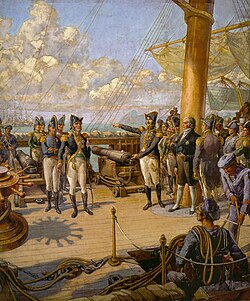
Tensions rose as the Cortes (the Portuguese legislative assembly) in Lisbon attempted to reclaim authority over Brazil. Prince Pedro resisted these demands, famously announcing on January 9, 1822, that he would remain in Brazil as Regent.
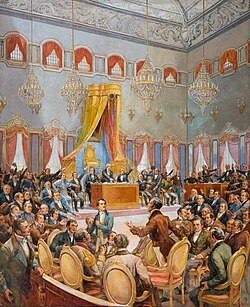
Pedro began establishing independent Brazilian institutions, including an advisory council of provincial representatives and a call for a National Constituent Assembly. By May 1822, he decreed that laws from Lisbon would only be implemented in Brazil with his personal approval.
The Proclamation of the Empire
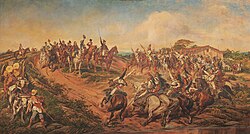
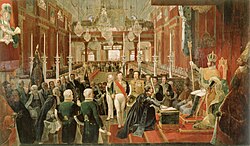
On September 7, 1822, Prince Pedro officially declared Brazil's independence. This act led to the establishment of the Empire of Brazil in October 1822, with Pedro crowned as Emperor Pedro I on December 1, 1822.
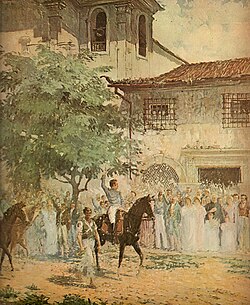
While the Lisbon Cortes approved a Constitution for the United Kingdom on September 23, 1822, it was never recognized in Brazil. The subsequent conflict saw the Imperial Army secure control over Brazilian territories, such as Salvador in 1823.
Formal Recognition and Dissolution
Portugal did not immediately recognize Brazil's sovereignty. Between 1822 and 1825, the Portuguese government attempted to block European recognition of the new state. However, under pressure from Great Britain, Portugal eventually conceded.
The process involved two stages of recognition. First, King John VI issued Letters Patent on May 13, 1825, attempting to frame independence as a royal concession. Brazilians rejected this, demanding a bilateral treaty that recognized their independence as a fact since 1822. This was finally achieved through a Treaty of Peace signed in Rio de Janeiro on August 29, 1825, and ratified in November 1825.
With this treaty, the United Kingdom was formally dissolved. Portugal returned to being the Kingdom of Portugal, and King John VI was granted the honorary, ceremonial title of "Emperor of Brazil" for the remainder of his life.
Dynastic Resolution: Pedro I and Maria II
The death of King John VI on March 10, 1826, created a brief personal union, as Emperor Pedro I inherited the Portuguese throne as King Pedro IV. To avoid compromising Brazilian sovereignty, Pedro abdicated the Portuguese throne on May 2, 1826, in favor of his daughter, Queen Maria II.
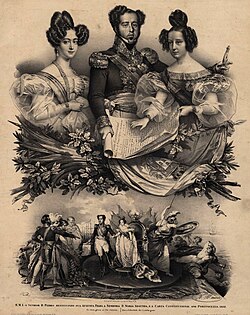
This abdication ensured that the two nations remained separate, ending any possibility of a renewed political union between the Portuguese and Brazilian crowns.
| Feature | Details |
|---|---|
| Period | 1815–1825 |
| Government | Absolute Monarchy (until 1822) → Constitutional Monarchy |
| Key Monarchs | Maria I, John VI, Pedro I/IV |
| Primary Currency | Real |
| Religion | Roman Catholicism |
| Final Status | Dissolved into Kingdom of Portugal and Empire of Brazil |
Frequently Asked Questions
Why was the United Kingdom of Portugal, Brazil and the Algarves created?
It was created in 1815 after the Portuguese court moved to Brazil to escape Napoleon's invasions. Elevating Brazil to a kingdom ensured its status was equal to Portugal's, reflecting the reality that the empire was being governed from Rio de Janeiro.
Who was the first Emperor of Brazil?
Prince Pedro, the son of King John VI, became the first Emperor of Brazil (Pedro I) after declaring independence from Portugal on September 7, 1822.
Why did it take until 1825 for Portugal to recognize Brazil's independence?
Portugal initially used diplomatic efforts to prevent European powers from recognizing Brazil. King John VI also attempted to "save face" by presenting independence as a royal gift rather than a result of military and political defeat.
What happened to the Portuguese throne after King John VI died?
His son, Emperor Pedro I of Brazil, briefly inherited the throne as King Pedro IV of Portugal. However, he abdicated shortly after in 1826 in favor of his daughter, Maria II, to maintain the separation of the two states.
What was the role of the Cortes in the dissolution of the union?
The Cortes were the Portuguese legislative assembly. Their attempts to strip Brazil of its administrative autonomy and force Prince Pedro to return to Lisbon accelerated the movement toward Brazilian independence.