Battle of Caseros: The Fall of Rosas and the Birth of Modern Argentina
The Battle of Caseros, fought on February 3, 1852, stands as one of the most pivotal moments in South American history. This clash near El Palomar, Argentina, did more than just end a military campaign; it dismantled the long-standing regime of Juan Manuel de Rosas and paved the way for the constitutional organization of the Argentine nation.
The conflict pitted the forces of the Argentine Confederation against a powerful coalition known as the Grand Army (Ejército Grande). This alliance included the Argentine provinces of Entre Ríos and Corrientes, the Empire of Brazil, and Uruguay. The resulting victory for the allies fundamentally shifted the political landscape of the Rio de la Plata region.
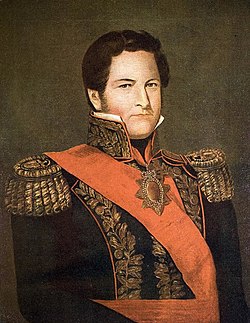
Key Facts
- Date: February 3, 1852.
- Location: El Palomar, Argentina.
- Outcome: Decisive victory for the Grand Army; exile of Juan Manuel de Rosas.
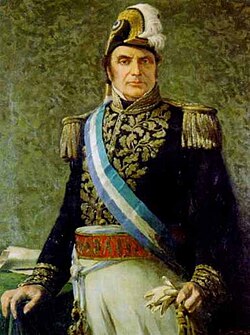
- Major Figures: Justo José de Urquiza (Allied Commander) and Juan Manuel de Rosas (Confederation Leader).
- Political Impact: Led to the creation of the Argentine Constitution of 1853.
- Casualties: Approximately 2,000 total casualties, with the majority suffered by the Rosista forces.
The Road to Conflict
Internal Strife and the Anglo-French Blockade
Since 1814, Argentina had been plagued by internal instability and civil wars stemming from disagreements over the structure of its government. Juan Manuel de Rosas, the dominant leader of the Argentine Confederation, sought to consolidate power and expand influence into Uruguay. However, his efforts to capture Montevideo were hindered by a British-French naval blockade of the Rio de la Plata.
The blockade eventually ended with the Arana–Southern Treaty. Following this, Rosas attempted to tighten his control over Montevideo by outlawing trade with the city. This move alienated key allies, most notably Justo José de Urquiza, the governor of Entre Ríos.
Urquiza's Rebellion and the Grand Army
Urquiza grew suspicious that Rosas was using threats of war with the Empire of Brazil to avoid drafting a national constitution. In a bold move known as his Pronunciamiento, Urquiza called for Rosas's resignation and began assembling a force of 10,000 horsemen.
Urquiza formed a strategic alliance with Brazil and the government of Montevideo. After successfully expelling the forces of Manuel Oribe from Uruguay, the coalition turned its full attention toward Rosas. This combined force, the Grand Army, marched toward Buenos Aires, crossing Morón creek to position themselves at Monte Caseros.
The Battle of Caseros
Opposing Forces
The Rosista army consisted of roughly 22,000 to 26,000 men, including 10,000 infantry and 12,000 cavalry, supported by 60 guns. Despite their numbers, morale was low. The appointed commander, Angel Pacheco, resigned due to Rosas's contradictory micromanagement, leaving the aging politician to take personal command despite his lack of military expertise.
The Grand Army was composed of 24,206 to 28,000 troops, including 4,020 Brazilians and 1,641 Uruguayans, with 50 guns. While many of the Argentine troops were undisciplined gauchos (skilled horsemen of the plains), the Brazilian contingent provided professional military structure.
Course of the Engagement
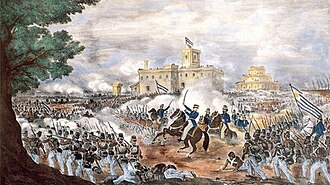
The battle lasted six hours. Urquiza launched a reckless but effective charge against the Rosista left flank. Simultaneously, Brazilian infantry and Uruguayan brigades seized the Palomar, a circular pigeon-breeding building that served as a strategic point on the right flank.
As the flanks collapsed, only the center, commanded by Martiniano Chilavert, continued to fight. The engagement devolved into an artillery duel until the Rosistas ran out of ammunition, allowing the Brazilian lines to advance and secure the victory.
The Fate of Martiniano Chilavert
Following the battle, Colonel Martiniano Chilavert refused to flee, waiting for Urquiza at his cannon. After a heated argument regarding loyalty and treason, Urquiza ordered Chilavert's execution. Chilavert demanded to be shot from the front; however, he was ultimately killed by bayonets and rifle butts.
Aftermath and Political Legacy
Juan Manuel de Rosas, wounded in the hand, fled to Buenos Aires and signed his resignation. Under the protection of the British consul, he boarded the ship Centaur and entered exile in Southampton, England.
The immediate aftermath in Buenos Aires was chaotic, marked by looting until Urquiza's troops restored order. Urquiza was subsequently declared interim governor of Buenos Aires. He used his new position of preeminence to reunite the provinces via the San Nicolás Agreement, which led to the Argentine Constitution of 1853—the foundation of the modern Argentine state.
| Feature | Argentine Confederation (Rosas) | Grand Army (Urquiza & Allies) |
|---|---|---|
| Total Strength | 22,000 – 26,000 | 24,206 – 28,000 |
| Artillery | 60 guns (incl. Congreve battery) | 50 guns |
| Key Commanders | Juan Manuel de Rosas | Justo José de Urquiza |
| Casualties | ~8,500 (1,500 killed/wounded, 7,000 captured) | ~600 (300 killed, 300 wounded) |
| Result | Defeat and Exile | Victory and Constitutional Reform |
Frequently Asked Questions
Why was the Battle of Caseros significant for Argentina?
It ended the dictatorship of Juan Manuel de Rosas and allowed Justo José de Urquiza to lead the country toward a formal constitutional government, resulting in the Constitution of 1853.
Who composed the Grand Army?
The Grand Army was a coalition consisting of forces from the Argentine provinces of Entre Ríos and Corrientes, the Empire of Brazil, and Uruguay.
What happened to Juan Manuel de Rosas after the battle?
After resigning his position, Rosas fled to the United Kingdom with the help of the British consul and lived in exile in Southampton.
What was the role of the Palomar in the battle?
The Palomar was a circular building used for pigeon breeding that became a strategic objective; its capture by the Brazilian and Uruguayan forces helped collapse the Rosista right flank.
How did the battle affect Uruguay?
The victory of the allies led to the Colorados seizing power in Uruguay and established Brazil as the guarantor of Uruguayan independence.