Caudillismo: The History and Legacy of Hispanic Strongmen
In the political lexicon of Spain and Hispanic America, few terms are as evocative as caudillo. Derived from the Latin capitellum (a diminutive of caput, meaning "head"), a caudillo is a personalist leader who wields significant military and political power. While often used interchangeably with terms like "warlord," "strongman," or "military dictator," the term specifically describes a unique brand of leadership rooted in the cultural and political soil of the Spanish-speaking world.
The essence of caudillismo lies in the charisma of the leader and their ability to forge deep, personal bonds with their followers. Historically, these leaders often stepped in as providers when formal government institutions failed, creating a father-child dynamic with their supporters—most notably the gauchos (common people of the plains). This mutual reliance allowed caudillos to reshape state formations and shift political climates through sheer force of personality and loyalty.
Key Facts
- Definition: A personalist military and political leader specific to Spain and Hispanic America.
- Origins: Linked to the Spanish Reconquista and the power vacuums following the Spanish American wars of independence.
- Core Trait: Reliance on charisma and personal loyalty rather than institutional legitimacy.
- Followers: Often relied on the support of gauchos, who viewed the caudillo as a provider.
- Modern Usage: Can be used pejoratively or, as in the case of Francisco Franco, as a proud title of authority.
The Evolution of Caudillismo
From the Reconquista to the Conquistadors
The roots of this leadership style may trace back to medieval Spain during the Reconquista (the campaign to recover territory from the Moors). Early conquistadors, such as Hernán Cortés and Francisco Pizarro, mirrored the caudillo archetype: they were successful military commanders who rewarded loyalty and maintained a symbiotic relationship with their troops.
The Post-Independence Power Vacuum
While the Spanish crown used bureaucracy to prevent personalist rule during the colonial era, the early 19th-century wars of independence changed the landscape. Historian John Lynch argues that the collapse of colonial rule created a power vacuum, allowing regional strongmen to rise as the primary sources of order and authority in the newly independent nations.
Regional Manifestations of Strongman Rule
Mexico and Central America
Following independence in 1821, Mexico was split between federalists (who favored liberal, decentralized government) and centralists (who supported a strong state, the Army, and the Catholic Church). Many regional caudillos aligned with the federalists to protect their local autonomy.
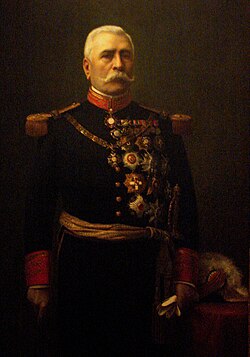
One of the most prominent figures was Porfirio Díaz, who rose to power via the Plan of Tuxtepec in 1876. His long rule, known as the Porfiriato, was defined by the slogan "order and progress," enforced by his private police force, the Rurales.
The Bolivarian Republics
Simón Bolívar, the pivotal figure of independence, was eventually called upon to assume dictatorial powers in 1828 to "save the republic." Though he stepped down in 1830, his legacy remains complex, admired by some for his opposition to slavery and by others for his authoritarianism.
In Bolivia, Manuel Isidoro Belzu (president 1848–1855) represented a progressive variation of the caudillo. He implemented wealth redistribution and welfare programs based on communalism, which resonated with native populations, though he eventually ruled despotically.
The Southern Cone
In Argentina, Juan Manuel de Rosas (r. 1829–1852) dominated the confederation, prioritizing order over democratic principles in a region plagued by anarchy. Conversely, Chile experienced more stability under the centralized regime established by Diego Portales, which fostered an export-oriented economy.
Paraguay saw a unique approach under José Gaspar Rodríguez de Francia (r. 1814–1840). As Supreme Dictator, he isolated the country from foreign trade to achieve economic self-sufficiency and based society on communal properties.
Caudillos in the 20th Century and Beyond
The Mexican Revolution
The fall of Porfirio Díaz in 1911 sparked a decade of civil war that birthed new regional caudillos. Figures like Pancho Villa and Emiliano Zapata fought for different visions of Mexico. Eventually, the rise of the Partido Nacional Revolucionario (PNR) in 1929—later the Institutional Revolutionary Party—served as a systemic brake on the personalist power of regional strongmen.
Spain and the Generalissimo
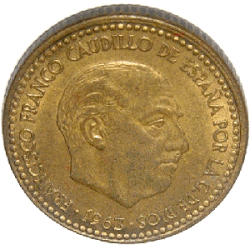
In Europe, the term was applied to the authoritarian regimes of Antonio Salazar in Portugal and Francisco Franco in Spain. Franco, who led Spain from 1936 to 1975, embraced the title of caudillo after overthrowing the Second Spanish Republic.
Caudillismo in Literature
The archetype of the strongman has deeply influenced Hispanic literature. Notable works include Gabriel García Márquez's The Autumn of the Patriarch, Miguel Ángel Asturias's El Señor Presidente, and Rómulo Gallegos's Doña Bárbara, which uniquely depicts a female caudillo.
| Leader | Region | Key Characteristic/Legacy |
|---|---|---|
| Simón Bolívar | Bolivarian Republics | Liberator of several nations; complex authoritarian legacy. |
| Porfirio Díaz | Mexico | "Order and Progress"; long-term modernization via the Porfiriato. |
| Juan Manuel de Rosas | Argentina | Wealthy landowner who imposed order over democratic liberty. |
| José Gaspar Rodríguez de Francia | Paraguay | Supreme Dictator; focused on economic self-sufficiency. |
| Francisco Franco | Spain | Generalissimo who proudly adopted the title of Caudillo. |
Frequently Asked Questions
What is the difference between a caudillo and a standard dictator?
While both wield absolute power, a caudillo's authority is specifically rooted in personalism and charisma. Their power comes from personal loyalty and a symbiotic relationship with followers (like gauchos) rather than solely from institutional or legal frameworks.
Why did caudillos emerge after independence?
The wars of independence overthrew established Spanish colonial bureaucracies, leaving a power vacuum. In the absence of stable government institutions, regional military leaders stepped in to provide order and security.
Was every caudillo a military leader?
Most were, as military success provided the prestige and force necessary to seize power. However, their rule often extended into civilian governance, where they acted as political patrons and providers for their constituents.
How did the PNR affect caudillismo in Mexico?
The creation of the Partido Nacional Revolucionario (PNR) shifted power from individual, personalist regional leaders to a centralized political party, effectively limiting the influence of independent regional caudillos.
Are there examples of progressive caudillos?
Yes. Manuel Isidoro Belzu of Bolivia is cited as a progressive example for his efforts to redistribute wealth and implement welfare programs that aligned with the traditional values of native populations.