John VI: The King Who Transformed Portugal and Brazil
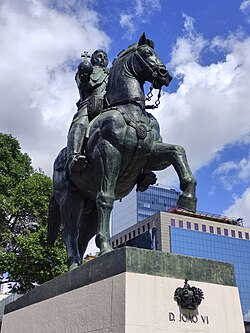
Dom John VI, known as "the Clement" (o Clemente), was a pivotal figure in the history of the Luso-Brazilian world. Serving as the King of the United Kingdom of Portugal, Brazil, and the Algarves, his reign was marked by an unprecedented geopolitical shift: the relocation of a European royal court to the Americas. From his role as a prince regent to his eventual status as a titular Emperor of Brazil, John VI navigated the turbulent waters of the Napoleonic era and the rise of South American nationalism.
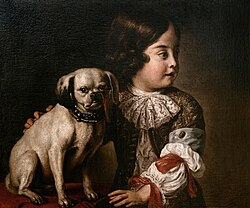
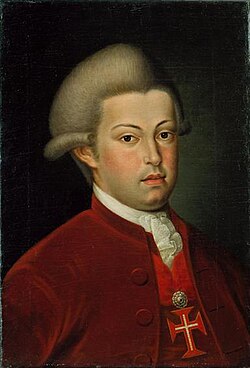
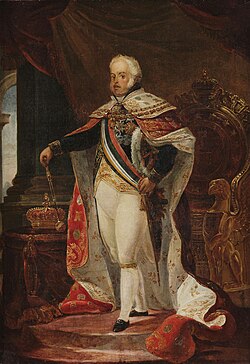
Born on May 13, 1767, at the Palace of Queluz, John was the second son of Peter III and Maria I. His path to the throne was not immediate; he became the heir only after the death of his older brother, Prince José, from smallpox in 1788. Before officially ascending the throne, he held several prestigious titles, including the Duke of Braganza and the Prince of Brazil.
Key Facts
- Full Name: João Maria José Francisco Xavier de Paula Luís António Domingos Rafael.
- Reign: King of Portugal and Brazil from 1816 to 1826.
- Dynasty: House of Braganza.
- Major Event: Moved the Portuguese court to Brazil for thirteen years.
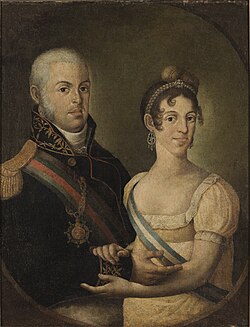
- Family: Married Carlota Joaquina of Spain; father of Pedro I of Brazil and Pedro IV of Portugal.
- Death: Died March 10, 1826, with later forensic evidence suggesting arsenic poisoning.
The Path to Power: Regency and Accession
John's political life began in earnest in 1799 when he became the prince regent. This arrangement was necessary due to the mental illness of his mother, Queen Maria I. For nearly two decades, John exercised absolute power as regent, effectively ruling the empire before his formal accession.
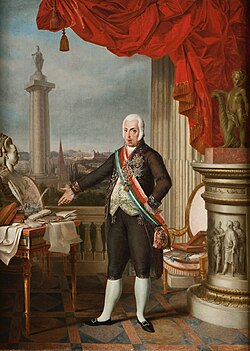
Upon the death of Maria I on March 20, 1816, John officially became King. While he had already held the reins of power, his formal acclamation took place on February 6, 1818, at the Royal Chapel, accompanied by grand festivities.
The Brazilian Era and Colonial Transformation
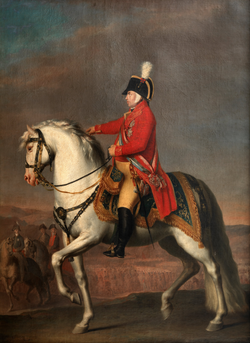
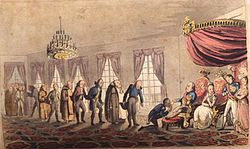
One of the most defining periods of John's life was his thirteen-year stay in Brazil. This move transformed Brazil from a colony into the center of the Portuguese Empire. During this time, the royal court established a complex administration in Rio de Janeiro, maintaining traditional customs such as the beija-mão (hand-kissing ceremony).
The transition was not without tension. His wife, Carlota Joaquina of Spain, was an ambitious figure who frequently conspired against Portuguese interests. She sought to establish her own monarchy in South America, collaborating with Spanish nationalists in the Río de la Plata region. Despite her failed plots, her influence pushed John to engage more deeply in Spanish colonial politics, leading to the capture of Montevideo in 1817 and the annexation of the Cisplatina Province in 1821.
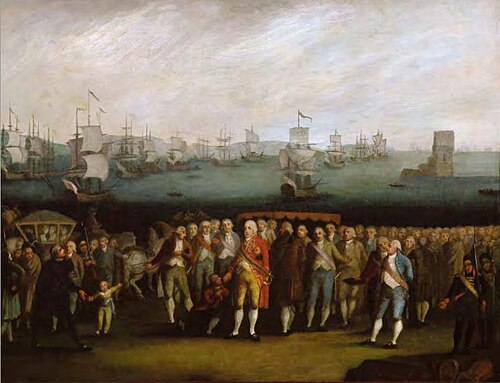
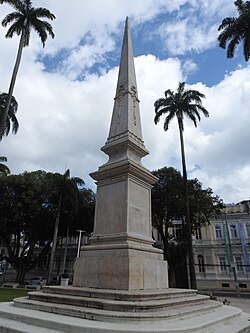
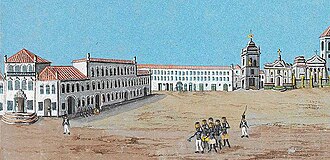
The presence of the court in Rio de Janeiro fundamentally altered the city's landscape and the country's political status, creating a level of autonomy that would eventually lead to independence.
Return to Portugal and the Split of the Empire
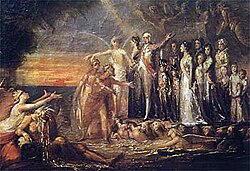
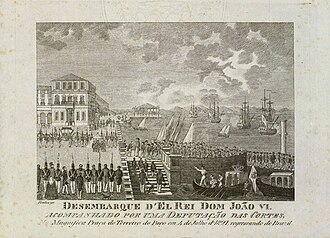
By 1821, political pressure in Lisbon reached a breaking point. The Cortes (the Portuguese parliament) demanded the King's immediate return to Europe and the establishment of a constitutional government. Fearing that his departure would strip Brazil of its newfound autonomy, John attempted to send his son, Prince Pedro, to Lisbon to negotiate a constitution. However, Pedro refused, leaning toward liberal ideals.
John eventually departed for Lisbon on April 25, 1821, naming Pedro as regent of Brazil. Upon his return to Portugal on July 3, 1821, John was forced to swear loyalty to a new constitution on October 1, 1822, which limited his royal prerogatives.
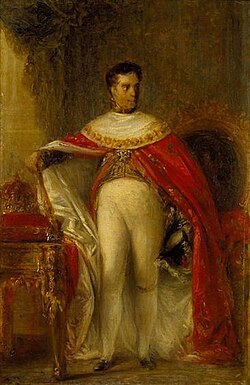
The separation of the two lands became inevitable. On September 7, 1822, Prince Pedro proclaimed Brazilian independence and assumed the title of Emperor of Brazil. While Portugal did not recognize this immediately, it is suggested that John had anticipated this outcome, advising his son to take the crown before an "adventurer" could seize it.
Final Years and Mysterious Death
John VI's final days were marked by sudden illness. On March 4, 1826, after returning from the Hieronymites Monastery, he suffered from vomiting and convulsions. He died at 5 a.m. on March 10, 1826, at the Bemposta Palace.
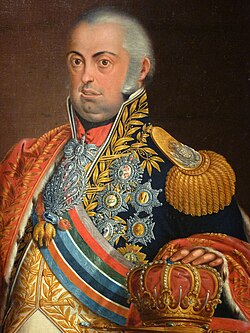
While the cause of death was initially unclear, modern science has provided a chilling answer. In the 1990s, investigators exhumed the remains of the King. Analysis of fragments of his heart revealed levels of arsenic sufficient to kill two people, confirming long-held suspicions that John VI had been assassinated by poison.
Summary of Reign and Titles
| Period | Title/Role | Territory |
|---|---|---|
| 1767–1788 | Infante John of Portugal | Portugal |
| 1788–1816 | Prince of Brazil, Duke of Braganza | Portugal/Brazil |
| 1816–1822 | King of the United Kingdom of Portugal, Brazil and the Algarves | United Kingdom |
| 1822–1825 | King of Portugal and the Algarves | Portugal |
| 1825–1826 | King of Portugal and the Algarves, Emperor of Brazil (titular) | Portugal/Brazil |
Frequently Asked Questions
Why did John VI move the Portuguese court to Brazil?
The move was a strategic response to the Napoleonic Wars, allowing the Portuguese monarchy to escape capture by French forces and maintain the sovereignty of the House of Braganza from the safety of South America.
What was the relationship between John VI and Carlota Joaquina?
Their marriage was strained and largely formal. Carlota Joaquina was highly ambitious and frequently plotted to secure her own power or a separate monarchy in South America, often acting against her husband's interests.
How did Brazil achieve independence from John VI?
Prince Pedro, acting as regent in Brazil, led a revolt and proclaimed independence on September 7, 1822, becoming Emperor Pedro I. This occurred while John VI was back in Portugal under the pressure of the liberal Cortes.
How was the cause of John VI's death determined?
Although doctors at the time were uncertain, a forensic investigation in the 1990s analyzed rehydrated fragments of his heart, which detected lethal amounts of arsenic, confirming he was poisoned.
What was the "United Kingdom of Portugal, Brazil and the Algarves"?
It was a political entity created during John VI's reign that elevated Brazil from a colonial status to a kingdom equal in rank to Portugal, effectively unifying the two territories under one crown.