Union of India: The Transition from British Raj to Republic (1947–1950)
Between August 15, 1947, and January 26, 1950, the Union of India existed as an independent dominion within the British Commonwealth of Nations. This pivotal era marked the end of the British Raj—the period of direct British rule—and the birth of a sovereign nation. The transition was a complex process of political negotiation, territorial division, and social upheaval that reshaped the geography and identity of South Asia.
Before independence, the region was divided into British India, administered directly by the United Kingdom, and the princely states, which were ruled by local Indian rulers under a system of British paramountcy. The passage of the Indian Independence Act 1947 formalized the end of this arrangement, creating two distinct dominions: India and Pakistan.
Key Facts
- Independence Date: 15 August 1947.
- Republican Status: Adopted a republican constitution on 26 January 1950.
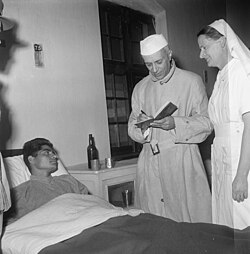
- First Prime Minister: Jawaharlal Nehru.
- First Governor-General: Lord Mountbatten, followed by C. Rajagopalachari.
- Territorial Change: The British Raj was partitioned into the Dominions of India and Pakistan.
- Political Structure: A federal parliamentary constitutional monarchy until 1950.
The Path to Independence
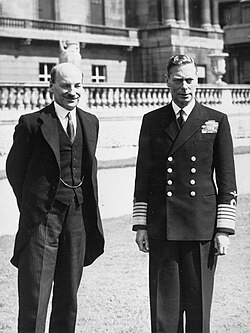
The momentum for decolonization accelerated following the 1945 British general elections, which saw the victory of the Labour Party. Led by Prime Minister Clement Attlee, the new government was committed to ending British rule in India, partly due to the economic and human exhaustion following the Second World War. By early 1947, Britain announced its intention to transfer power no later than June 1948.
The transition culminated on August 15, 1947, when the Union of India became independent. While the British monarch remained the formal head of state, the British government relinquished all governing responsibilities. Consequently, the title "Emperor of India" was abandoned.
Partition and its Aftermath
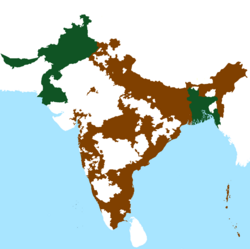
The creation of the Dominion of Pakistan on August 14, 1947, was based on the distribution of Muslim-majority populations. According to the 1941 census, 24.3% of pre-independent India was Muslim, with these populations clustered primarily in the northwest (Punjab) and the east (Bengal).
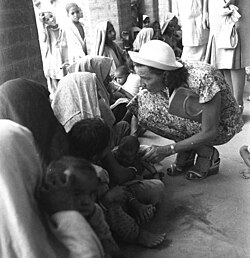
This partition triggered a massive exchange of populations. Millions of Muslims migrated to West and East Pakistan, while Hindus and Sikhs migrated into India. This period was marked by significant violence and a humanitarian crisis, necessitating the establishment of numerous refugee camps.
The Kashmir Conflict
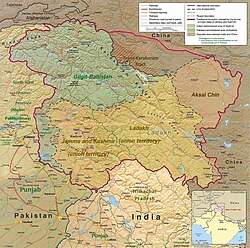
The partition left the status of Kashmir unresolved, leading to an immediate conflict between the two new nations. A ceasefire was eventually brokered by the United Nations in late 1948. However, the failure to conduct a UN-demanded plebiscite (a direct vote by the people) left the region divided by a cease-fire line, later known as the Line of Control.
Nation Building and Political Integration
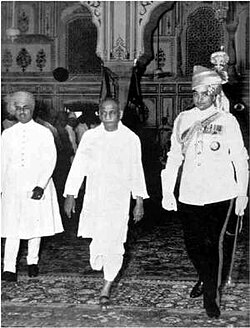
One of the most daunting tasks for the new government was the integration of the 362 princely states. These states varied wildly in size, from the massive state of Hyderabad (200,000 sq km) to tiny territories of less than 25 sq km. The British had revoked their treaty obligations, advising the princes to join either India or Pakistan. Through the efforts of leaders like Sardar Patel, almost all states acceded to the Union by August 15.
The Framing of the Constitution
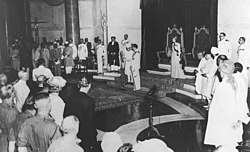
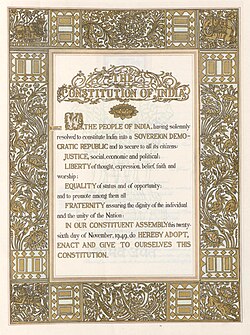
The legislature of the Dominion was the Constituent Assembly, formed from members elected in September 1946. The Indian National Congress held a dominant majority (82%) after members from regions that became Pakistan withdrew. This assembly was tasked with drafting a constitution that would define the nation's values and legal framework.
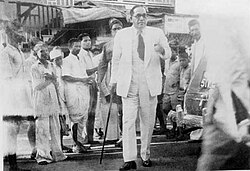
B. R. Ambedkar, a leader for the "untouchables" (Dalits), served as the chairman of the Drafting Committee, ensuring the new legal order addressed social inequalities.
Society and Economy (1947–1950)
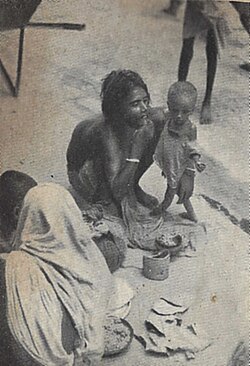
The early years of the Union were characterized by extreme poverty and low literacy. A 1949 National Income Committee reported the average annual income per person to be approximately Rs. 260 ($55). The nation also struggled with the lingering effects of the 1943 Bengal famine.
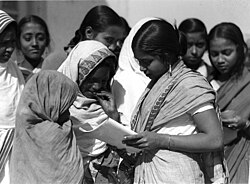
Literacy rates in 1951 highlighted a stark urban-rural and gender divide, with women's literacy significantly lower than men's across all regions.
| Attribute | Detail |
|---|---|
| Official Name | Union of India (Dominion of India) |
| Capital | New Delhi |
| Government Type | Federal parliamentary constitutional monarchy |
| Estimated Population (1949-50) | 360,185,000 |
| Land Area (1949-50) | 3,159,814 km² |
| Currency | Indian rupee |
Frequently Asked Questions
What was the difference between the Union of India and the Republic of India?
The Union of India (1947–1950) was a dominion, meaning it was independent but still recognized the British monarch as the formal head of state. The Republic of India was established on January 26, 1950, when the country adopted its own constitution and replaced the monarchy with an elected President.
Who were the primary leaders during the Dominion period?
Jawaharlal Nehru served as the Prime Minister, while Vallabhbhai Patel served as Deputy Prime Minister and Minister of Home Affairs. The Governor-General role was first held by Lord Mountbatten and later by C. Rajagopalachari.
How were the princely states integrated into India?
The British revoked their treaty rights with the over 500 princely states, advising them to join either India or Pakistan. Most states acceded to the Union of India through political negotiations led largely by Sardar Patel.
What caused the partition of India and Pakistan?
Partition was driven by the desire to create a separate homeland for Muslims in regions where they were the majority, specifically in the northwest and east of the subcontinent, leading to the creation of the Dominion of Pakistan.
What was the role of the Constituent Assembly?
The Constituent Assembly served as the legislature for the Dominion of India and was responsible for drafting the Constitution of India, which was eventually adopted in 1950.