Ulrich von Ensingen: The Master Architect of Gothic Spires
The skyline of medieval Europe was defined by the ambition of its architects, and few were as influential in the realm of verticality as Ulrich von Ensingen. A master of the German Gothic style, Ensingen left an indelible mark on some of the most iconic religious structures in Europe, specializing in the complex engineering required to reach unprecedented heights.
Key Facts
- Primary Achievement: Conceived the plans for the main spire of the Ulm Minster, the tallest church tower in existence.
- Architectural Style: Specialized in Sondergotik (Special Gothic), a regional variation of Gothic architecture.
- Major Works: Contributed to the Ulm Minster, Strasbourg Cathedral, Frauenkirche in Esslingen, and the convent at Pforzheim.
- International Influence: Likely served as a consultant for the Milan Cathedral in 1394.
- Death: Passed away on February 10, 1419.
The Legacy of the Ulm Minster
Ulrich von Ensingen is most renowned for his visionary work on the Ulm Minster. He was the mind behind the plans for the main spire and the west porch. His design utilized the Sondergotik style, characterized by its unique regional adaptations of the broader Gothic movement. While Ensingen provided the foundational vision and plans, the upper stages of the tower were eventually completed by another architect, Böblinger.
Today, the Ulm Minster remains a marvel of engineering, holding the title of the tallest church tower in the world.
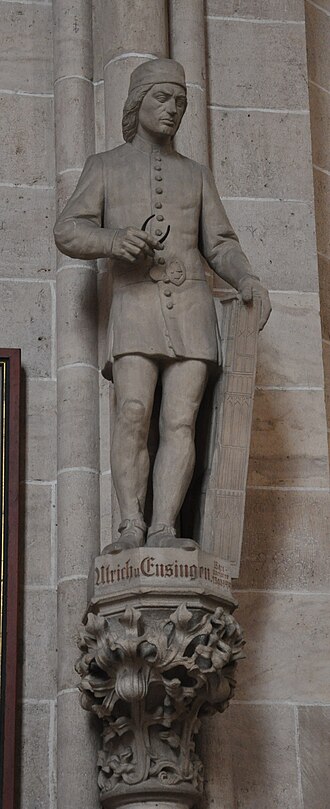
Contributions to European Cathedrals
Beyond Ulm, Ensingen's expertise in intricate stonework and geometry was sought after across borders. In France, he designed the elegant octagonal stage of the tower at the Strasbourg Cathedral. This section is particularly noted for its "cage" of intricate tracery—the ornamental stone openwork that supports the glass in Gothic windows and spires.
Later Career and Consultancies
In the final decades of his life, Ensingen continued to shape the ecclesiastical landscape of Germany. From 1398, he worked on the Frauenkirche in Esslingen, and from 1409, he contributed to the convent at Pforzheim.
His influence extended as far as Italy. Records indicate that in 1394, either Ulrich himself or his son, also named Ulrich, acted as a consultant for the construction of the Milan Cathedral, demonstrating the high regard in which the Ensingen architectural lineage was held.
Summary of Major Works
| Location | Structure | Contribution |
|---|---|---|
| Ulm, Germany | Ulm Minster | Plans for main spire and west porch |
| Strasbourg, France | Strasbourg Cathedral | Octagonal tower stage with intricate tracery |
| Esslingen, Germany | Frauenkirche | Architectural work (starting 1398) |
| Pforzheim, Germany | Convent at Pforzheim | Architectural work (starting 1409) |
| Milan, Italy | Milan Cathedral | Consultancy (1394) |
Frequently Asked Questions
What is Ulrich von Ensingen's most famous work?
His most famous contribution is the design of the main spire of the Ulm Minster, which is currently the tallest church tower in existence.
What is Sondergotik?
Sondergotik, or "Special Gothic," refers to a specific late Gothic architectural style prevalent in German-speaking lands, often featuring distinct spatial arrangements and ornamental details.
Did Ulrich von Ensingen finish the Ulm Minster tower?
No. While Ensingen conceived the plans and designed the tower and west porch, the upper stages were built by the architect Böblinger.
Where can we see Ensingen's work outside of Germany?
His work is visible in France at the Strasbourg Cathedral, where he designed the octagonal stage of the tower featuring intricate stone tracery.
Was he involved in the construction of the Milan Cathedral?
Yes, records suggest that either Ulrich or his son, also named Ulrich, served as a consultant for the Milan Cathedral in 1394.