Ulm University: A Hub of Interdisciplinary Research and Innovation
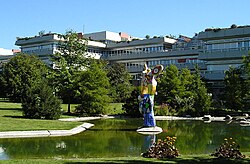
Founded in 1967, Ulm University (German: Universität Ulm) is a prominent public institution located in Ulm, Baden-Württemberg, Germany. As one of the youngest public universities in the country, it was established with a forward-thinking vision to break traditional academic silos and promote interdisciplinarity—the integration of multiple academic disciplines to solve complex problems.
The university focuses its academic strengths on the natural sciences, medicine, engineering, mathematics, economics, and computer science. Its main campus is situated on the Oberer Eselsberg hill, north of the city, while its extensive medical facilities are spread across various sites in Ulm.
Key Facts
- Established: 1967
- Motto: Sciendo – Docendo – Curando (Learning – Teaching – Healing)
- Student Population: 9,891 (Summer Semester 2018)
- Budget: €393.6 million
- Core Focus: Natural sciences, medicine, engineering, and computer science
- Global Standing: Ranked 193rd worldwide by Times Higher Education (2024)
Academic Structure and Organization
Ulm University is organized into four primary faculties, each managing its own set of specialized institutes and coordinating student services through their respective deans' offices:
- Faculty of Medicine: Closely associated with the University Hospital Ulm.
- Faculty of Engineering, Computer Science and Psychology
- Faculty of Natural Sciences
- Faculty of Mathematics and Economics
The Science Park and Industrial Synergy
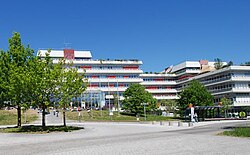
A defining feature of the university is the Ulm Science Park. This ecosystem integrates the university campus, the University Hospital, and various industrial research and development programs. By hosting research centers for global companies such as BMW, Daimler, and Siemens, the university bridges the gap between theoretical academic research and practical industrial application.
Research Excellence and Profile Areas
The university has strategically defined four profile areas to guide its research efforts:
- Green Energy: Focusing on sustainable power solutions.
- Quantum Technologies: Exploring the frontiers of physics and computing.
- Life Long Health: Advancing medical research and patient care.
- From Data to Knowledge: Leveraging informatics and data science.
Ulm University is a participant in the German Universities Excellence Initiative. It hosts the POLiS (Post Lithium Storage) Cluster of Excellency in collaboration with the universities of Gießen and Karlsruhe. Additionally, the university manages Collaborative Research Centers (Sonderforschungsbereiche), which are long-term interdisciplinary projects funded by the German Research Foundation (DFG). Current centers include SFB 1506 "Aging at Interfaces" and SFB/Transregio 234 focusing on light-driven molecular catalysts.
Internationalization and Global Reach
Ulm University has established itself as a global player through diverse English-taught programs and international partnerships. In 1998, it launched Germany's first International Masters program in English: the M.Sc. in Communication Technology (C-Tech). Other English-language offerings include Master's and PhD programs in molecular medicine, advanced materials, energy science and technology, finance, biology, and advanced oncology.
The university's global footprint extends to Egypt, where it helped found the German University in Cairo. Furthermore, it maintains over 100 bilateral agreements with partner universities across 19 European countries, facilitating robust student exchange via the ERASMUS program and other overseas partnerships in Canada, Australia, and the US.
The Albert Einstein Connection
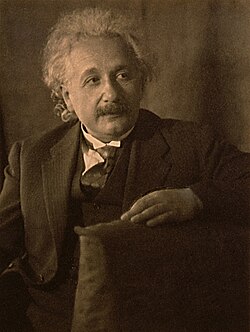
Because the legendary physicist Albert Einstein was born in Ulm in 1879, there have been repeated efforts to rename the institution in his honor. While the university senate voted to become the "Albert Einstein University of Ulm" in 2006, the state ministry did not confirm the change. Consequently, the university retains its original name, though the main campus is located on Albert-Einstein-Allee.
University Overview and Rankings
| Metric/Ranking | Global Position | National Position (Germany) |
|---|---|---|
| QS World University Rankings 2024 | 542 | 34 |
| Times Higher Education 2024 | 193 | 19-21 |
| ARWU World 2023 | 401–500 | 25–31 |
Frequently Asked Questions
What is the primary focus of Ulm University?
The university focuses on the natural sciences, medicine, engineering sciences, mathematics, economics, and computer science, with a strong emphasis on interdisciplinary research.
What is the Ulm Science Park?
The Science Park is a collaborative hub on the university campus that brings together public research, university hospitals, and industrial R&D centers from companies like Siemens, BMW, and Daimler.
Does Ulm University offer programs in English?
Yes, the university offers several English-taught programs, including the M.Sc. in Communication Technology, as well as degrees in finance, molecular medicine, biology, and advanced materials.
Why is the university not named after Albert Einstein?
Although the university senate approved the name change to Albert Einstein University of Ulm in 2006, the Ministry of Science, Research and Arts of the State of Baden-Württemberg did not confirm the decision.
What is the POLiS Cluster of Excellency?
POLiS (Post Lithium Storage) is a research cluster focused on the next generation of energy storage, conducted as part of the German Universities Excellence Initiative in partnership with the universities of Karlsruhe and Gießen.