Ulm University: A Hub of Innovation and Interdisciplinary Research
Founded in 1967, Ulm University (German: Universität Ulm) is a prominent public institution located in Ulm, Baden-Württemberg, Germany. As one of the youngest public universities in the country, it was established with a forward-thinking vision to modernize research and teaching through a strong emphasis on interdisciplinarity—the integration of multiple academic disciplines to solve complex problems.
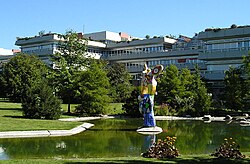
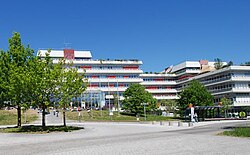
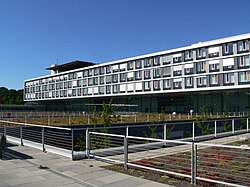
The university focuses its academic strengths on the natural sciences, medicine, engineering, mathematics, economics, and computer science. Its main campus is situated on the Oberer Eselsberg hill north of the city, while its medical facilities are distributed across various sites in Ulm.
Key Facts
- Established: 1967
- Motto: Sciendo – Docendo – Curando (Learning – Teaching – Healing)
- Student Population: 9,891 (Summer Semester 2018)
- Budget: €393.6 million
- Academic Staff: 2,469
- Global Ranking: Ranked 193rd worldwide by Times Higher Education (2024)
History and Evolution
Ulm University was created to provide a fresh approach to academia in a state known for its ancient institutions, such as the universities of Heidelberg, Freiburg, and Tübingen. Since its inception, the university has steadily expanded its subject offerings and grown in size.
A defining feature of the university's growth is the Ulm Science Park. This initiative bridges the gap between academic theory and industrial application by hosting research centers for global companies such as BMW, Daimler, and Siemens. This synergy is further supported by the German Research Foundation (DFG), which funds several Collaborative Research Centers (Sonderforschungsbereiche) at the university.
The Einstein Connection
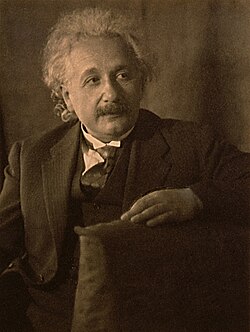
Because the legendary physicist Albert Einstein was born in Ulm in 1879, there were repeated efforts to rename the institution the "Albert Einstein University of Ulm." While the university senate approved this change in 2006, the Ministry of Science, Research and Arts of Baden-Württemberg did not confirm the decision. Consequently, the university retained its original name, though the main campus road was named Albert-Einstein-Allee in his honor.
Campus and Academic Structure
The university is organized into four primary faculties, each managing its own set of specialized institutes:
- Faculty of Medicine: Closely integrated with the University Hospital Ulm.
- Faculty of Engineering, Computer Science and Psychology
- Faculty of Natural Sciences
- Faculty of Mathematics and Economics
The Academy for Science, Industry and Technology
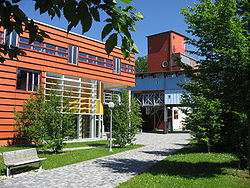
The university operates an academy that provides professional development and specialized training. Notable offerings include an 80-hour Special Pain Therapy course and programs in Commercial Mediation and Organizational Development. In 2008, the academy served 875 participants, with the Compact Seminar in Emergency Medicine being among the most popular.
Research Profile and Global Reach
Ulm University has identified four strategic profile areas to guide its research efforts:
- Green Energy: Including the POLiS (Post Lithium Storage) Cluster of Excellency.
- Quantum Technologies
- Life Long Health
- From Data to Knowledge
The institution is highly internationalized, offering several English-language Master's and PhD programs in fields such as Molecular Medicine, Finance, and Advanced Oncology. It also maintains a global footprint through its partnership in founding the German University in Cairo.
International Exchange and Rankings
The university maintains over 100 bilateral agreements with partner institutions across 19 European countries and various overseas destinations, particularly in Canada, Australia, and the US. This global outlook is reflected in its competitive rankings.
| Ranking Body | Global Rank | National Rank (Germany) |
|---|---|---|
| Times Higher Education (2024) | =193 | 19-21 |
| ARWU (2023) | 401–500 | 25–31 |
| QS World (2024) | 542 | 34 |
Frequently Asked Questions
Why is the university not named after Albert Einstein?
Although the university senate voted to rename the institution the Albert Einstein University of Ulm in 2006, the state Ministry of Science, Research and Arts of Baden-Württemberg did not approve the change. The university remains Ulm University, but its main street is named Albert-Einstein-Allee.
What is the Ulm Science Park?
The Ulm Science Park is a collaborative hub located on the university campus that integrates public and industrial research. It hosts research and development programs from the university, the University Hospital, and major corporations like Siemens and BMW.
Which research areas is Ulm University most known for?
The university focuses on four main profile areas: Green Energy (including post-lithium storage), Quantum Technologies, Life Long Health, and the transition from Data to Knowledge.
Does Ulm University offer programs in English?
Yes, the university offers several English-taught programs, including the M.Sc. in Communication Technology (the first of its kind in Germany), as well as Master's and PhD programs in Molecular Medicine, Finance, Biology, and Advanced Materials.