Ulm School of Design: The Evolution of the Ulm Model
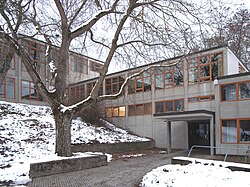
The Ulm School of Design (Hochschule für Gestaltung Ulm, or HfG) was a pioneering college of design in Ulm, Germany, that operated from 1953 to 1968. Founded by Inge Aicher-Scholl, Otl Aicher, and Max Bill, the institution sought to redefine the role of the designer in a post-war society. While it drew inspiration from the Bauhaus, the HfG moved beyond the integration of art and craft to embrace a holistic, multidisciplinary approach that integrated sociology, psychology, economics, and systems-thinking into the design process.
The school is globally recognized for establishing the Ulm Model, a structured, scientific approach to design education that shifted the focus from the individual artistic expression of the designer to a rigorous, problem-solving methodology. This legacy continues to influence international industrial design and design management today.
Key Facts

- Founded: 1953 by Inge Aicher-Scholl, Otl Aicher, and Max Bill.
- Duration: Operated for 15 years until its closure in 1968.
- Core Philosophy: Transitioned from the "form-giving" artistic approach of the Bauhaus to a scientific, analytical methodology.
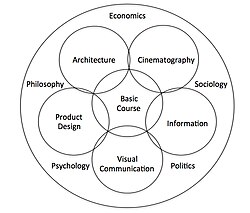
- Key Departments: Product Design, Visual Communication, Industrialized Building, Information, and Filmmaking.
- Major Contribution: Developed the "Ulm Model," integrating semiotics (the study of signs and symbols) and ergonomics into design.
- Notable Partnership: Collaborated with Braun to create a coherent, "honest" corporate product identity.
Historical Foundations and Political Context

The HfG emerged during the reconstruction of West Germany following World War II. It was an initiative of the Scholl Foundation, established by Inge Scholl in memory of her siblings, Sophie and Hans Scholl, members of the anti-Nazi resistance group "White Rose." The school was envisioned as a research and teaching institution to foster humanistic education and link creative activity to the moral and cultural reconstruction of German society.
Funding was provided in part by John McCloy of the American High Command for Germany. The school opened in 1953 with Max Bill, a former Bauhaus student, as its first rector. The faculty included Bauhaus veterans like Josef Albers and Johannes Itten, as well as influential figures such as Tomás Maldonado and Otl Aicher. The institution also hosted world-renowned visiting lecturers, including Walter Gropius, Mies van der Rohe, and Buckminster Fuller.
The HfG Campus and Architecture

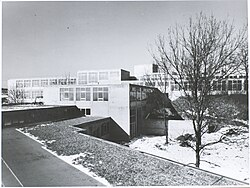
The school's physical environment was as progressive as its curriculum. Designed by Max Bill and inaugurated on October 2, 1955, the HfG building was one of Germany's first reinforced concrete structures. The complex featured spacious workshops, dormitories, and a cafeteria, with interiors designed for maximum flexibility to support the school's experimental nature.
Curriculum and Academic Structure

The HfG implemented a rigorous four-year program designed to move students from foundational creative skills to specialized professional application.
The Basic Course (Vorkurs)
Every student began with a mandatory one-year Basic Course. This phase was intended to address deficits in primary and secondary creative education, focusing on hands-on experience in workshops involving wood, metal, plastics, and photography.
Specialization Departments
Following the basic course, students chose one of several specialties:
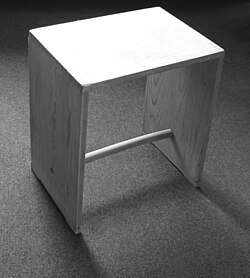
- Product Design: This department radically shifted industrial design away from purely artistic views toward science, technology, and ergonomics (the study of people's efficiency in their working environment).
- Visual Communication: Originally called Visual Design, this department focused on mass media, traffic sign systems, and the visual translation of scientific content.
- Industrialized Building: Focused on the systemic approach to architecture and construction.
- Information: A specialized field that operated until 1962.
- Filmmaking: Initially part of Visual Communication, it became an independent department in 1962.

The Shift to the "Ulm Model"
The school's history was marked by an internal ideological struggle between two primary approaches to design. Max Bill advocated for the "heroic" Bauhaus tradition, where the designer acted as a "form-giver" blending art and technology.
However, under the leadership of Tomás Maldonado and other theorists, the school shifted toward a more analytical methodology. This new approach, which became known as the Ulm Model, emphasized business analysis, sociology, and psychology. It sought a balance between art and science, utilizing semiotics to ensure that products and communications were logically structured and universally understood.

Industry Collaboration: The Braun Partnership
One of the most successful applications of the Ulm Model was the collaboration with the company Braun. Working with designers like Otl Aicher, Hans Gugelot, and Dieter Rams, the HfG helped develop the "Braun style." Unlike other companies that sought variety, Braun and HfG pursued unity and coherence across their entire product line, creating "honest" forms that avoided superficial styling in favor of functional clarity.

Closure and Lasting Legacy
Despite its international prestige, the HfG was plagued by internal conflicts over its curriculum and governance. These disputes led to public criticism and political tension with the Parliament of Baden-Wuerttemberg. After the government withdrew federal subsidies, the school's financial situation became untenable, leading to its closure in 1968.
Despite its short lifespan, the HfG's influence was profound. It pioneered the integration of science and art in design education, establishing the foundations for modern design management. The school's buildings remain a preserved heritage site under the Foundation Ulm.
| Year | Focus | Key Objectives |
|---|---|---|
| Year 1 | Basic Course (Vorkurs) | Foundational creative projects and workshop skills. |
| Years 2 & 3 | Specialization | Deep dive into Product Design, Visual Communication, Building, Information, or Film. |
| Year 4 | Thesis | Implementation of new design approaches through a final project. |

Frequently Asked Questions
How did the Ulm School of Design differ from the Bauhaus?
While the Bauhaus focused on integrating art, craft, and technology through the lens of the artist-designer as a "form-giver," the Ulm School of Design moved toward a more scientific and analytical approach. It integrated sociology, psychology, and systems-thinking, prioritizing a structured problem-solving methodology over individual artistic expression.
What is the "Ulm Model"?
The Ulm Model is a design education approach that emphasizes a systematic, multidisciplinary methodology. It combines technical knowledge of materials and production with scientific analysis, ergonomics, and semiotics to create functional, coherent, and user-centered designs.
Why did the HfG Ulm close in 1968?
The school closed due to a combination of internal conflicts regarding the curriculum and the subsequent withdrawal of financial subsidies by the Regional Parliament of Baden-Wuerttemberg, which made the institution's operation financially impossible.
What was the significance of the HfG's work with Braun?
The collaboration with Braun served as a real-world test for the Ulm Model. It resulted in the "Braun style," characterized by a coherent identity and "honest" functional forms, moving away from the trend of random "styling" of individual objects toward a unified product ecosystem.
Who were the most influential figures at the school?
Key figures included the founders Max Bill and Otl Aicher, as well as rector Tomás Maldonado. The school also benefited from the influence of visiting lecturers like Walter Gropius and the collaboration of industrial designers like Dieter Rams.