Otl Aicher: The Visionary of Modern German Graphic Design
Otl Aicher was a titan of 20th-century visual communication, whose work redefined how humans interact with information in public spaces. A German graphic designer and typographer, Aicher combined a rigorous mathematical approach with a deep commitment to clarity and functionality. From co-founding one of Europe's most influential design schools to creating the universal visual language of the Olympic Games, his legacy continues to shape modern corporate design—the practice of creating a consistent visual identity for an organization.
Key Facts
- Full Name: Otto "Otl" Aicher (1922–1991).
- Major Achievement: Lead designer for the 1972 Munich Summer Olympics.
- Educational Legacy: Co-founder of the Ulm School of Design.
- Typographic Contribution: Creator of the Rotis typeface.
- Global Impact: Developed the pictogram system that influenced the US Department of Transportation (DOT) signage.
Early Life and Resistance
Born on May 13, 1922, in Ulm, Württemberg, Aicher's early life was marked by a strong moral opposition to the Nazi regime. He developed a close friendship with the Scholl family, including Hans and Sophie Scholl, members of the White Rose resistance movement. Due to his refusal to join the Hitler Youth, Aicher was arrested in 1937 and subsequently failed his abitur (college entrance examination) in 1941.
Drafted into the German army during World War II, Aicher attempted to leave the service multiple times before eventually deserting in 1945. He spent the final period of the war in hiding at the Scholl residence in Wutach. Following the war, he pursued his artistic passions, studying sculpture at the Academy of Fine Arts Munich before establishing his own studio in Ulm in 1947.
The Ulm School of Design and Corporate Identity
In 1953, Aicher co-founded the Ulm School of Design (Hochschule für Gestaltung Ulm) alongside Max Bill and Inge Scholl. The institution became a premier center for design education until 1968, attracting notable figures such as Tomás Maldonado and Anthony Froshaug. At Ulm, Aicher helped pioneer the concept of corporate identity, applying systematic design principles to help companies communicate their values visually.
His influence is most evident in the early branding of global giants like Braun and Lufthansa, where he emphasized minimalism and efficiency over ornamentation.
The 1972 Munich Olympics: A Masterclass in Visual Systems
Aicher's most globally recognized work came in 1966 when he was appointed lead designer for the 1972 Summer Olympics in Munich. His goal was to create a visual identity that harmonized with the stadium's architecture, designed by Günther Behnisch. To achieve this, Aicher developed a comprehensive system of pictograms—simplified graphic symbols used to communicate meaning across language barriers.
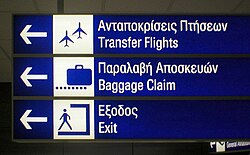
Using a strict grid system and a bright, specific color palette, Aicher created icons for various sports that were universally understood. This system was so effective that it directly influenced the 1974 DOT pictograms used by the United States Department of Transportation for public signage, such as telephones and restrooms.
The Logo and Color Theory
The Olympic logo, known as the Strahlenkranz (garland), was the result of an iterative process. While early concepts explored the city's coat of arms or local landscapes, the final design merged a sun-like garland with a spiral shape, refined through mathematical calculations by designer Coordt von Mannstein.
The color palette was inspired by the tones of the Alps, utilizing blue, white, green, orange, and silver. These colors were not merely aesthetic; they served a functional purpose, identifying different themes such as media, technical services, and hospitality. This color-coding extended to staff uniforms, allowing visitors to easily identify personnel by department.
Typography and Promotion
Aicher selected the Univers typeface for the Games' communications. His team produced 21 sports posters using a technique called "posterization," which manually separated tonal qualities to create bold, graphic images in the official Olympic colors. These were displayed alongside works by renowned artists like David Hockney and R. B. Kitaj. Additionally, Aicher created the first official Olympic mascot: Waldi, a striped dachshund.
Later Career and the Rotis Typeface
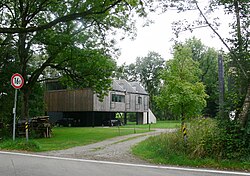
In his later years, Aicher continued to apply his systematic approach to various projects. In 1980, he became a consultant for the kitchen manufacturer Bulthaup. In 1988, he developed the Rotis font family, named after his home and studio near Leutkirch im Allgäu. The typeface remains in use by Bulthaup today.

Aicher also lent his expertise to the branding of the University of Konstanz and the Munich Airport. His intellectual curiosity extended to writing, producing works such as The World as Design (1991) and Critique of the Automobile (1984).

Summary of Otl Aicher's Contributions
| Category | Key Project/Contribution | Impact/Significance |
|---|---|---|
| Education | Ulm School of Design | Pioneered modern design education in Germany. |
| Events | 1972 Munich Olympics | Created universal pictograms and a systematic visual identity. |
| Typography | Rotis Typeface | A custom font family used in high-end corporate branding. |
| Corporate | Braun & Lufthansa | Early pioneer of comprehensive corporate identity systems. |
| Mascots | Waldi the Dachshund | The first official mascot of the Olympic Games. |
Frequently Asked Questions
What are Aicher's pictograms?
They are a system of simplified, grid-based graphic symbols created for the 1972 Munich Olympics to communicate sports and directions universally, regardless of the viewer's language.
What is the Rotis typeface?
Rotis is a font family designed by Aicher in 1988, named after the location of his studio in Rotis, near Leutkirch im Allgäu.
How did Aicher influence the US Department of Transportation?
The principles Aicher used for his Olympic pictograms were adopted by the US DOT in 1974 to create standardized public signage for facilities like toilets and telephones.
What was Aicher's role at the Ulm School of Design?
Aicher was a co-founder and teacher at the school, which became one of Germany's most influential centers for design education between 1953 and 1968.
How did Aicher die?
Otl Aicher passed away on September 1, 1991, after being struck by a motorbike while mowing the grass at his home in Rotis.