Turkish Language: History, Structure, and Evolution
Turkish is a prominent member of the Turkic language family, specifically belonging to the Oghuz branch of Common Turkic. With approximately 91 million speakers worldwide—including 85 million native speakers—it serves as the official language of Turkey, Northern Cyprus, and Cyprus. Beyond these borders, it is recognized as a minority language in several nations across the Balkans, the Middle East, and Central Asia.
From its early forms in Old Anatolian Turkish to the complex administrative style of the Ottoman era, the language has undergone significant transformations to meet the needs of a modernizing state.
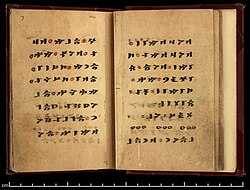
Key Facts
- Total Speakers: Approximately 91 million (L1: 85 million; L2: 6.1 million).
- Family: Turkic → Common Turkic → Oghuz → Western → Turkish.
- Official Status: Official in Turkey, Northern Cyprus, and Cyprus.
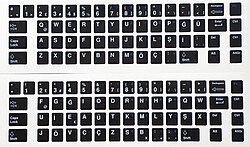
- Writing System: Latin-based Turkish alphabet (since 1928).
- Regulating Body: Turkish Language Association.
Historical Evolution and Language Reform
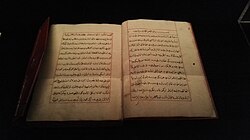
The trajectory of the Turkish language is marked by a dramatic shift from Ottoman Turkish to Modern Turkish. Ottoman Turkish was characterized by a heavy influence of Arabic and Persian loanwords, often used in legal, religious, and literary contexts.
In the early 20th century, a sweeping language reform was implemented to purify the language and make it more accessible to the general population. This involved replacing Arabic-derived terms with native Turkic roots or newly coined words. For example, the Arabic-derived müselles (triangle) was replaced by üçgen, a compound of üç (three) and the suffix -gen.
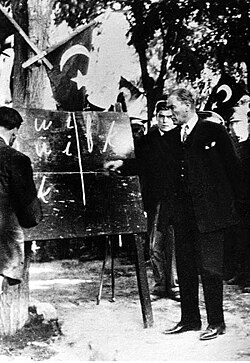
A pivotal moment in this evolution occurred on September 20, 1928, when Mustafa Kemal Atatürk introduced the new Latin-based alphabet, replacing the Arabic script to increase literacy and align the nation with Western linguistic standards.
Geographic Distribution and Dialects
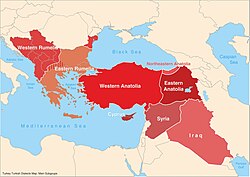
Turkish is spoken across a vast region spanning Anatolia, the Balkans, Cyprus, Mesopotamia, the Levant, and Transcaucasia. While Istanbul Turkish serves as the standard form, several distinct dialects exist, including:
- Cypriot Turkish
- Iraqi Turkmen
- Meskhetian Turkish
- Rumelian Turkish
- Syrian Turkish
Linguistic Structure and Phonology
Vowel Harmony
One of the most defining features of Turkish is vowel harmony. This is a phonological process where the vowels in a word must belong to the same class (front or back). Grammatical affixes possess a "chameleon-like quality," changing their vowels to match the root word they attach to.
![Vowels of Turkish.[54]](/images/ad/8e/ad8e154b77ba6deb0c785effb720cb64dd90e7b3a4fb3163cd7d86ae953d9a59.png)
However, there are exceptions to this rule, such as native compound words (e.g., bugün meaning "today") and certain invariable suffixes like -yor (used for the present continuous tense).
Consonants and Word Accent
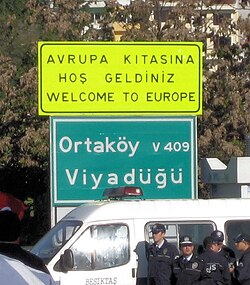
Turkish employs a variety of labial, dental, palatal, and velar consonants. A notable feature is consonant alternation, where certain consonants soften when a vowel is added (e.g., the /k/ in viyadük becomes /ğ/ in viyadüğü).
Syntax and Grammar
Turkish is primarily a Subject-Object-Verb (SOV) language, though word order can shift to SVO or OVS to change the focus of the sentence. It is an agglutinative language, meaning it builds complex meanings by adding multiple suffixes to a root word.
The language does not have grammatical gender. Instead, it uses a system of cases to define the role of a noun in a sentence:
| Case | Ending | Example (köy - village) | Meaning |
|---|---|---|---|
| Nominative | ∅ | köy | the village |
| Accusative | -ü / -ı | köyü | the village (object) |
| Genitive | -ün / -ın | köyün | of the village |
| Dative | -e / -a | köye | to the village |
| Locative | -de / -ta | köyde | in/at the village |
| Ablative | -den / -tan | köyden | from the village |
Vocabulary and Word Formation
Turkish is highly productive in its word formation. By adding suffixes to a root, a single word can evolve through various classes. For instance, starting with göz (eye), the language can derive gözlük (eyeglasses), gözlükçü (optician), and gözlemci (observer).
The language also creates descriptive compound words, such as bilgisayar (computer), which literally translates to "information counter" (bilgi + say-).
Frequently Asked Questions
Does Turkish have masculine or feminine nouns?
No, Turkish has no grammatical gender. There are no gender-specific pronouns; the word o can mean he, she, or it.
What is vowel harmony?
Vowel harmony is a rule where vowels within a word must be consistent in terms of backness (front vs. back) and sometimes rounding, ensuring a melodic flow to the speech.
How did the writing system change?
Turkish transitioned from the Arabic script to a modified Latin alphabet in 1928 as part of a broader modernization and literacy campaign led by Atatürk.
What is the difference between Ottoman Turkish and Modern Turkish?
Ottoman Turkish contained a high percentage of Arabic and Persian vocabulary and used the Arabic script. Modern Turkish is more streamlined, uses the Latin alphabet, and prioritizes native Turkic roots.
Is Turkish related to other languages?
Yes, it is part of the Turkic language family, making it related to languages such as Azerbaijani, Kazakh, Kyrgyz, and Turkmen.