Turkey Vulture
The Turkey Vulture (Cathartes aura) is one of the most successful and widely distributed raptorial birds in the Americas. Known for its role as a primary scavenger, this species plays a critical ecological role by cleaning up carrion across a vast geographical range. From the forests of southern Canada to the tip of Cape Horn, the turkey vulture is a common sight in open and semi-open landscapes.
With a global population estimated at 18 million individuals, it rivals the black vulture in abundance. While many are permanent residents of the southern United States, northern populations are known to migrate as far south as South America to escape harsh winters.

Key Facts
- Scientific Name: Cathartes aura
- Conservation Status: Least Concern (IUCN 3.1)
- Global Population: Approximately 18,000,000 individuals
- Distribution Range: Roughly 28,000,000 km² across the Americas
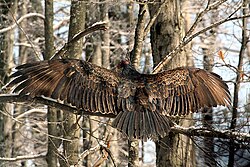
- Wingspan: 1.5 to 2 meters (4.9 to 6.6 feet)
- Lifespan: Capable of living over 50 years in captivity
Taxonomy and Subspecies
The turkey vulture belongs to the family Cathartidae. Within the species Cathartes aura, scientists recognize five distinct subspecies based on their distribution and physical characteristics:
| Subspecies | Common Name | Distribution |
|---|---|---|
| C. a. aura | Antillean turkey vulture | Caribbean/Antilles |
| C. a. jota | Chilean turkey vulture | Chile |
| C. a. meridionalis | Western turkey vulture | Western Americas |
| C. a. ruficollis | Tropical turkey vulture | Tropical regions |
| C. a. septentrionalis | Eastern turkey vulture | Eastern North America/Canada |
Physical Description
The turkey vulture is a large bird with a body length of 62–81 cm and a weight ranging from 0.8 to 2.41 kg. Interestingly, birds found at the northern limits of their range tend to be larger than those in the neotropics. For example, birds in Florida average around 2 kg, while those in Venezuela average between 1.22 and 1.45 kg.
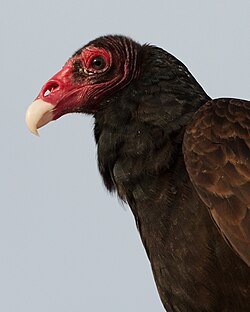
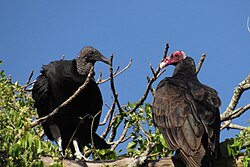
The species exhibits minimal sexual dimorphism, meaning males and females are nearly identical in size, plumage, and color. Their body feathers are primarily brownish-black, though the underside of the flight feathers appears silvery-gray. The most striking feature is the small, red, featherless head and a short, ivory-colored hooked beak.
Specialized Anatomy
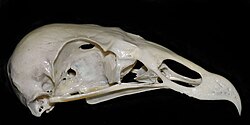
One of the most unique anatomical features of the turkey vulture is its perforate nostrils. Unlike many birds, their nostrils are not divided by a septum; instead, they are open, allowing one to see through the beak from a side view.
Their feet are flat and relatively weak, featuring an anisodactyl toe arrangement (three toes forward, one back). Because they are scavengers rather than hunters, their talons are blunt and not designed for grasping prey. Their legs and feet are pink-skinned, though they often appear stained white.
Growth and Longevity
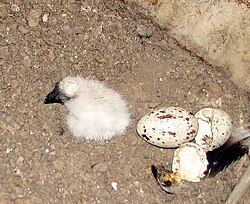
Immature birds possess a gray head and a black beak tip, which transition to adult colors as they mature. While wild longevity is harder to track, captive records show impressive lifespans. A male named Lord Richard, living at the Lindsay Wildlife Experience in California, reached 51 years of age as of 2025. Another vulture, Nero, lived to be 47 years old.
Comparison with the Black Vulture
The turkey vulture is often confused with the black vulture. While their body masses are similar, the turkey vulture has a longer tail and longer wings, making it appear larger during flight. The black vulture is more compact in appearance.
Legal Protection and Conservation
The turkey vulture is currently listed as a species of Least Concern by the IUCN Red List, as its population remains stable. However, it is strictly protected by law in several countries to ensure its continued survival.
- United States: Protected under the Migratory Bird Treaty Act of 1918.
- Canada: Protected by the Convention for the Protection of Migratory Birds.
- Mexico: Protected by the Convention for the Protection of Migratory Birds and Game Mammals.
In the U.S., it is illegal to kill, possess, or take parts of these birds (including feathers) without a permit. Violations can result in significant fines—up to $100,000 for individuals and $200,000 for organizations—and potential imprisonment.
Frequently Asked Questions
How can you tell a turkey vulture apart from a black vulture in flight?
The turkey vulture generally appears larger in flight due to its longer wings and longer, slimmer tail compared to the shorter-winged and shorter-tailed black vulture.
What is unique about the turkey vulture's beak?
The turkey vulture has perforate nostrils, meaning there is no septum dividing the nostrils. This allows a person to see through the beak when viewing the bird from the side.
Are turkey vultures endangered?
No, they are classified as Least Concern by the IUCN. Their populations are stable and they are widely distributed across the Americas.
Do turkey vultures migrate?
While they are permanent residents in the southern United States, birds from northern regions may migrate as far south as South America.
What is the maximum known lifespan of a turkey vulture?
In captivity, they can live over 50 years. A documented male named Lord Richard reached the age of 51.