Tuberculosis: History, Diagnosis, and Global Treatment Strategies
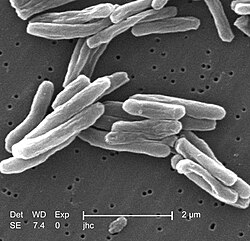
Tuberculosis (TB), historically known as consumption, the white death, or the great white plague, is a formidable infectious disease caused by the bacterium Mycobacterium tuberculosis. While it primarily affects the lungs, this pathogen can spread to other parts of the body, making it a complex challenge for pulmonology and infectious disease specialists worldwide.
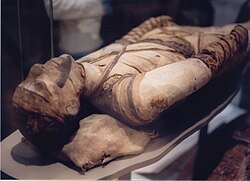
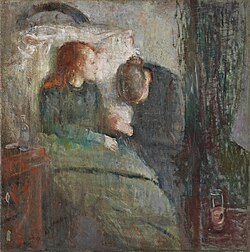
Despite centuries of medical advancement, TB remains a significant global health threat. In 2024, an estimated 10.7 million new infections occurred, resulting in approximately 1.23 million deaths annually. The disease's long history is etched into human records, from ancient Egyptian mummies showing spinal decay to the poignant art of Edvard Munch, who depicted the illness that claimed his mother and sister.
Key Facts
- Causative Agent: Mycobacterium tuberculosis.
- Primary Symptoms: Chronic cough, fever, weight loss, and coughing up bloody mucus.
- Global Impact: 10.7 million new cases and 1.23 million deaths per year (2024).
- Prevention: BCG vaccination and screening of high-risk populations.
- Treatment: Long-term courses of antibiotics.
- Critical Risk Factor: Immunodeficiency significantly increases susceptibility.
The History and Identification of TB
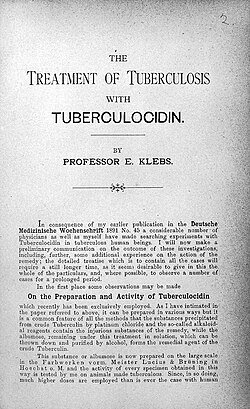
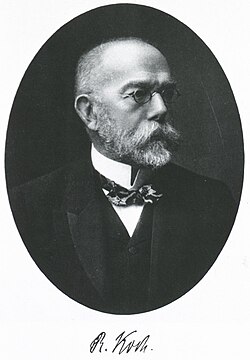
The identification of the tuberculosis bacillus was a turning point in medical history, led by the work of Robert Koch. Before the advent of modern antibiotics, TB was a leading cause of death, often romanticized in literature and art but devastating in reality.
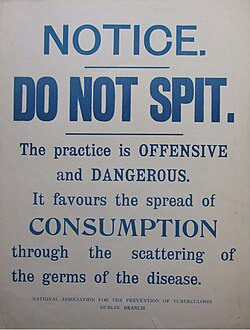
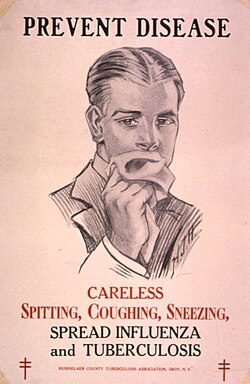
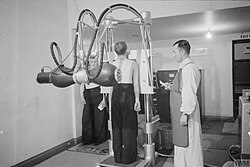
Early public health efforts in the early 20th century focused on screening and isolation. In the 1920s and 1940s, massive campaigns were launched to halt the spread, including screening programs for the Royal Navy and the use of phototherapy in countries like Finland.

Understanding the Disease: Latent vs. Active TB
![Age-standardized disability-adjusted life years caused by tuberculosis per 100,000 inhabitants, 2004:[159] no data ≤10 10–25 25–50 50–75 75–100 100–250 250–500 500–750 750–1000 1000–2000 2000–3000 ≥ 3000](/images/98/b7/98b7e4e899a964e9a9239e6aa3a62f74214bb5032cddd884f9628f8c48ffd559.webp)
Tuberculosis manifests in two primary forms: Latent TB Infection and Active TB Disease. In latent TB, the bacteria remain in the body but are kept under control by the immune system. People with latent TB are asymptomatic and cannot spread the bacteria to others.
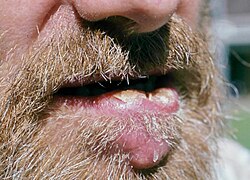
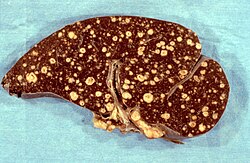
Active TB occurs when the bacteria multiply and destroy tissue. While pulmonary TB (affecting the lungs) is the most common form, the disease can become extrapulmonary, affecting the spleen, lips, or spine.
![The main symptoms of variants and stages of tuberculosis are given,[5] with many symptoms overlapping with other variants, while others are more, but not entirely, specific for certain variants.](/images/15/27/1527cbc06cce2e7a47da9e9e828ddc2cdf679487f7856167dedbda6b559c08fa.webp)
Transmission and Risk Factors
TB is an airborne infection transmitted through droplets when an infected person coughs or sneezes. Certain factors increase the risk of contracting the disease or progressing from latent to active TB:
- Immunodeficiency: Weakened immune systems (such as those caused by HIV) are the primary risk factor.
- Close Contact: Prolonged exposure to individuals with active pulmonary TB.
- Environmental Factors: Overcrowding and malnutrition.
Diagnosis and Detection
Early and accurate diagnosis is critical to preventing transmission and improving patient outcomes. Doctors use a combination of screening and confirmatory tests.
Screening Tests
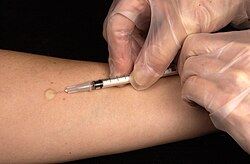
- Mantoux Skin Test: An injection of PPD tuberculin just below the skin of the forearm to check for an immune response.
- Interferon-Gamma Release Assay (IGRA): A blood test that measures the immune system's response to M. tuberculosis.
Confirmatory Diagnostics
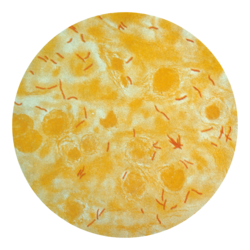
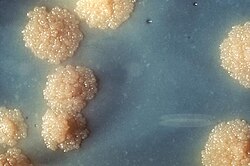
Once a screening test is positive, further investigation is required to determine if the disease is active. This includes Chest X-rays (CXR) to look for lung lesions and microbiological studies, such as sputum samples stained to identify the red-colored bacteria.
Treatment and the Challenge of Drug Resistance
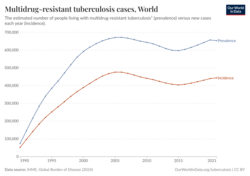
Drug-susceptible TB is treated with a regimen of antibiotics. However, the emergence of Drug-Resistant TB (DR-TB) has complicated global efforts. This includes Multidrug-resistant TB (MDR-TB) and Extensively drug-resistant TB (XDR-TB).
For resistant strains, advanced combinations like BDLLfxC (bedaquiline, delamanid, and linezolid combined with levofloxacin or clofazimine) are utilized. Adherence to these long-term treatments is vital to prevent further resistance.
Prevention and Global Public Health
Prevention focuses on a hierarchy of controls to stop airborne transmission and the use of the Bacillus Calmette-Guérin (BCG) vaccine, first administered to humans in 1921.
The World Health Organization (WHO) has implemented strategies to eliminate TB by 2035. These efforts are supported by national programs, such as India's National TB Elimination Programme and the End TB Transmission Initiative (ETTi).
![Between 1995 and 2015, the World Health Organization formulated 3 strategies for the control and ultimately the elimination of tuberculosis, with a target date of 2035. This diagram charts how these are linked and build on each other.[238]](/images/fc/54/fc54ab9c566243f7679ba993355eb95c0a0d67dc2fa227f943d1cd46d35722de.jpg)
![Global tuberculosis rates per 100,000 population, from 2010 to 2023. Shaded areas represent 95% uncertainty intervals.[97]](/images/11/78/1178ea1964a493e1beb59505ff32f19769b9e9e3c8de3d07ebb37ad543985c60.png)
Summary of Tuberculosis Overview
| Category | Details |
|---|---|
| Causative Agent | Mycobacterium tuberculosis |
| Primary Symptoms | Chronic cough, bloody mucus, fever, weight loss |
| Key Diagnostics | Mantoux test, IGRA, Chest X-ray, Sputum culture |
| Primary Prevention | BCG Vaccine, airborne infection control |
| Treatment | Antibiotics (Standard or DR-TB specific regimens) |
| Global Target | Elimination by 2035 (WHO Strategy) |
Frequently Asked Questions
What is the difference between latent TB and active TB?
Latent TB occurs when the bacteria remain dormant in the body; the person has no symptoms and cannot infect others. Active TB occurs when the bacteria multiply and cause disease, leading to symptoms and the ability to spread the infection.
How is tuberculosis transmitted?
Tuberculosis is an airborne disease. It spreads when a person with active pulmonary TB releases bacteria into the air through coughing, sneezing, or speaking, which are then inhaled by others.
What is the BCG vaccine?
The Bacillus Calmette-Guérin (BCG) vaccine is a vaccine used to prevent tuberculosis. It was first administered to humans in 1921 and is primarily used in countries with a high prevalence of the disease.
What is MDR-TB?
MDR-TB stands for Multidrug-resistant tuberculosis. It refers to strains of M. tuberculosis that are resistant to at least the two most powerful first-line anti-TB drugs, requiring more complex and longer treatment regimens.
Can TB affect organs other than the lungs?
Yes. While pulmonary TB is most common, the bacteria can travel through the bloodstream to other organs, causing tuberculosis of the spine, spleen, lymph nodes, or even the skin and lips.