Trumpet: History, Construction, and Evolution of the Brass Icon
The trumpet is one of the most recognizable instruments in the world, known for its brilliant, piercing tone and commanding presence. As a member of the brass family, it is technically classified as an aerophone—an instrument that produces sound by vibrating a column of air. While modern audiences associate the trumpet with jazz clubs and symphony orchestras, its origins are far more utilitarian, beginning as a tool for communication and signaling.
Sound is produced when a player vibrates their lips against a cup-shaped mouthpiece, creating a standing wave within the instrument's tubing. Since the late 15th century, these instruments have primarily been crafted from brass tubing, typically bent into a rounded rectangular shape to make them manageable for the performer.

Key Facts
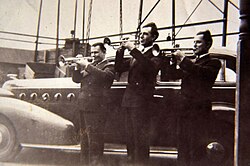
- Common Pitch: The most standard trumpet is pitched in B&flat, with a tubing length of approximately 1.48 meters.
- Classification: A valved aerophone sounded by lip vibration (Hornbostel–Sachs 423.233).
- Core Mechanism: Modern trumpets use valves to change the length of the tubing, allowing for a fully chromatic range.
- Historical Use: Originally used for military and religious signaling before evolving into a musical instrument.
- Versatility: Used across diverse genres including classical, jazz, concert bands, and popular music.
The Evolution of the Trumpet
Ancient Origins and Signaling
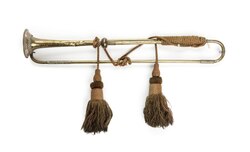
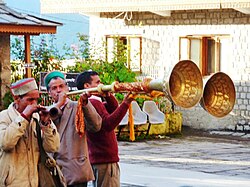
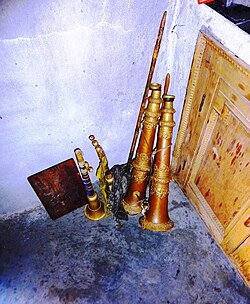
Trumpet-like devices date back to the 2nd Millennium BC. Early examples include the bronze and silver trumpets found in the tomb of Tutankhamun in Egypt, as well as metal trumpets from China and bronze lurs from Scandinavia. In Central Asia, the Oxus civilization created trumpets from a single sheet of metal with decorated swellings, a significant technical achievement for the 3rd millennium BC.
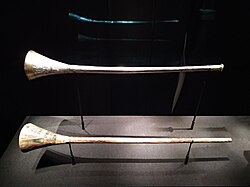
Other ancient cultures utilized similar instruments for communication. The Greeks used the Salpinx, a straight bone or bronze trumpet, while the Bible mentions the Shofar (made from a ram's horn) and the chazozra (made of metal). In ancient Peru, the Moche people depicted trumpets in their art as early as AD 300. During this era, these instruments were primarily used for military or religious signaling rather than artistic music.
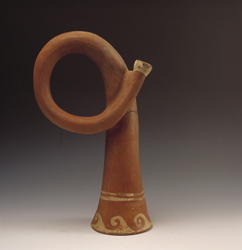
The Natural Trumpet and the Baroque Era
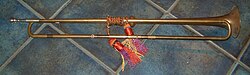
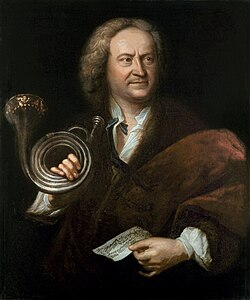
By the late Middle Ages and Renaissance, improvements in metallurgy allowed the trumpet to transition into a musical instrument. These "natural trumpets" lacked valves and could only play notes within a single overtone series. To change keys, players had to swap out sections of tubing called crooks.
The Baroque era marked the "Golden Age of the natural trumpet." Virtuoso players developed the clarino register—a high range that allowed for more melodic flexibility. This period saw a vast amount of music written specifically for these skilled performers.
The Modern Valved Trumpet
The limitations of the natural trumpet often relegated the instrument to a secondary role during the Classical and Romantic periods. This changed with the invention of valves, which allowed the trumpet to become fully chromatic, meaning it could play all twelve pitches of the Western scale without changing instruments.
Construction and Technical Mechanics
Valve Systems
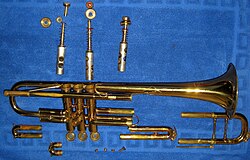
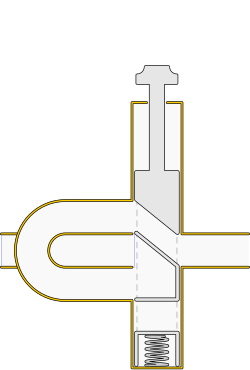
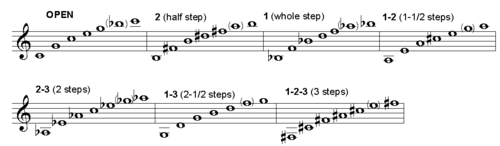
Most modern trumpets feature three valves, though some have four. Each valve increases the length of the tubing when depressed, which lowers the pitch:
- First Valve: Lowers the pitch by a whole step (two semitones).
- Second Valve: Lowers the pitch by a half step (one semitone).
- Third Valve: Lowers the pitch by one and a half steps (three semitones).
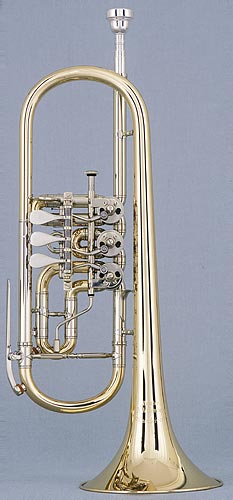
There are two primary types of valves: piston valves, which are the most common, and rotary valves, which are frequently used in German-style orchestras.
Trumpet Varieties
While the B&flat trumpet is the standard, several variations exist to suit different musical needs:
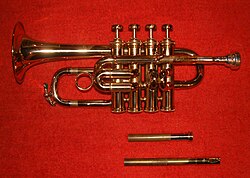
- Piccolo Trumpet: Pitched an octave higher than the standard trumpet.
- Bass Trumpet: Pitched an octave lower (usually in B&flat or C).
- Trumpet in C: Often used in orchestral settings.
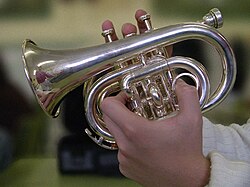
- Pocket Trumpet: A compact version with tightly coiled tubing.
- Flumpet: A hybrid between a trumpet and a flugelhorn.
Summary of Trumpet Specifications
| Type | Typical Pitch | Key Characteristic | Common Use |
|---|---|---|---|
| Standard Trumpet | B&flat | Cylindrical bore, ~1.48m length | General purpose, Jazz, Band |
| Piccolo Trumpet | B&flat | Octave higher than standard | High-register Baroque music |
| Bass Trumpet | B&flat or C | Octave lower than standard | Orchestral depth |
| Cornet | B&flat | Conical bore | Brass bands, Early Jazz |
Playing Techniques and Artistry
Fingering and Intonation
Trumpeters produce different notes by combining valve presses and adjusting their embouchure (the way the lips are applied to the mouthpiece). Because the harmonic series is not perfectly in tune with modern equal temperament, players often extend the third valve slide to improve intonation when using specific fingerings.
Mutes and Extended Techniques
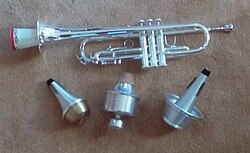
To alter the timbre or volume, players use mutes. Common types include the straight mute, cup mute, and the wah-wah (harmon) mute.
Contemporary music also employs extended techniques, such as growling (vibrating the uvula while playing) and multi-phonics (humming one note while playing another).
Legendary Figures of the Trumpet
The instrument's evolution is mirrored by the artists who mastered it. In early jazz, Louis Armstrong shifted the focus from the cornet to the trumpet, establishing the instrument's dominance. Dizzy Gillespie expanded the harmonic complexity and range of the instrument, while Miles Davis became one of the most influential musicians of the 20th century through his innovative phrasing and use of space.
In the realm of high-register playing, Cat Anderson and Maynard Ferguson pushed the physical limits of the instrument, achieving extreme volume and accuracy in the highest registers.
Frequently Asked Questions
What is the difference between a trumpet and a cornet?
The primary difference is the bore shape. A trumpet has a cylindrical bore, which contributes to its brighter, more piercing sound, while a cornet has a conical bore, resulting in a mellower, rounder tone.
Why are there different pitches like B&flat and C?
Different pitches allow the instrument to blend better with other instruments in an ensemble or to play in specific keys more easily. The B&flat trumpet is the most versatile and common for students and jazz musicians.
What does a "natural trumpet" mean?
A natural trumpet is an instrument without valves. It can only play the notes of the harmonic series (overtones) based on the length of its tubing, requiring the player to use different "crooks" to change the key.
How do valves actually change the note?
Pressing a valve redirects the air into an additional loop of tubing. This increases the total length of the instrument, which lowers the fundamental pitch and the entire series of available notes.
What is the purpose of a mute?
Mutes are devices inserted into the bell of the trumpet to change its tone color, reduce the volume, or create specific sound effects, such as the "wah-wah" sound common in jazz.