Trolleybuses: The Evolution of Trackless Electric Transit
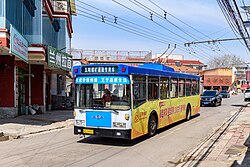
A trolleybus—also known as a trackless trolley or trolley coach—is a specialized electric bus that draws power from dual overhead lines. Unlike trams or streetcars, which rely on metal tracks to complete an electrical circuit, trolleybuses use two separate wires and spring-loaded or pneumatically raised poles to maintain a continuous power flow. This design allows them the flexibility of a bus with the environmental benefits of electric propulsion.
Most systems operate using direct current (DC), typically 600 volts in older installations and 750 volts in more modern networks. Today, approximately 260 trolleybus systems remain active across more than 40 countries, though over 800 such systems have existed throughout history.
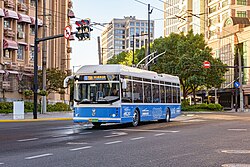
Key Facts
- Oldest System: The Shanghai trolleybus system, opened in 1914, is the oldest currently operating in the world.
- Largest Networks: Kyiv holds the record for the longest total route length, while Minsk has the highest number of individual routes.
- Longest Line: Route #52 of the Crimean Trolleybus spans 86 km.
- Most Produced Model: The Russian-built ZiU-9 (ZiU-682) is the most numerous model in history, with over 45,000 units manufactured.
- Smallest City: Mariánské Lázně in the Czech Republic is the smallest city served by a trolleybus system.
A History of Trackless Transit
The concept of the electric trolley began with early experiments, such as the 1882 Elektromote in Berlin, the world's first trolleybus.
![The Elektromote, the world's first trolleybus,[6] in Berlin, Germany, 1882](/images/96/be/96be2915df4af06173bb796cd9dbf0cf1c0a41e677cb17438f935f44dc642a28.jpg)
Early Adoption in Great Britain and the US
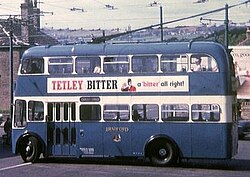
In Great Britain, Leeds and Bradford were pioneers, launching services on June 20, 1911. While London operated the largest UK system, Bradford became the last city to run trolleybuses, closing its network on March 26, 1972.
In the United States, the first non-experimental system appeared near Nantasket Beach in 1904, followed by a year-round commercial line near Los Angeles in 1910. Many US cities adopted an "all-four" transit strategy, utilizing buses, trolleybuses, streetcars, and rapid transit (subways or elevated lines) to match the capacity needs of different routes.
Global Expansion and Specialized Use
Trolleybuses became a dominant form of post-World War I electric traction in cities like Chicago, Boston, and Atlanta. Beyond urban centers, these vehicles have been used in specialized environments, such as the Wuyang Coal Mine in China, which operates the last remaining mine trolleybus system in the country.
Technical Design and Infrastructure
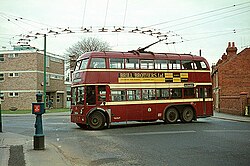
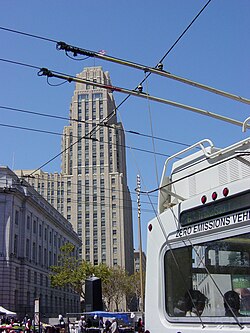
The core of a trolleybus system is the overhead wiring. Two parallel wires are suspended from roadside posts, usually at a height of 18 to 20 feet. These wires are insulated from the poles to deliver the necessary voltage to the vehicle.
Power Collection and Switching
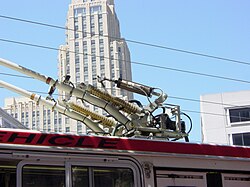
Trolley poles use contact shoes and pull-ropes to maintain a connection with the overhead lines. To navigate intersections or change routes, the system employs wire switches.

Modern Innovations: IMC and Dual-Mode
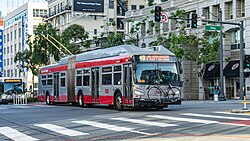
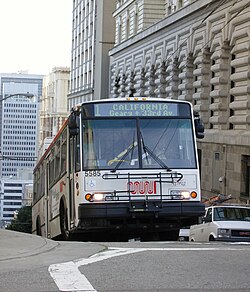
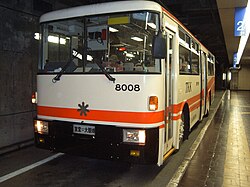
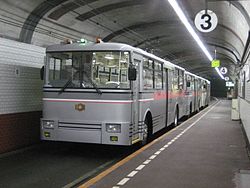
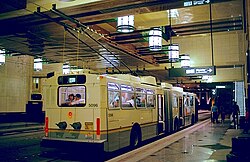
Modern transit has introduced In-Motion Charging (IMC), which allows trolleybuses to charge batteries while connected to the wires, enabling them to travel off-wire for portions of their route. Another variation is the dual-mode bus, which combines a combustion engine with electric overhead power. For example, Seattle operated Breda buses from 1990 to 2005 that ran as electric trolleybuses in tunnels and switched to diesel on city streets.
Manufacturing and Accessibility
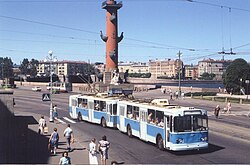
Over 200 manufacturers have produced trolleybuses. Historically, the Russian company Trolza (formerly ZiU) was the largest, producing over 65,000 vehicles. In Western and Central Europe, Škoda has been a major player since 1936, producing over 14,000 units.
The Shift to Low-Floor Designs
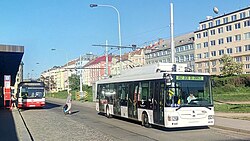
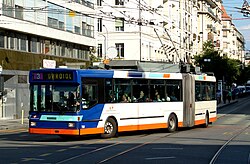
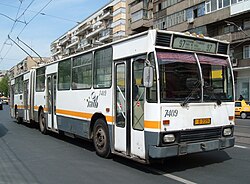
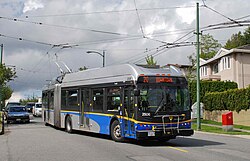
To improve accessibility for passengers with disabilities, the industry transitioned from high-floor vehicles with lifts to low-floor designs. In Europe, the first production low-floor models appeared in 1992 via NAW and Gräf & Stift. North American cities followed later; Boston introduced Neoplan low-floor vehicles in 2003, while Vancouver and Philadelphia eventually converted their entire fleets.
| Category | Detail | Location/Entity |
|---|---|---|
| Oldest Operating System | Opened 1914 | Shanghai, China |
| Longest Single Line | 86 km (Route #52) | Crimean Trolleybus |
| Most Produced Model | 45,000+ units | ZiU-9 (Russia) |
| Largest by Route Length | Global Leader | Kyiv, Ukraine |
| Largest by Route Count | Global Leader | Minsk, Belarus |
Frequently Asked Questions
![A switch in parallel overhead lines[41]](/images/fc/e6/fce66f9ea42fe778fe94eafc42141d1936f47f54653af383a107f3b20d35f9ed.jpg)
![A ZiU-9 trolleybus in service in Piraeus, Greece, on the large Athens-area trolleybus system. The Russian-built ZiU-9 (also known as the ZiU-682), introduced in 1972, is the most numerous trolleybus model in history, with more than 45,000 built.[5]: 114 In the 2000s it was effectively rendered obsolete by low-floor designs.](/images/ad/54/ad540ecab102e2c1d5a9ee638747cef1e35bb65ad6cb7ecbc0a3f20e745938bd.jpg)
How does a trolleybus differ from a tram?
While both use overhead wires, a tram runs on fixed metal tracks which serve as the electrical return path. A trolleybus runs on rubber tires on normal roads and requires two overhead wires to complete the electrical circuit.
What is In-Motion Charging (IMC)?
IMC is a technology that allows a trolleybus to charge its onboard batteries while it is drawing power from the overhead lines, allowing the vehicle to operate without wires for certain segments of its journey.
Why did some cities move away from trolleybuses?
Some cities found the cost of maintaining overhead infrastructure too high or preferred the flexibility of battery-powered motorbuses, which do not require fixed wiring.
What are the benefits of low-floor trolleybuses?
Low-floor designs eliminate the need for steps or mechanical lifts, making the vehicles significantly more accessible for passengers in wheelchairs and those with limited mobility.
Which company has produced the most trolleybuses?
Trolza (formerly ZiU) is the largest former manufacturer, having produced over 65,000 trolleybuses since 1951 before declaring bankruptcy in 2017.