Bus Transport: History, Evolution, and Modern Applications
A bus (shortened from the Latin omnibus) is a motor vehicle designed to carry significantly more passengers than a standard car or van, yet fewer than a train. While most commonly associated with public transit, buses are also utilized for private charters, tourism, and specialized corporate or government needs. Typically accommodating between 30 and 100 passengers, some high-capacity models can carry up to 300 people.
From the early days of horse-drawn carriages to the cutting-edge electric fleets of today, the bus has evolved into a globalized industry. Whether it is a city transit bus charging a fare or a free school shuttle, these vehicles remain a cornerstone of urban and rural mobility.
Key Facts
- Etymology: The term comes from the Latin omnibus, meaning "for all."
- Capacity: Most buses carry 30–100 passengers, though some reach 300.
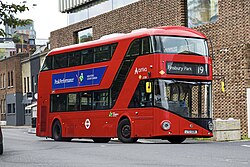
- Variety: Common types include single-deck, double-decker, articulated, midibuses, and minibuses.
- Propulsion: Evolution has moved from horses and steam to diesel, electric, hybrid, and compressed natural gas.
- Global Cost: A typical modern city bus can cost nearly US$450,000.
The Origins of the Omnibus
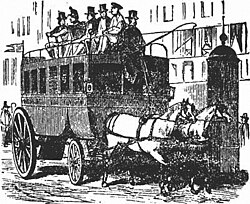
The concept of the bus began in 1823 in Richebourg, France. Stanislas Baudry, a corn-mill owner, established a horse-drawn transport service to bring customers from Nantes to his spa. The vehicles stopped in front of a hatter's shop named "Omnés," which featured a sign reading "Omnes Omnibus" (a pun meaning "Omnés for all" or "everything for everyone").
The transport service became more profitable than the spa itself, leading Baudry to launch the first official omnibus service in Paris in April 1828. Similar services soon followed in Manchester (1824) and London (1829).
Technological Evolution
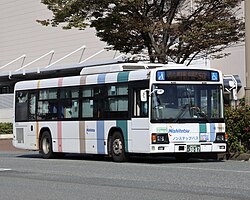
Steam and Early Mechanical Power
In the 1830s, Walter Hancock and associates of Sir Goldsworthy Gurney pioneered steam-powered intercity services in England. These vehicles were faster and more stable than horse-drawn carriages. However, the Locomotive Act of 1861 imposed strict speed limits—5 mph in towns and 10 mph in the country—which effectively stifled mechanical propulsion in Great Britain for three decades.
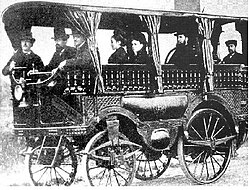
The Rise of the Trolleybus
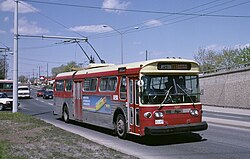
The electric trolleybus, which draws power from overhead wires via trolley poles, was developed through the collaboration of the Siemens brothers. Sir William Siemens proposed the concept in 1881, and his brother, Ernst Werner von Siemens, presented the first vehicle, the Electromote, in 1882 in Halensee, Germany.
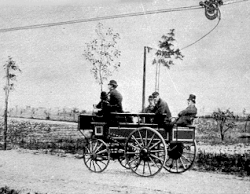
The Motor Bus Era
The first internal combustion engine buses appeared in 1895 in Siegerland, Germany. By 1898, Daimler Motors Corporation produced a double-decker bus for London with a top speed of 18 km/h (11.2 mph). The first mass-produced model, the B-type double-decker, entered service in 1910, with nearly 3,000 units built by 1920.
In the 1950s, the AEC Routemaster introduced revolutionary aircraft-inspired designs, including a lightweight aluminum body, independent front suspension, and a fully automatic gearbox.
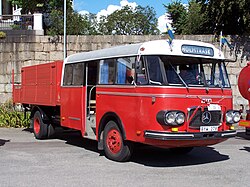
Bus Types and Design
Configurations and Accessibility
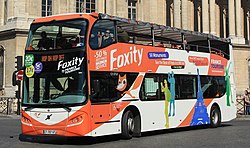
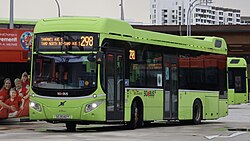
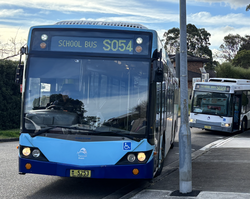
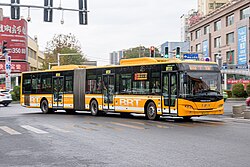
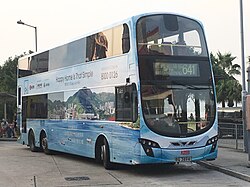
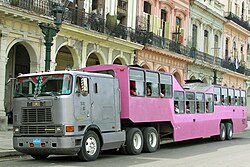
Buses are categorized by their size and structure. Single-deck rigid buses are the most common, while articulated buses (which feature a pivoting joint) and double-deckers handle larger crowds. Smaller loads are managed by midibuses and minibuses.
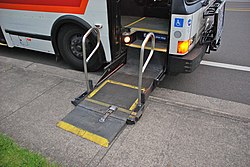
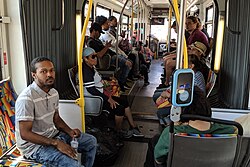
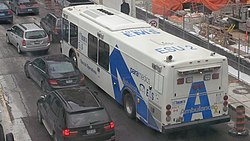
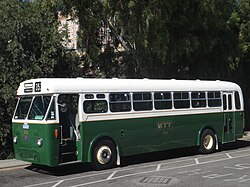
Modern design focuses heavily on accessibility. While 20th-century buses were primarily high-floor vehicles requiring lifts, contemporary buses often feature low-floor designs and "kneeling" air suspension to allow easier boarding for wheelchair users and people with strollers.
Propulsion Systems
While diesel engines have dominated since the 1920s, there is a growing shift toward sustainable energy. Current trends include:
- Electric Buses: Battery-powered vehicles, some with rapid-charging capabilities at stops.
- Hybrid Electric: Combining traditional engines with electric motors.
- Alternative Fuels: Compressed natural gas (CNG) and biodiesel.
- Fuel Cell: Hydrogen-powered propulsion.
Diverse Applications of Buses
Public and Student Transport
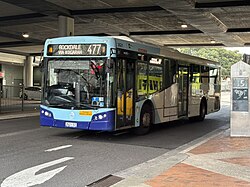
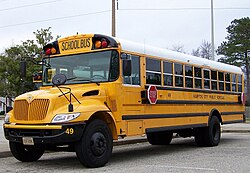
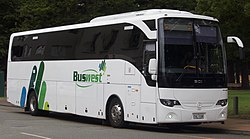
Transit buses are designed for efficiency, often featuring multiple doors for rapid boarding. In contrast, coaches are optimized for long-distance travel. Student transport includes dedicated school buses, which are often free of charge for students.
Specialized and Private Use
Buses serve a wide array of niche purposes:
- Tourism: Open-top buses for sightseeing and heritage routes.
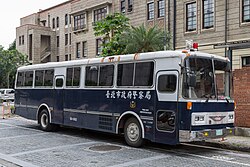
- Government/Security: Armored buses for dignitaries and police buses for prisoner transport or command centers.
- Airport Operations: Airside buses for crew and passenger transit.
- Private Charter: Tour vehicles for musicians and political campaigns.
Global Standards and Dimensions
| Region | Max Length | Max Width |
|---|---|---|
| European Union / UK (Single Axle) | 13.5 meters | 2.55 meters |
| European Union / UK (Twin Axle) | 15 meters | 2.55 meters |
| North America (US, Canada, Mexico) | No specified limit | 2.6 meters |
Frequently Asked Questions
Where does the word "bus" come from?
It is a contraction of the Latin word omnibus, meaning "for all," originating from a 19th-century transport service in Nantes, France.
What is the difference between a bus and a coach?
Buses are generally used for shorter, urban transit routes with utilitarian fittings, while coaches are designed for longer-distance travel and typically offer more comfort.
What is an articulated bus?
An articulated bus is a high-capacity vehicle that consists of two rigid sections linked by a pivoting joint, allowing a longer vehicle to navigate city corners.
How have buses become more accessible?
Modern buses have transitioned from high-floor designs to low-floor configurations, often incorporating ramps and "kneeling" suspension to assist passengers with mobility challenges.
What are the most common modern propulsion types?
While diesel remains common, there is a significant increase in the use of electric, hybrid, compressed natural gas, and biodiesel engines to reduce environmental impact.