tramsstreetcarslight railurban transitpublic transport

Trams and Streetcars: The Evolution of Urban Rail Transit

Trams and Streetcars: The Evolution of Urban Rail Transit A tram—known as a streetcar or trolley in North America—is a form of urban rail transit where vehicles operate on tracks laid dir...

Trams and Streetcars: The Evolution of Urban Rail Transit

A tram—known as a streetcar or trolley in North America—is a form of urban rail transit where vehicles operate on tracks laid directly into public streets. While some systems utilize a segregated right-of-way to avoid traffic, most are integrated into the city's existing road network. Trams are a specific subset of light rail, distinguished by their lower capacity, frequent coexistence with other vehicles, and lower traffic signal priority compared to heavier rail systems.

These vehicles range from individual railcars to multiple-unit trains, which can be coupled to form longer motor coaches. Because they are generally lighter and shorter than rapid transit trains, they are ideal for navigating dense urban environments.
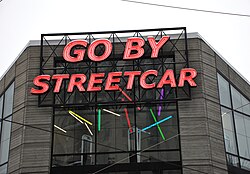
A sign in Portland that reads "go by streetcar". Trams are often called streetcars in North America.

Key Facts

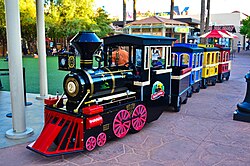
A trackless train is also called tram in U.S. English.
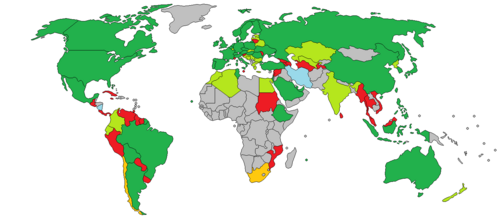
  • Global Reach: Tram and light rail systems operate in 403 cities worldwide, with 210 located in Europe.
  • Largest Network: Melbourne currently hosts the world's largest tram system (256 km), surpassing Saint Petersburg.
  • Historical Peak: Paris once held the record for the largest system, with over 1,111 km of track in 1925.
  • Fleet Size: There are approximately 36,864 trams and light rail vehicles in operation globally.
  • Longevity: Trams typically have a longer service life than internal combustion buses.

The Evolution of Tram Technology
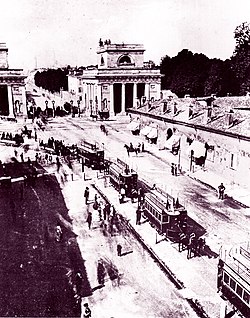
Inauguration of the Milan–Monza tramway, 1876.

Early Propulsion: Horse and Steam

The earliest forms of urban rail relied on animal power. The Swansea and Mumbles Railway, established in 1804, is recognized as the world's first railway service. Horse-drawn trams remained common for decades; for instance, New York City utilized them until 1917. Today, heritage lines like the Douglas Bay Horse Tramway (1876) on the Isle of Man and the Victor Harbor line (1894) in South Australia still operate.
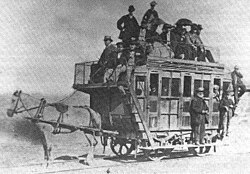
A horse-drawn tram operated by Swansea and Mumbles Railway, 1870. Established in 1804, the railway service was the world's first.

Steam engines also played a role in early transit, though they were less common in dense city centers than horse-drawn or later electric options.
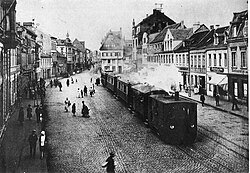
A steam tram engine from the Cologne-Bonn Railway, pulling a train through Brühl marketplace, c. 1900

Cable-Hauled Systems

Cable cars use a moving cable beneath the street to pull the vehicle, making them highly effective on steep inclines. This technology was prominent in San Francisco and Chicago. Melbourne operated one of the world's largest cable systems between 1885 and 1940, peaking at 592 trams on 75 km of track.
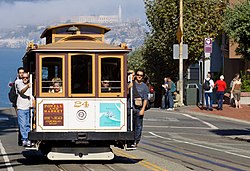
The San Francisco cable car's effectiveness on hills partially explains its continued use.

The Electric Revolution

The 1890s saw a rapid spread of electric tramways across Europe and Asia. Cities like Prague (1891), Kyiv (1892), and Rome (1894) adopted the technology quickly. In Japan, the Kyoto Electric railroad began operations in 1895, leading to a boom of 82 companies across 65 cities by 1932, though most disappeared by the 1960s.
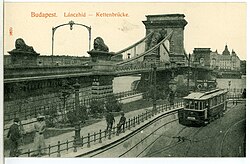
A tram in Budapest in 1908. The city established a network of electric trams in 1894.

Modern Power and Propulsion

Most modern trams use a pantograph—a folding arm that collects electricity from an overhead line. Other methods include trolley poles, bow collectors, or a third rail with a contact shoe. Some systems employ dual power, using electricity in the city and diesel in rural areas. Recent innovations include battery-powered trams, hydrogen fuel cell trains, and ground-level power supplies (APS) to eliminate overhead wires in historic districts.
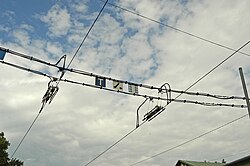
Overhead lines are used for most tram and light rail systems.

Infrastructure and Design

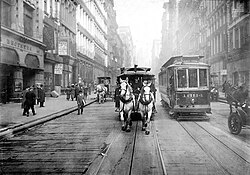
Horse-drawn trams continued to be used in New York City until 1917.

Track and Operation

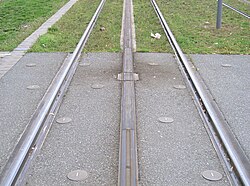
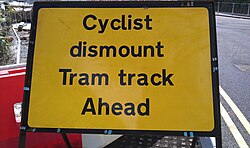
Trams run on grooved rails embedded in the street, which allows other vehicles to cross them. However, these tracks can pose a hazard for cyclists whose wheels may get caught in the groove. To manage traffic, systems use point-setting mechanisms to automatically route trams to specific platforms.
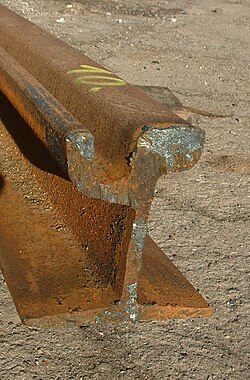
Cross section of a grooved tram rail

Vehicle Variations

Modern tram design varies based on city needs. Articulated trams use flexible joints to navigate tight corners while maintaining length. Low-floor designs improve accessibility for passengers, while tram-trains are specialized vehicles capable of running on both urban street tracks and mainline railway tracks.
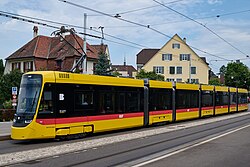
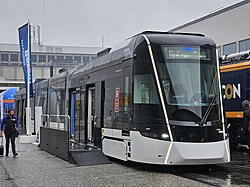
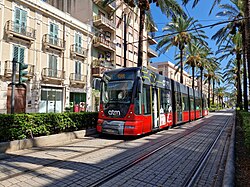
A BLT TINA tram in 2024.

Global Market and Statistics

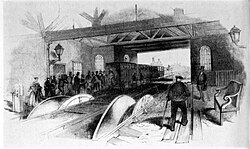
Winding drums of the London and Blackwall cable-operated railway

The tram industry continues to grow. As of February 2026, there were 6,656 new trams on order globally, with an additional 2,596 options. Major manufacturers include Bombardier, Alstom, and Siemens.

Major Tram Manufacturers: Orders and Options (Feb 2026)
Manufacturer Firm Orders Options
Bombardier 962 296
Alstom 650 202
Siemens 557 205
CAF 411 112
CRRC 370 30

Largest Current Networks by Length

  • Melbourne: 256 km
  • Kyiv: 231 km
  • Saint Petersburg: 205.5 km
  • Cologne: 194.8 km
  • Berlin: 191.6 km

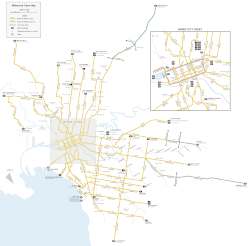
Map of the Melbourne tram network.
Map of Melbourne tram system in 2011, the largest in the world.

Frequently Asked Questions

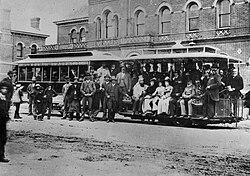
The first cable car service in Melbourne, 1885. Melbourne operated one of the largest cable car networks in the world.
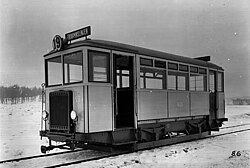
The only petrol-driven tram of Stockholms Spårvägar, on line 19, in the 1920s
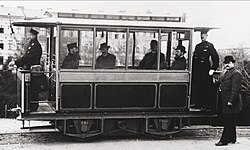
Gross-Lichterfelde Tram in Berlin in 1882. First lacking overhead wires, it became the first tram with those in 1883.
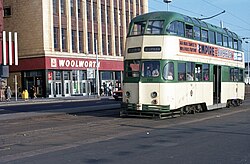
Between 1962 and 1992 Blackpool had the only urban tramway in the UK.
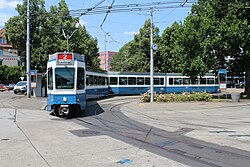
Zürich tram multiple-unit train
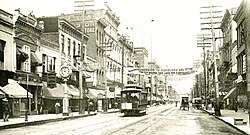
Streetcar in Toledo, Ohio, 1895
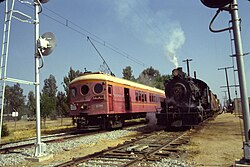
The Southern California Railway Museum in Perris has the largest collection of Pacific Electric Railway streetcars (known as the Red Cars).
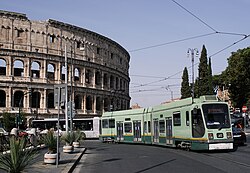
Tram line 3 Socimi in front of Colosseum in Rome.
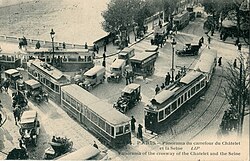
Recharging battery-powered trams of Paris and Seine Tramway Company [fr], late 1890s.
Hyundai Rotem's Hydrogen fuel cell tram train for Daejeon Metro Line 2
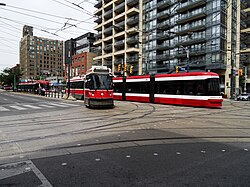
A dedicated right of way lane in Toronto. The tram on the left is about to enter a track operating in mixed traffic.
A section of APS track in Bordeaux with powered and neutral sections.
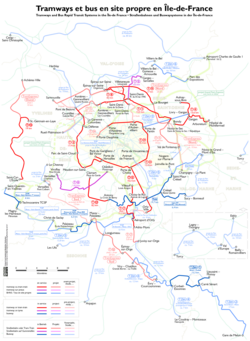
A map of the tram routes of Paris.
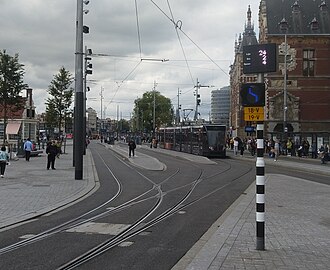
A 3-way point-setting system in Amsterdam. The indicator on the right displays "Lijn 24, Spoor 4". The points are set to automatically send the next tram (route 24 to De Boelelaan/VU) to platform 4 on the left.
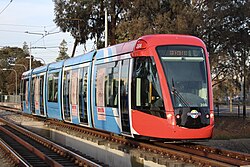
Alstom Citadis 302 tram for Adelaide Metro.
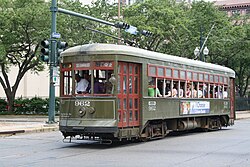
Produced in 1923–24, 900 Series trams are still use in New Orleans. Trams typically have longer service life than internal combustion buses.
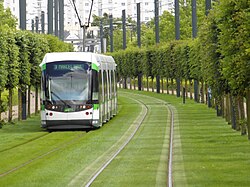
A tram running down tracks embedded in grass in Nantes.
Tramway system in Messina, opened in 2003
Tram tracks pose a hazard for cyclists, as their wheels may get caught in the track.
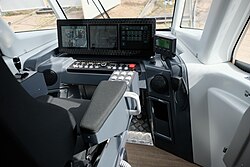
The driver's seat in the Russian "Lvionok" ("Lionet") tram
Trams and LRT networks around the world as of 2026 Countries with tram networks, including LRT Countries with tram networks, no LRT Planned networks Countries that used to have tram networks Never built any electric tram networks
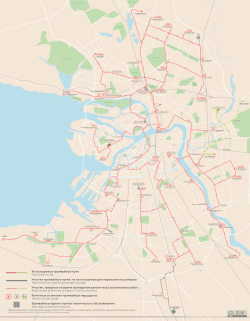
Map of Saint Petersburg's tram system in 2025. The system was the world's largest, before it was surpassed by Melbourne's system.
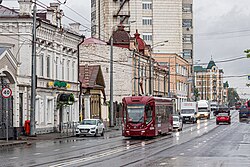
City Star tram at longest urban intracity tram route in Kazan
At its peak, the Paris tram system was the world's largest, with over 1,111 kilometres (690 mi) of track in 1925.
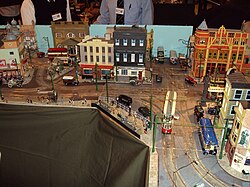
A model of a town with a tram model built into it

What is the difference between a tram and light rail?

While trams are a type of light rail, they are typically more integrated into urban streets, share the road with other vehicles, have lower passenger capacity, and generally have lower priority at traffic signals than dedicated light rail systems.

How do trams get their power?

Most trams use a pantograph to draw electricity from overhead wires. Some older systems use trolley poles, while others use a third rail or onboard batteries and hydrogen fuel cells for wire-free operation.

Which city has the largest tram network in the world?

Melbourne, Australia, currently has the largest network with 256 km of track. Historically, Saint Petersburg and Paris also held the title of the world's largest system.

Are trams safer for cyclists?

Tram tracks can be hazardous for cyclists because bicycle wheels can get caught in the grooved rails, potentially leading to accidents if the cyclist is not crossing the tracks at a safe angle.

What is a tram-train?

A tram-train is a hybrid vehicle designed to operate on both urban tramway tracks (in city streets) and standard mainline railway tracks, allowing for seamless travel between city centers and outlying regions.