Passenger Trains: Evolution, Technology, and Global Rail Systems
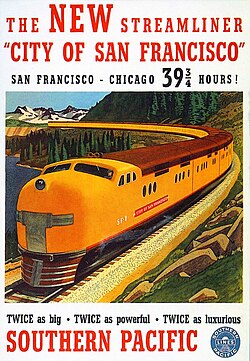
A passenger train is a specialized rail vehicle designed to transport people along a railroad line. Unlike freight trains, which are dedicated to goods, passenger services focus on the movement of people between stations or depots. These trains can be hauled by one or more locomotives—which pull unpowered coaches or carriages—or they can be self-propelled, known as multiple units or railcars.
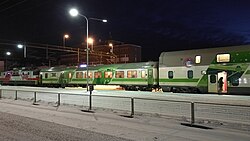
Modern rail travel has evolved significantly in terms of safety and capacity. To maximize efficiency, many services utilize bi-level (double-decker) cars, while long-distance journeys often feature sleeper trains equipped with beds. While locomotive-hauled trains generally offer higher passenger capacities, multiple units are typically more cost-effective to operate.
Key Facts
- Environmental Impact: Rail travel is highly sustainable, emitting only 2–27% of the CO2 of air travel and 2–24% of that of car travel per mile.
- High-Speed Threshold: High-speed rail generally refers to systems operating above 200 km/h (120 mph).
- Capacity: Bi-level commuter cars can carry up to 150 passengers per car, exceeding 1,000 passengers per train.
- Efficiency: High-speed rail is often more time- and cost-competitive than flying for distances between 500 and 600 km.
The History of Passenger Rail
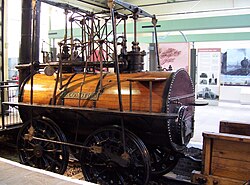
The journey of passenger rail began in the United Kingdom. In 1804, Richard Trevithick designed an engine that transported 70 employees of the Penydarren Ironworks in Wales over a distance of 9 miles. This was followed by the first regular passenger service in 1807 on the horse-drawn Swansea and Mumbles Railway. By 1808, Trevithick's exhibition train, Catch Me Who Can, offered paid rides on a loop of track in London.
The era of public steam travel arrived in 1825 with Locomotion No. 1 on the Stockton and Darlington Railway, reaching speeds of 15 miles per hour.
Rail travel expanded to the United States in the 1830s, gaining widespread popularity by the 1850s and '60s. The transition to electricity began in 1879 at the Berlin Industrial Exposition, leading to the first commercial electric passenger train, the Gross-Lichterfelde Tramway, in 1880.
Long-Distance and High-Speed Rail
Long-distance trains connect cities and regions, sometimes crossing international borders. To enhance passenger comfort, these trains often include dining and restaurant cars, as well as sleeping cars for overnight journeys.
A significant advancement in this sector is high-speed rail. These systems often use dedicated tracks to maintain speeds above 200 km/h. Japan's Shinkansen, or "bullet train," pioneered this technology in October 1964. Other prominent systems include France's TGV, Germany's ICE, Italy's Le Frecce, and Spain's AVE.
![The Shinkansen N700 Series Nozomi travels between Tokyo and Osaka in around two and a half hours.[11]](/images/88/7b/887bec8d3fcde9352b10526eecf6407de4348b22d738d17429ddb268dd63f311.jpg)
To improve stability and comfort during curves, some high-speed trains employ tilting technology—a dynamic form of superelevation. This allows trains to navigate curves more efficiently. Examples include the Pendolino, the N700 Series Shinkansen, Amtrak's Acela, and the Spanish Talgo.
Inter-city Service Categories
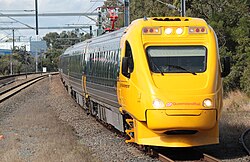
Inter-city rail provides fast travel with limited stops, generally categorized into three levels:
- InterCity: High-speed connections between major population hubs, bypassing intermediate stations.
- Express: Services that stop at select larger urban communities.
- Regional: Services that stop at all intermediate stations to serve smaller communities.
Additionally, higher-speed rail occupies the middle ground, operating faster than conventional inter-city trains but slower than full high-speed rail, utilizing upgraded conventional infrastructure.
Short-Distance and Urban Transit
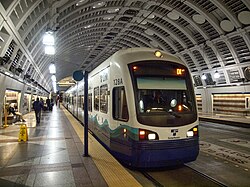
Urban areas rely on various rail systems to move large volumes of people efficiently, bypassing road congestion via dedicated rights-of-way.
Commuter and Suburban Rail
Commuter trains (or S-Bahn in German-speaking regions) serve those traveling between suburban residential areas and city centers. These services typically feature peak-period operations and reduced fares.
![Mumbai's suburban trains handle 7.24 million commuters daily.[15]](/images/7a/72/7a72f50f25fdb1e973069d43ddd602d6a02515669e712150a3c873d9b599162e.jpg)
Rapid Transit, Light Rail, and Trams
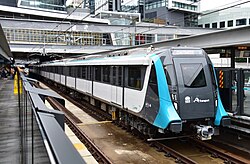
- Rapid Transit: Known as the metro in Europe, these operate on exclusive rights-of-way entirely separated from pedestrians and road vehicles.
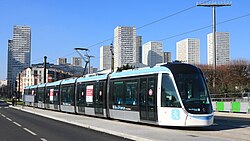
- Light Rail: Electrically powered trains that run on ground-level tracks, raised structures, or in streets, using lighter equipment for urban flexibility.
- Trams: Also called streetcars in North America, these run on tracks alongside or within public urban streets.
Specialized Rail Services
Railcars and Lightweight Trains
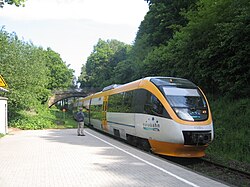
In Australia and the UK, a railcar is a self-propelled vehicle, often consisting of a single carriage with a driver's cab. Historically, the pursuit of lightweight trains led to innovations like the Rail Zeppelin (1930), the U.S. Bullet (1931), and the Flying Hamburger (1932). Modern lightweight initiatives continue today, such as India's 2023 order for 16 lightweight cars and France's TELLi project starting in 2029.
Heritage Railways
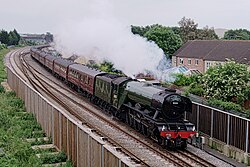
Heritage trains are museum railways often operated by volunteers and railfans. They use historic vehicles to replicate the appearance and operating practices of former railway companies, serving as both tourist attractions and, occasionally, local transport.
Summary of Passenger Rail Types
| Type | Primary Purpose | Key Characteristic | Typical Speed/Scope |
|---|---|---|---|
| High-Speed Rail | Inter-city travel | Dedicated tracks | > 200 km/h |
| Commuter Rail | Suburban commuting | High capacity (Bi-level) | Metropolitan areas |
| Rapid Transit | Urban movement | Exclusive right-of-way | City-wide (Metro) |
| Light Rail/Tram | Urban flexibility | Street-level integration | Low to Medium speed |
| Heritage Rail | Tourism/Education | Historic vehicles | Low speed/Museum |
Frequently Asked Questions
What is the difference between a locomotive-hauled train and a multiple unit?
A locomotive-hauled train consists of a powered engine pulling unpowered coaches. A multiple unit (or railcar) is self-propelled, meaning the propulsion system is integrated into the passenger cars themselves.
Why is high-speed rail often preferred over flying for mid-range distances?
For distances between 500 and 600 km, rail is often more competitive because it eliminates lengthy airport check-in and boarding procedures, and can have lower operating costs due to the avoidance of high fuel consumption during aircraft takeoff.
What is tilting technology in trains?
Tilting technology is a dynamic form of superelevation that allows trains to lean into curves. This improves stability and passenger comfort while allowing higher speeds on existing tracks.
How does passenger rail impact the environment compared to other transport?
Passenger rail is one of the lowest-emission modes of travel, producing significantly less carbon dioxide per mile than both cars (2–24% of car emissions) and airplanes (2–27% of air emissions).
What defines a "heritage train"?
Heritage trains use retired historic vehicles to preserve the look and operating practices of past eras. They are typically run by volunteers as museum railways or tourist attractions.