Urban Rail Transit: A Comprehensive Overview of Local Rail Systems
Urban rail transit encompasses a diverse array of local rail systems designed to move passengers within and around urban and suburban environments. Because these systems often overlap in function and design, they are categorized into several distinct types based on their capacity, speed, and infrastructure. From the street-level charm of a tram to the high-speed efficiency of a metro, understanding these technologies helps clarify how modern cities stay in motion.
Key Facts
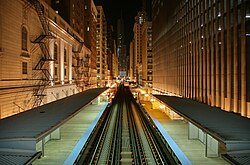
- Rapid transit (often called metro or subway) features high capacity and full grade separation from other traffic.
- Trams typically run along streets and share space with vehicular traffic.
- Light rail serves as an evolution of the tram, offering higher speeds and exclusive rights-of-way.
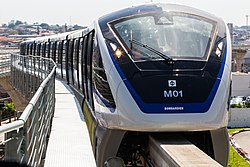
- Monorails utilize a single rail or beam rather than the traditional two-rail track.
- Commuter rail covers long distances and connects suburban areas to city centers, often sharing tracks with freight.
Primary Types of Urban Rail
Trams, Streetcars, and Trolleys
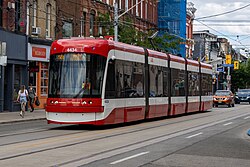
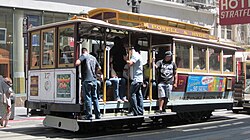
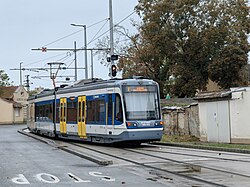
A tram (known as a streetcar or trolley in North America) is a rail-based system that operates mainly along streets. These systems generally have lower passenger capacity and frequent stops. While modern trams often use multiple-unit configurations to increase capacity, they frequently share the road with vehicular traffic and may lack signal priority. In Germany, these are referred to as Straßenbahn.
Light Rail Systems
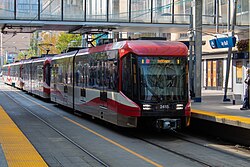
Light rail emerged as an evolution of the tram. It offers higher capacity and speed, typically by operating in an exclusive right-of-way that is separated from road traffic, though it is not always fully grade-separated. Unlike traditional trams, light rail regularly operates with multiple-unit trains. In Germany, these systems are often called Stadtbahn.
Rapid Transit (Heavy Rail)
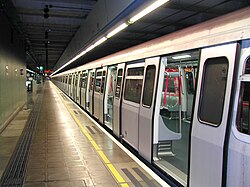
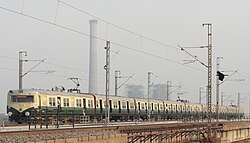
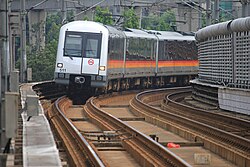
Rapid transit systems are characterized by high passenger capacity, high frequency, and full grade separation—meaning the tracks are completely separated from other traffic and pedestrians. This is often referred to as "heavy rail." Depending on the region, these systems go by many names:
- Metro: Common globally (short for metropolitan).
- Subway: Frequently used in American cities, Glasgow, and Toronto.
- Underground/Tube: The standard terms in London.
- U-Bahn: The German term for underground rail.
- MRT: Mass Rapid Transit, common in cities like Singapore, Taipei, and Chennai.
- L or Skytrain: Used for predominantly elevated systems, such as in Chicago or Vancouver.
Specialized Transit Technologies
Commuter and Regional Rail
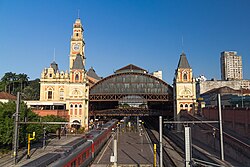
Commuter rail (or regional rail) operates on mainline tracks that may be shared with freight or intercity trains. While these systems travel at higher speeds and cover longer distances than rapid transit, they typically have more widely spaced stations and lower service frequencies. Some hybrid systems, such as the S-train, combine the characteristics of both commuter and rapid transit.
Cable-Driven Systems
There are two primary cable-based systems used in transit:
- Cable Car: Rail cars are hauled by a continuously moving cable at a constant speed. Individual cars grip and release the cable to stop and start.
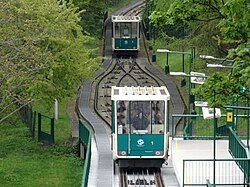
- Funicular: An inclined railway that uses the weight of descending cars to help pull ascending cars up a slope.
Monorail and Automated Guideway Transit
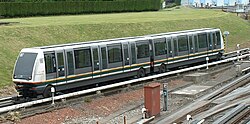
A monorail uses a single rail or beam for support. Automated guideway transit (AGT) systems vary in design, ranging from advanced rapid transit (ART) to Personal Rapid Transit (PRT), which provides direct point-to-point travel in small vehicles.
Guided Buses
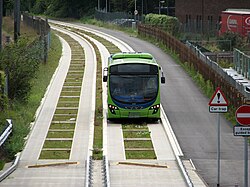
While not rail-based, guided buses can be steered by external means, often on dedicated tracks. Bus Rapid Transit (BRT) uses methods to provide faster bus services with characteristics similar to light rail. Some cities even refer to rubber-tired guided buses as "trams on tires.'
Summary of Transit Types
| Type | Primary Characteristic | Typical Environment |
|---|---|---|
| Tram | Low capacity, street-running | Shared road traffic |
| Light Rail | Medium capacity, higher speed | Exclusive right-of-way |
| Rapid Transit | High capacity, high frequency | Fully grade-separated |
| Commuter Rail | Long distance, high speed | Mainline/shared tracks |
| Monorail | Single rail support | Elevated guideways |
Frequently Asked Questions
What is the difference between a tram and light rail?
While modern trams are increasingly similar to light rail, the primary difference is that trams frequently share the road with vehicular traffic and may not have signal priority, whereas light rail typically operates in an exclusive right-of-way.
Why are some transit lines named differently than their technical type?
Naming conventions often follow local tradition rather than technical definitions. For example, the Chicago "L" is an elevated system, and the London "Underground" includes many tracks that are actually above ground.
What is a funicular?
A funicular is a cable-driven inclined railway. It is unique because it uses the weight of the descending cars to assist in pulling the ascending cars up a slope.
Is a monorail a type of rapid transit?
A monorail is defined by its track structure—a single rail or beam—rather than its capacity. While some monorails function as rapid transit, the term specifically describes the single-rail technology.
What is Bus Rapid Transit (BRT)?
BRT refers to bus systems that use specialized methods to provide faster service, mimicking many of the characteristics and efficiencies found in light rail systems.