High-Speed Rail: Evolution, Technology, and Global Networks
High-speed rail (HSR) represents the pinnacle of land-based transportation, blending advanced engineering with the need for rapid intercity connectivity. From the early experiments of the 20th century to the sprawling networks of modern Asia and Europe, these systems have redefined how millions of people travel, offering a competitive alternative to short-haul aviation and automotive travel.
Defining High-Speed Rail
![A pair of Italian FS' ETR 500 at Firenze Santa Maria Novella railway station. The version ETR 500 Y1 achieved 362 km/h (225 mph) on the Bologna-Florence line on 4 February 2009, a new world speed record in a tunnel.[6]](/images/23/97/2397ad02a4eb59ca0f468f3e650b5d017933490d07e1506736ec25515fb61816.jpg)
Because different regions have different infrastructure standards, the definition of "high-speed" varies by governing body. The International Union of Railways (UIC) categorizes HSR based on speed thresholds: a maximum achievable speed exceeding 200 km/h (124 mph), or 250 km/h (155 mph) for "very high-speed" rail. They also consider the average corridor speed, which must exceed 150 km/h (93 mph) or 200 km/h (124 mph) for very high-speed lines.
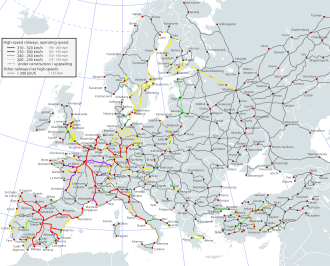
The European Union sets a minimum speed limit of 250 km/h (155 mph) for lines specifically built for high speed, and approximately 200 km/h (124 mph) for upgraded existing lines. Nationally, definitions vary: Australia's High Speed Rail Authority Act 2022 defines it as speeds exceeding 250 km/h, while China's Ministry of Railways specifies new passenger lines designed for 250 km/h or higher, with initial services at least 200 km/h.
Key Facts
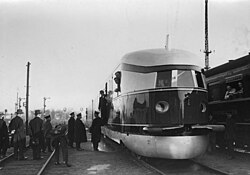
- World's First: The Tokaido Shinkansen in Japan was the first high-speed rail line.
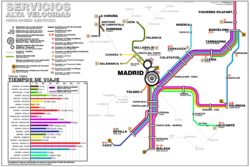
- Longest Network: China possesses the world's longest HSR network; Spain has the longest in Europe (3,973 km as of January 2025).
- Absolute Speed Record: The L0 Series Shinkansen holds the unconventional record at 603 km/h (374.7 mph).
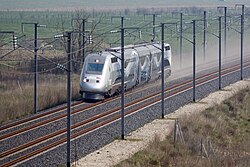
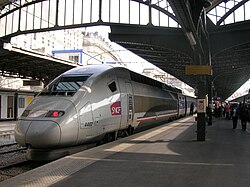
- Conventional Record: The V150 (a modified TGV) holds the conventional rail record at 574.8 km/h (357.2 mph).
- Longest Service: The Beijing–Kunming train is the world's longest HSR service, covering 2,653 kilometers.
The History of Speed
Early Research and Aspirations
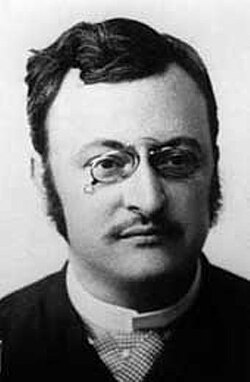
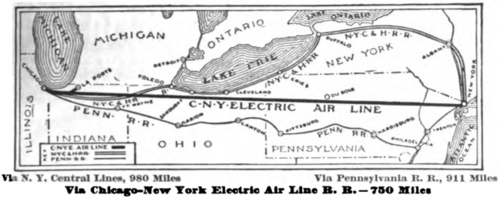
The dream of high-speed electric rail began in the late 19th century. In 1891, Károly Zipernowsky proposed a 250 km/h line between Vienna and Budapest. By 1893, Wellington Adams envisioned an "air-line" from Chicago to St. Louis operating at 160 km/h.
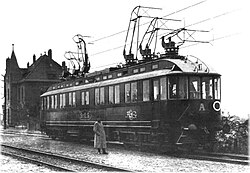
The first tangible breakthroughs occurred in 1903, when railcars equipped by S&H and AEG achieved speeds of 206.7 km/h and 210.2 km/h respectively, proving that electric high-speed travel was technically feasible.
The Rise of the Streamliners and Shinkansen
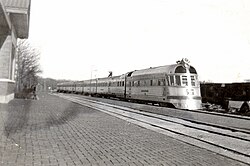
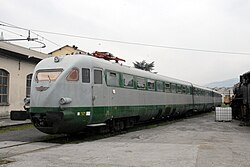
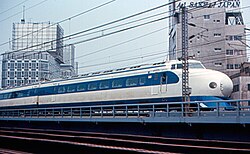
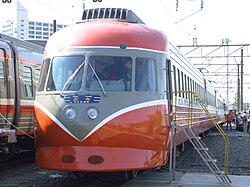
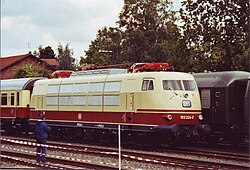
The 1930s saw the emergence of "streamliners" in the United States and record-breaking electric trains in Italy. The Italian ETR 200 set a record of 203 km/h in 1938. However, the true revolution arrived in 1964 with Japan's Shinkansen (Bullet Train), which introduced the 0 series reaching 210 km/h (130 mph) on dedicated lines.
European Expansion and the TGV
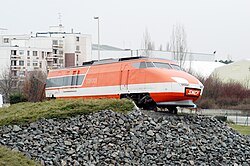
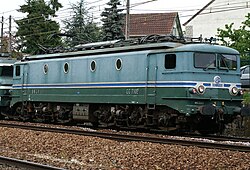
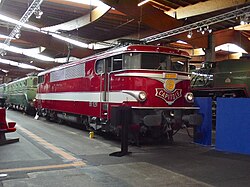
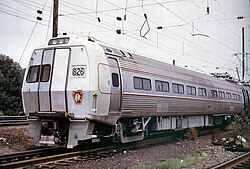
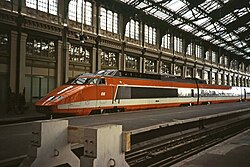
Europe followed with various demonstrations in the 1960s and 70s, including France's Le Capitole and the US Metroliner. France eventually led the charge with the TGV (Train à Grande Vitesse), which utilized gas-turbine prototypes before moving to electric power, eventually reaching a staggering 574.8 km/h in 2007 during test runs.
Global Network Development
Asia: The Current Powerhouse
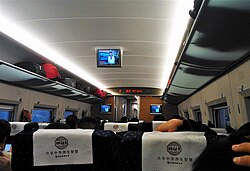
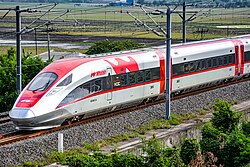
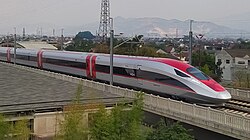
Asia currently leads in HSR deployment. China has built a massive network, with trains like the CR400AF operating at 350 km/h. Indonesia recently joined the ranks with the Whoosh HSR, the first high-speed rail in Southeast Asia and the Southern Hemisphere, connecting its two largest cities in Western Java at 350 km/h.
Europe: A Diverse Landscape
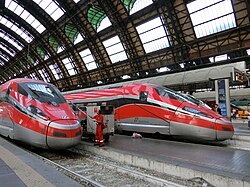
Europe's network is characterized by high integration. Spain's network is the longest on the continent. Italy's Frecciarossa services, utilizing ETR 500 and ETR 1000 trains, operate at 300 km/h and are notably profitable without government funding.
![FS' Frecciarossa 1000 high speed train at Milano Centrale railway station, with a maximum speed of 400 km/h (249 mph),[54] is one of the fastest trains in Europe.[55][56]](/images/59/01/5901308db449e06861144c868572ce50672baebff3582756a6c13bf34cb10c1f.jpg)
North America
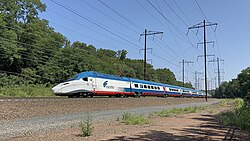
High-speed rail has seen slower adoption in the US. While the Acela provides rapid service in the Northeast, private ventures like Brightline in Florida have introduced trains with top speeds of 201 km/h.
Technology and Infrastructure
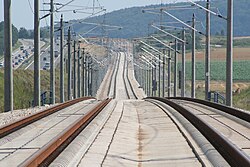
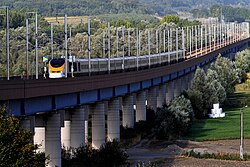
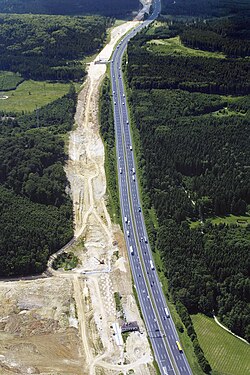
HSR requires specialized infrastructure to maintain safety at high velocities. This includes ballastless track (concrete slabs instead of crushed stone) and viaducts to eliminate road crossings and steep ramps.
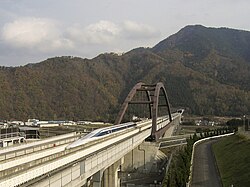
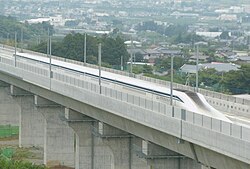
While most HSR is conventional wheel-on-rail, Maglev (magnetic levitation) technology eliminates friction by floating the train above the track. The Shanghai Maglev is a prime example, though the L0 Series in Japan has pushed Maglev speeds to over 600 km/h.
Performance and Ridership Comparison
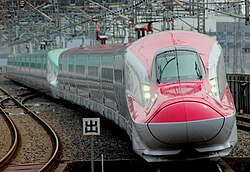
HSR is often compared to air travel for distances between 300 and 800 kilometers, where it typically offers better energy efficiency and city-center to city-center convenience.
| Country/Territory | Ridership (Millions) | Passenger-km (Billions) |
|---|---|---|
| China | 2,357.7 | 774.7 |
| Japan | 354.6 | 99.3 |
| Russia | 156.7 | 6.2 |
| France | 125.9 | 60.0 |
| Germany | 99.2 | 33.2 |
Safety and Challenges
Despite a strong safety record, HSR has faced significant accidents. Notable incidents include the 1998 Eschede derailment in Germany, the 2011 Wenzhou accident in China, and a severe collision in Adamuz on January 19, 2026, where a derailment at a switch led to a collision at 250 km/h, resulting in at least 46 deaths.
Frequently Asked Questions
![An ETR 500 train running on the Florence–Rome high-speed line near Arezzo in Italy, the first high-speed railway opened in Europe.[50]](/images/35/8f/358f4215683add11c1d2fdc389fb94a8ab30872f567f877e856b3ed4979ca531.jpg)

![ETR 675 [it] Italo EVO (NTV) at Venezia Mestre railway station.](/images/79/b9/79b9c64166c8804f3ef88000309d98a7ba2c45a20e6f266c4c5fff75d5f35d8b.jpg)
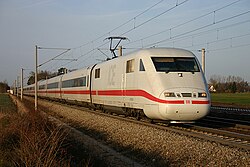
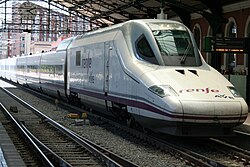
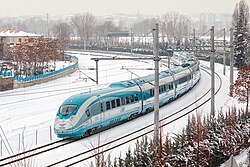
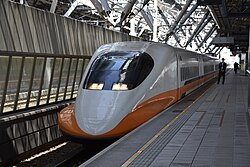

What is the difference between high-speed and very high-speed rail?
According to the UIC, high-speed rail generally refers to trains with a maximum speed over 200 km/h, while "very high-speed" rail refers to those exceeding 250 km/h.
Which country has the fastest commercial trains?
China and Indonesia operate the CR400AF/KCIC400AF and CR400BF, which have the highest commercial operational speeds at 350 km/h (220 mph).
How does Maglev differ from conventional high-speed rail?
Conventional HSR uses wheels on steel rails, whereas Maglev uses magnetic levitation to float the train above the guide-way, eliminating rolling resistance and allowing for much higher speeds.
Is high-speed rail more efficient than flying?
Generally, yes. HSR is often more energy-efficient per passenger and reduces pollution compared to short-haul flights, particularly when powered by an electrified grid.
What is the longest high-speed rail service in the world?
The Beijing–Kunming service in China is the longest, covering 2,653 kilometers (1,648 miles).