Commuter Rail Systems: Connecting Suburbs to City Centers Worldwide
For millions of people every day, the rhythm of life is dictated by the arrival of a train. Commuter rail serves as a vital artery in the modern metropolitan landscape, bridging the gap between quiet residential suburbs and bustling urban cores. Unlike urban metro systems that focus on high-frequency movement within a city, commuter rail is designed to move large volumes of people over longer distances, often spanning dozens or even hundreds of kilometers.
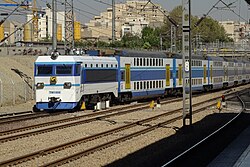
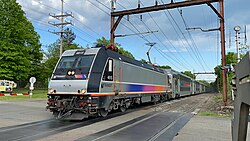
These systems are characterized by several distinct features. Typically, they utilize larger trains to provide more seating for longer journeys, though this often means less standing room compared to urban subways. Because they serve lower-density areas, they often operate on a scheduled basis rather than at fixed, high-frequency intervals. Furthermore, commuter lines frequently share tracks or rights-of-way with intercity or freight trains, and may not be fully grade-separated, meaning they sometimes encounter at-grade crossings with gates.
Key Facts
- Travel Distances: Typically range between 15 and 200 km, though some regional systems cover much more.
- Capacity: Major systems like the Mumbai Suburban Railway carry over 7.24 million commuters daily.
- High-Speed Integration: High-speed rail, such as Japan's Shinkansen, can function as a commuter service for long-distance travelers.
- Infrastructure: Systems may use dedicated tracks or share lines with freight and intercity services.
- Seating: Designed for longer trips, prioritizing seating over the high-standing capacity of urban metros.
Global Commuter Rail Networks
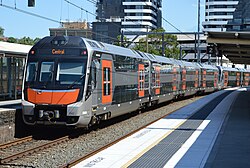
Commuter rail manifests differently across the globe, shaped by geography, population density, and national infrastructure priorities.
Asia and Oceania
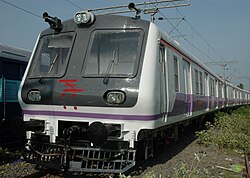
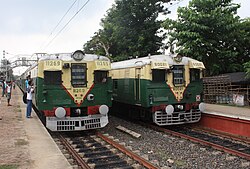
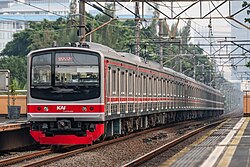
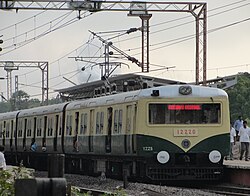
Asia hosts some of the world's most massive transit operations. In India, the Mumbai Suburban Railway is a titan of transit, carrying more than 7.24 million passengers every day. The Kolkata Suburban Railway is also among the largest in the world, featuring over 450 stations. In Indonesia, the KRL Commuterline serves the Greater Jakarta area, connecting the city center to provinces like West Java.
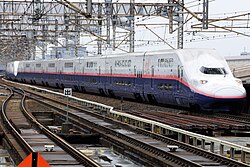
Japan offers a unique blend of commuter and high-speed rail. While the Shinkansen is famous for intercity travel, it is heavily used by commuters traveling 100 to 200 km. Historically, specialized 16-car bilevel E4 Series Shinkansen trains were used during rush hours to maximize capacity, though these were retired in 2021.
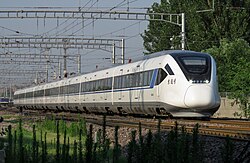
In Hong Kong, the MTR operates lines like the East Rail and Tuen Ma lines, which connect new towns in the New Territories to Kowloon. These lines utilize rolling stock with higher maximum speeds and longer stop spacing than standard urban metro lines to facilitate faster suburban travel.
Europe
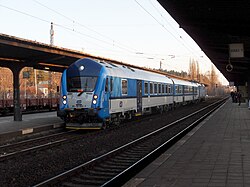
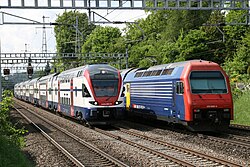
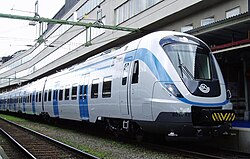
European systems often feature a subtle distinction between commuter and intercity rail. In the Netherlands, the Nederlandse Spoorwegen operates numerous direct trains between Amsterdam and The Hague that function as commuter services despite being technically intercity routes. In Germany, the S-Bahn systems provide integrated city-center and suburban connectivity.
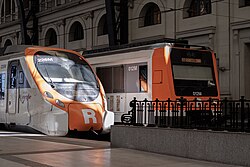
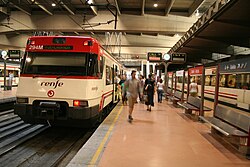
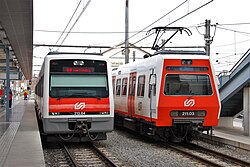
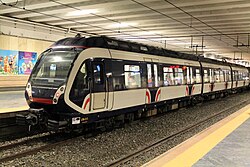
Spain's Cercanías system is a major component of metropolitan life. In Catalonia, the Rodalies de Catalunya manages several lines, while the FGC (Ferrocarrils de la Generalitat de Catalunya) manages various metro and suburban lines, including the Llobregat-Anoia line.
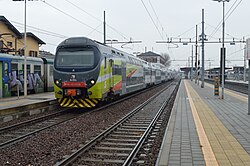
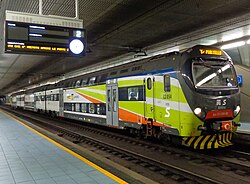
Italy also boasts extensive networks, with fifteen cities maintaining commuter services. Milan, for example, operates a significant suburban railway service with 12 lines, providing essential connectivity across the metropolitan area.
The Americas
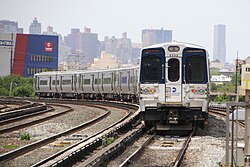
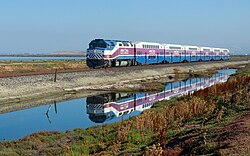
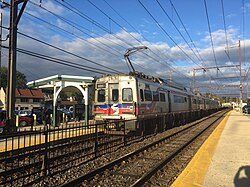
In North America, commuter rail is a cornerstone of many major metropolitan areas. The Long Island Rail Road serves New York City and Long Island and is noted as the busiest commuter railroad in North America. In the United States, other major players include NJ Transit, which serves New Jersey, New York, and Pennsylvania, and SEPTA Regional Rail in Philadelphia.
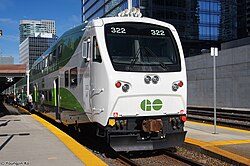
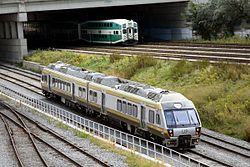
Canada also relies heavily on these systems. In the Toronto area, GO Transit serves the Greater Golden Horseshoe region, and is currently transitioning from a peak-direction commuter railway to a more robust Regional Express Network. The UP Express also provides vital service within the Toronto area.
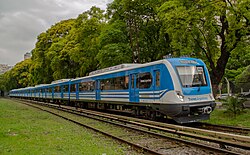
South American networks are equally significant. The Buenos Aires metropolitan area features an extensive system, including the Mitre Line, with some commuter networks spanning as much as 899 km.
Comparative Overview of Major Systems
| Region | System Name | Primary Area Served |
|---|---|---|
| Asia | Mumbai Suburban Railway | Mumbai, India |
| Asia | KRL Commuterline | Greater Jakarta, Indonesia |
| North America | Long Island Rail Road | New York City/Long Island, USA |
| North America | GO Transit | Toronto/Golden Horseshoe, Canada |
| Europe | Rodalies de Catalunya | Catalonia, Spain |
| South America | Mitre Line | Buenos Aires, Argentina |
Frequently Asked Questions
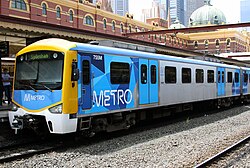
How does commuter rail differ from a metro or subway?
Commuter rail typically covers longer distances, connects lower-density suburbs to city centers, and often uses larger trains with more seating. Metros are designed for high-frequency, short-distance travel within a dense urban area, usually with more standing room.
Can high-speed trains be used for commuting?
Yes. In some regions, such as Japan with the Shinkansen or in parts of China, high-speed rail lines are used by daily commuters traveling between 100 and 200 km. Specialized discount passes are often available to accommodate this demand.
What is an Electric Multiple Unit (EMU)?
An EMU is a type of train that uses electric motors distributed among the carriages rather than being pulled by a single locomotive. This design is common in modern commuter and metro systems for better acceleration and efficiency.
Do commuter trains always have their own tracks?
Not necessarily. While some systems have dedicated tracks, many commuter rail lines share their right-of-way with intercity passenger trains or freight trains.
What is the difference between regional rail and commuter rail?
While the terms are often used interchangeably, regional rail often implies a broader network that may connect multiple cities or larger geographic regions, whereas commuter rail specifically focuses on the suburb-to-city movement.