Triploblasty and the Evolution of Animal Germ Layers
In the complex journey of embryonic development, the way an organism organizes its earliest cells determines its entire biological blueprint. One of the most critical milestones in animal evolution is triploblasty, a developmental condition where the gastrula—the early-stage embryo—consists of three primary germ layers. These layers serve as the foundational building blocks for all tissues and organs in more complex animals.
The Three Primary Germ Layers
Triploblasty occurs during gastrulation, the process where the blastula (a hollow sphere of cells) reorganizes into a multi-layered structure. In triploblastic organisms, the blastoderm splits into three distinct layers:
- Ectoderm: The outermost layer.
- Mesoderm: The middle layer.
- Endoderm: The innermost layer.
While these layers form the body's structure, germ cells are set aside during the blastula stage and are later incorporated into the gonads during organogenesis, the phase of development where specific organs are formed.
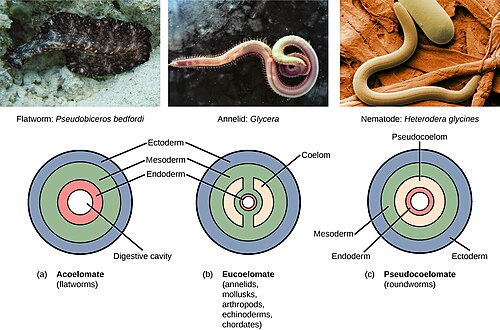
Comparative Embryology: Triploblasts vs. Diploblasts
Not all animals share this three-layered complexity. Biologists categorize animals based on the number of germ layers present in their embryos, which reveals a great deal about their evolutionary history.
Triploblasts
All bilaterians—animals characterized by embryos with bilateral symmetry (meaning the left and right sides are mirror images)—are triploblastic. This structural complexity allows for the development of more sophisticated organ systems.
Diploblasts
Animals such as cnidarians, ctenophores, and placozoans are diploblastic. Their embryos contain only two germ layers, lacking the mesoderm found in triploblasts.
Non-Tissue Animals
Sponges represent an even more basal level of development. They are less specialized than both diploblasts and triploblasts because they lack true tissues and organs entirely.
Evolutionary Timeline
The transition from simpler to more complex body plans occurred hundreds of millions of years ago. Evidence suggests that the earliest triploblasts evolved from diploblasts during the Proterozoic era. This evolutionary leap established the triploblastic group well before the Cambrian explosion, a period of rapid diversification that saw the emergence of most major animal phyla.
| Developmental Type | Number of Germ Layers | Example Taxa | Key Characteristics |
|---|---|---|---|
| Triploblastic | 3 (Ectoderm, Mesoderm, Endoderm) | Bilaterians | Bilateral symmetry; complex organs |
| Diploblastic | 2 | Cnidarians, Ctenophores, Placozoans | Simpler tissue organization |
| Non-Tissue | 0 (True tissues absent) | Sponges | Lack of true tissues and organs |
Key Facts
- Triploblasty involves three germ layers: ectoderm, mesoderm, and endoderm.
- The process of gastrulation transforms the blastula into these layers.
- All bilaterians are triploblastic.
- Diploblasts (like cnidarians) possess only two germ layers.
- Sponges lack true tissues and organs.
- Triploblasts evolved from diploblasts during the Proterozoic era.
Frequently Asked Questions
What is the difference between a triploblast and a diploblast?
The primary difference is the number of germ layers in the embryo. Triploblasts have three layers (ectoderm, mesoderm, and endoderm), while diploblasts have only two.
When did triploblastic animals first appear?
Triploblasts are thought to have evolved from diploblasts during the Proterozoic era, prior to the diversification seen in the Cambrian explosion.
Which animals are considered triploblastic?
All bilaterians, which are animals with bilaterally symmetrical embryos, are triploblastic.
What happens to germ cells during triploblastic development?
Germ cells are set aside during the blastula stage and are later incorporated into the gonads during the process of organogenesis.
Do sponges have germ layers?
No, sponges are less developmentally specialized than diploblasts and triploblasts, as they lack true tissues and organs.