Avalon Explosion: The First Surge of Complex Animal Life
For decades, the Cambrian explosion was regarded as the definitive starting point for complex life on Earth. However, scientific evidence now points to an earlier, equally pivotal event known as the Avalon explosion. Occurring approximately 575 million years ago during the Ediacaran period, this evolutionary radiation represents a rapid increase in the diversity of early animals, preceding the Cambrian event by about 36.2 million years.
Named after the Avalon Peninsula in Newfoundland, Canada, where key trace fossils were discovered, the Avalon explosion marks the emergence of metazoans (multicellular animals). This era saw the first appearance of major biological groups, including cnidarians (such as jellyfish and corals) and bilaterians (animals with a left and right side), fundamentally altering the trajectory of life in Earth's ancient oceans.
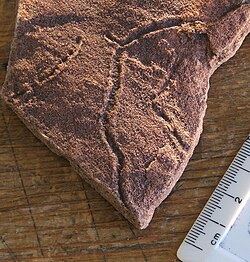
Key Facts
- Timeline: Occurred roughly 575 million years ago in the Ediacaran period.
- Precedence: Happened approximately 36.2 million years before the Cambrian explosion.
- Biodiversity: Featured over 270 defined species across 20 different genera.
- Habitat: Primarily consisted of sessile (non-motile), soft-bodied organisms in deep marine environments.
- Significance: Represents the earliest known complex multicellular organisms.
The History of the Discovery
The concept of a pre-Cambrian ecological growth spurt was famously predicted by Charles Darwin. However, empirical evidence remained elusive until 2008, when paleontologists from Virginia Tech proposed the Avalon explosion. By analyzing changes in the morphological space—the variety of body shapes and structures—within Ediacaran assemblages, researchers suggested that animal evolution was not a single event, but rather a series of explosive radiations.
While this analysis has sparked debate within scientific literature, it has shifted the understanding of how complex life transitioned from simple multicellularity to the diverse body plans seen in the fossil record.
Evidence and Global Distribution
The evidence for the Avalon explosion is found in trace fossils scattered worldwide. Significant deposits have been identified in Newfoundland, Canada, and the Charnwood Forest in England. These fossils comprise the Ediacaran biota, a collection of organisms that flourished before largely disappearing as the Cambrian explosion began.
The pattern of the Avalon explosion mirrors that of the Cambrian explosion: a sudden burst of diverse body plans followed by a period of diversification within those established frameworks. This suggests a recurring evolutionary mechanism for how life expands into new ecological niches.
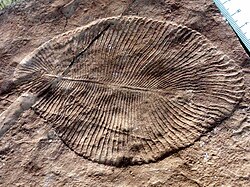
The Fauna of the Ediacaran Period
The animals of the Avalon explosion were characterized by low species diversity but significant morphological experimentation. Scientists have identified 50 different categories of morphological characteristics, though many anatomical details must be inferred from casts and fossils.
The Rise of Bilaterians
During this era, animals began developing bilateral symmetry, meaning they had a distinct anterior (front) and posterior (back) end. This complexity is evident in species such as Spriggina, Charniodiscus, and Yorgia. Many of these organisms are believed to be early ancestors of the annelid, arthropod, echinoderm, and cnidarian phyla.
![Kimberella is an enigmatic fossil that has been interpreted as a cubozoan cnidarian, or as an early mollusc, but its identity is still unclear.[2]](/images/d4/f3/d4f38beaa8e37cc8913b30fd74bfc52b9d54ad7c0b45961c1d4959363b330599.jpg)
The Enigmatic Vendobionta
Some of the most striking fossils from this period are the Vendobionta, a now-extinct phylum of organisms that superficially resemble plants. These "frondlets" exhibited various symmetries, including radial, parallel, and concentric patterns. Notable examples include the spindle-shaped Fractofusus, the lettuce-shaped Fradgatia, and the leaf-like Rangea.
![Cloudina may have been one of the first mineralized animals to appear, although its life appearance and evolutionary affinities remain unknown.[1]](/images/c3/aa/c3aa2289d5a9303e4416d7154f45bd734856a58460c8a110984bdaa21f6ede17.jpg)
Summary of Evolutionary Events
| Feature | Avalon Explosion | Cambrian Explosion |
|---|---|---|
| Approximate Age | 575 Million Years Ago | ~539 Million Years Ago |
| Primary Biota | Ediacaran Biota | Diverse Metazoans |
| Key Characteristics | Sessile, soft-bodied, early bilaterians | Rapid diversification of all living animal groups |
| Environment | Deep marine environments | Global marine oceans |
Frequently Asked Questions
What is the Avalon explosion?
The Avalon explosion is a proposed evolutionary event occurring about 575 million years ago during the Ediacaran period, characterized by a rapid increase in the biodiversity of early multicellular animals.
How does it differ from the Cambrian explosion?
The Avalon explosion occurred approximately 36.2 million years before the Cambrian explosion. While the Cambrian event saw the rise of almost all modern animal groups, the Avalon event represents an earlier surge of complex life, including the first cnidarians and bilaterians.
What were the Vendobionta?
Vendobionta were a now-extinct phylum of animals that looked like plants (frondlets). They displayed various symmetries and included species like Fractofusus and Rangea.
Where can fossils from the Avalon explosion be found?
Trace fossils have been discovered globally, with prominent sites located on the Avalon Peninsula in Newfoundland, Canada, and in the Charnwood Forest in England.
Were the Avalon organisms mobile?
Many were sessile (fixed in one place) and soft-bodied, though trace fossils indicate that some animal movement and sediment disturbance were occurring during this period.