Ediacaran Biota: The Earth's First Complex Multicellular Life
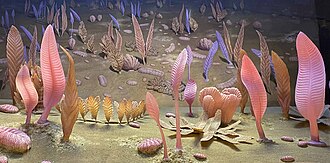
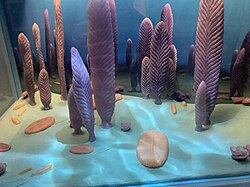
Long before the rise of dinosaurs or the first fish, Earth played host to a strange and enigmatic collection of life forms known as the Ediacaran biota. Existing approximately 635 to 538.8 million years ago, these organisms represent the earliest known complex multicellular life on our planet. Characterized by tubular and frond-like shapes, most of these creatures were sessile, meaning they remained fixed in one place throughout their adult lives.
These ancient organisms appeared in a world recovering from the extreme glaciation of the Cryogenian period. Their emergence is often linked to a proposed evolutionary event called the Avalon explosion about 575 million years ago, which saw a rapid radiation of diverse body plans.
Key Facts
- Timeframe: Existed from roughly 635 to 538.8 million years ago (Mya).
- Significance: Represents the first known complex multicellular organisms in the fossil record.
- Morphology: Primarily tubular, frond-shaped, and sessile organisms.
- Global Presence: Trace fossils have been discovered worldwide, including Russia, Australia, Mexico, and Canada.
- Fate: Largely disappeared during the Cambrian explosion, replaced by more modern animal body plans.
The Rise and Fall of an Ancient Ecosystem
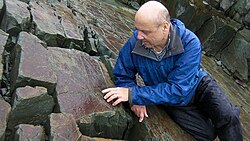
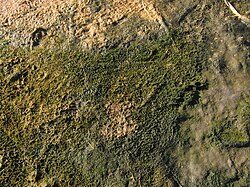
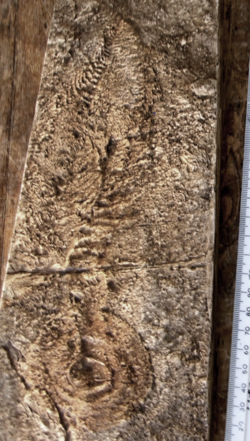
![Greg Retallack's analysis of thin sections and substrates of a variety of Ediacaran fossils.[107] His findings have been disputed by other scientists.[108][109][110]](/images/32/08/32081a20c48b90dbd7850237fc594743dd7d0be6411680e40be3a6a1fc161c2e.jpg)
The Ediacaran biota flourished for millions of years, reaching a peak of diversity that is evident in sites like the White Sea in Russia and the Ediacara Hills in South Australia. In 1995, researchers discovered a diverse community in Sonora, Mexico, dating to approximately 555 Mya, proving that these ecosystems were widespread across the globe.
However, as the world transitioned into the Cambrian period (538.8 Mya), these characteristic communities vanished. While a few rare survivors may have persisted into the Middle Cambrian (510–500 Mya), the dominant Ediacaran life forms were almost entirely replaced by the animals of the Cambrian explosion.
Why did they disappear?
Scientists have proposed several hypotheses to explain the sudden disappearance of the Ediacaran biota:
- Environmental Change: Shifts in ocean chemistry or temperature may have rendered the environment uninhabitable.
- Predation: The arrival of the first true predators may have wiped out the slow-moving or stationary Ediacaran forms.
- Competition: More efficient Cambrian animals may have outcompeted them for resources.
- Preservation Bias: It is possible the organisms didn't vanish entirely, but the conditions required to fossilize them disappeared.
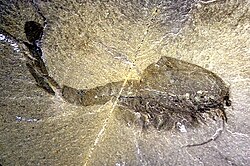
Morphology and Classification
Because these organisms are so different from modern animals, classifying them is a subject of intense scientific debate. They are often grouped into form taxa based on their physical appearance rather than genetic relationship.
Common Body Forms
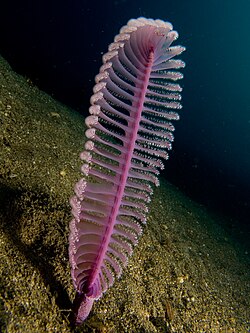
- Fronds: Leaf-like structures, such as Charnia, which bear a passing resemblance to modern sea pens.
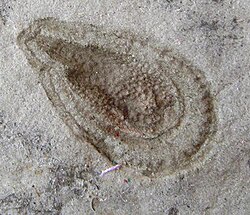
- Discs and Bags: Circular or sac-like organisms.
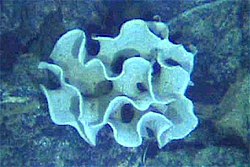
- Quilted Organisms: Creatures with a repetitive, padded texture.
- Trace Fossils: Imprints left by motile organisms, such as Kimberella, which may have been a grazing or predatory bilaterian.
The preservation of these fossils is often attributed to microbial mats—thick layers of bacteria and algae that covered the seafloor. These mats acted as a stabilizing agent, creating "death masks" that captured the impressions of soft-bodied organisms before they decayed.
Summary of Ediacaran Characteristics
| Feature | Description |
|---|---|
| Period | 635 – 538.8 Million Years Ago |
| Primary Forms | Tubular, Frond-shaped, Discs, Quilted |
| Lifestyle | Mostly sessile (stationary) |
| Key Assemblages | Avalon, White Sea, Nama |
| Preservation Method | Microbial mat impressions (Death Masks) |
Frequently Asked Questions
What exactly was the Ediacaran biota?
The Ediacaran biota refers to the collection of all life forms present during the Ediacaran Period. They were the first complex, multicellular organisms to appear on Earth, mostly consisting of soft-bodied, stationary creatures with strange, non-animal-like shapes.
How do they differ from Cambrian animals?
Most modern animal body plans (such as shells, joints, and complex eyes) first appeared during the Cambrian explosion. Ediacaran organisms lacked these features, instead utilizing simpler, often quilted or tubular structures.
What is the "Avalon explosion"?
The Avalon explosion was a proposed event approximately 575 million years ago where Ediacaran life underwent a rapid increase in diversity and complexity following the thawing of global ice sheets.
Were Ediacaran organisms animals?
This is still debated. Some scientists believe they were early animals (like cnidarians), while others suggest they were giant single-celled protozoans or even an entirely extinct kingdom of life.
What is a "death mask" in paleontology?
A death mask occurs when a soft-bodied organism is covered by sediment and a microbial mat. The bacteria in the mat mineralize quickly, preserving a detailed cast of the organism's exterior even after the soft tissue has rotted away.