Understanding the Animal Kingdom: From Evolutionary Origins to Global Diversity
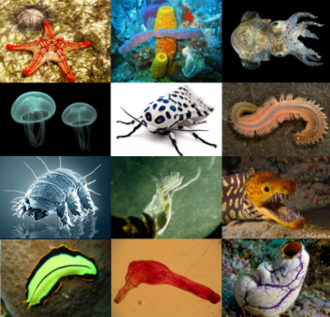
The biological kingdom Animalia encompasses a staggering array of life, from microscopic organisms to the giants of the ocean. Animals are multicellular, eukaryotic organisms that play critical roles in every ecosystem on Earth. Whether they are soaring through the sky, swimming in the deep sea, or crawling through the soil, all animals share a set of fundamental biological characteristics that distinguish them from plants, fungi, and other forms of life.
Key Facts
- Total Described Species: Over 1.5 million, including 1.05 million insects.
- Estimated Global Species: Up to 7.77 million.
- Size Range: From 8.5 μm to 33.6 meters in length.
- Common Ancestry: Animals are a monophyletic clade, meaning they evolved from a single common ancestor.
- Core Requirements: Animals consume organic material, breathe oxygen, and possess myocytes (muscle cells).
- Evolutionary Milestone: Most modern phyla appeared during the Cambrian explosion approximately 539 million years ago.
Defining Characteristics of Animals
To be classified within the kingdom Animalia, an organism must meet several biological criteria. Most animals are motile, meaning they have the ability to move spontaneously and independently. At a cellular level, they are eukaryotic (cells contain a nucleus and organelles) and multicellular.
A defining feature of animal development is the growth from a blastula—a hollow sphere of cells formed during the early embryonic stage. This developmental process is unique to animals and sets the foundation for their complex body structures.
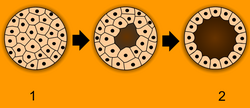
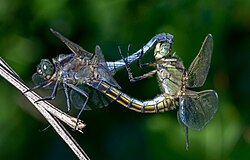
Furthermore, animals are heterotrophs, meaning they must consume organic material for energy. Most species reproduce sexually, a process that promotes genetic diversity across populations.
Evolutionary History and the Fossil Record
The story of animal life begins in the late Cryogenian period, with evidence suggesting a common ancestor lived approximately 650 million years ago. This was followed by the Avalon explosion during the Ediacaran period, where early animal life began to diversify.
The most significant surge in diversity occurred during the Cambrian explosion, starting around 539 million years ago (Mya). During this era, nearly all modern animal phyla first appeared in the marine fossil record. This was followed by the Ordovician radiation approximately 485.4 Mya, which saw the emergence of most animal classes.
From a phylogenetic perspective, animals are the sister group to the choanoflagellates. Together, these groups form the clade Choanozoa. Molecular clock evidence suggests that the animal clade may have actually originated as far back as 800 Mya.
Diversity and Classification
The sheer variety of animal life is immense. The scientific study of these organisms is known as zoology, while the study of their behavior is called ethology. Animals are generally divided into several major groups based on their body plans and evolutionary history:
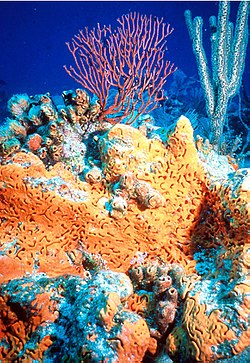
- Porifera: Simple animals, such as sponges.
- Cnidaria: Including corals and jellyfish.
- Ctenophora: Comb jellies.
- Placozoa: Simple, flat multicellular animals.
- Bilateria: Animals with bilateral symmetry, comprising roughly 30 different phyla.
The Bilaterian Body Plan
Within the Bilateria, many animals follow a nephrozoan body plan. This typically includes an elongated body with a distinct head (containing sense organs and a mouth) and a tail. This structure, supported by circular and longitudinal muscles, allows for peristaltic motion, enabling efficient movement through their environments.
![Idealised nephrozoan body plan.[c] With an elongated body and a direction of movement the animal has head and tail ends. Sense organs and mouth form the basis of the head. Opposed circular and longitudinal muscles enable peristaltic motion.](/images/02/0e/020e4d51300419cc0dca329925367821138f95c17d5ceaa5188b18875c78e4e2.webp)
Ecology and Environmental Interaction
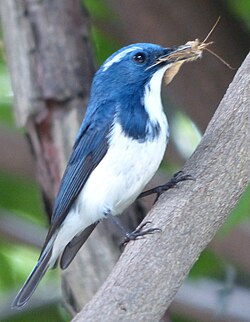
Animals exist in complex ecologies, forming intricate food webs. These interactions range from symbiotic relationships to predation, where one animal feeds on another to survive.
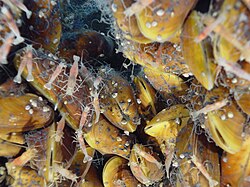
Animals have adapted to almost every environment on Earth, including extreme conditions. For example, specialized mussels and shrimps thrive around hydrothermal vents in the deep ocean, where they rely on chemical energy rather than sunlight.
Animals in Human Culture and Society
The classification of animals has evolved over centuries. Jean-Baptiste de Lamarck was instrumental in modernizing the classification of invertebrates, expanding upon the work of Linnaeus by breaking the group "Vermes" into nine distinct phyla by 1809.
![Jean-Baptiste de Lamarck led the creation of a modern classification of invertebrates, breaking up Linnaeus's "Vermes" into nine phyla by 1809.[160]](/images/c6/55/c65523bd2f9c7f0ba0f190f26544af772d6fea183b064930840488ec60b42d09.webp)
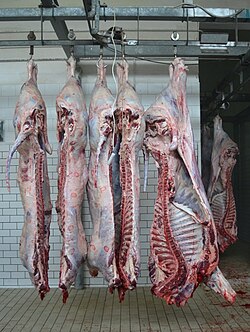
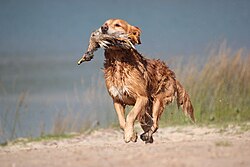
Humans have integrated animals into their lives in various practical and symbolic ways. Practically, animals provide food sources and assist in labor and hunting.
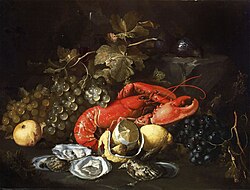
Beyond utility, animals hold deep symbolic meaning and have been a central theme in art and culture for millennia.
Animal Diversity Summary
| Category | Data / Detail |
|---|---|
| Total Described Species | > 1.5 Million |
| Insects (Described) | ~ 1.05 Million |
| Molluscs (Described) | > 85,000 |
| Vertebrates (Described) | ~ 65,000 |
| Estimated Total Species | Up to 7.77 Million |
| Size Range | 8.5 μm to 33.6 m |
Frequently Asked Questions
What defines an organism as an animal?
An animal is a multicellular, eukaryotic organism that consumes organic material, breathes oxygen, and possesses myocytes (muscle cells). Most animals are capable of movement and develop from a hollow sphere of cells called a blastula during embryonic development.
When did the first animals appear on Earth?
Animals first appeared in the fossil record during the late Cryogenian period. Genetic evidence suggests a common ancestor existed approximately 650 million years ago, though some molecular clock estimates suggest the clade could have originated as early as 800 million years ago.
What was the Cambrian explosion?
The Cambrian explosion was a pivotal evolutionary event starting around 539 million years ago. During this time, most of the modern animal phyla first appeared in the fossil record, primarily as marine species, leading to a massive increase in biological diversity.
How many animal species are there?
While over 1.5 million species have been formally described—with insects making up the vast majority—scientists estimate that there may be as many as 7.77 million animal species in total on Earth.
What is the difference between zoology and ethology?
Zoology is the broad scientific study of animals, covering their biology, classification, and physiology. Ethology is a more specialized branch of science that focuses specifically on the study of animal behavior.