Understanding Zoology: The Scientific Study of Animal Life
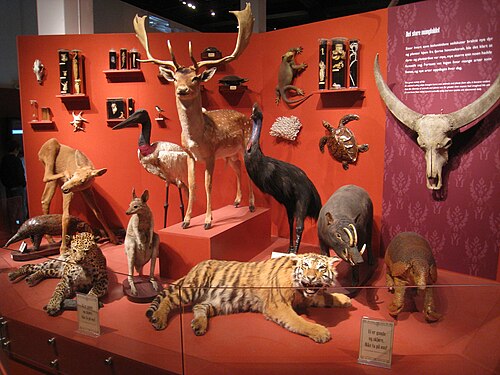
Zoology is a primary branch of biology dedicated to the scientific study of animals. This diverse field encompasses the investigation of animal structure, embryology (the study of the development of embryos), classification, habits, and distribution. Zoologists examine both living and extinct species, exploring how they interact within their respective ecosystems. The term itself is derived from the Ancient Greek words zôion, meaning "animal," and lógos, meaning "study of."
Key Facts
- Zoology is a major branch of biology that studies all animal life, including extinct species.
- Aristotle is considered the founder of formal zoological study.
- Modern zoology relies heavily on evolutionary biology and molecular genetics.
- Approximately 1.5 million animal species have been described, though estimates suggest up to 8 million may exist.
- The field is divided into many specialized disciplines, such as ethology, physiology, and anatomy.
The History of Zoological Science
Ancient Foundations
Human interest in animals dates back to prehistory. Cave paintings in France, some 15,000 years old, show detailed renderings of bison, horses, and deer. As the Neolithic Revolution introduced the domestication of animals, ancient civilizations in Mesopotamia and Egypt began documenting wildlife and husbandry through art and hieroglyphics.
The formal roots of zoology lie in the Greco-Roman world. In the fourth century BC, Aristotle categorized animals into two groups: vertebrates (animals with blood) and invertebrates (animals without blood). He studied their development and how their parts functioned to help them adapt to their environments. Centuries later, the Roman physician Galen performed animal dissections to study anatomy, providing a foundation for anatomical study that lasted for many centuries.
The Renaissance and the Rise of Empiricism
During the post-classical era, Middle Eastern science integrated and advanced the knowledge of the Greeks, Romans, and Persians. By the 13th century, Albertus Magnus was applying a modern scientific approach, arguing that natural science should inquire into the causes of things rather than simply accepting tradition. A major milestone occurred between 1551 and 1558 when Conrad Gessner published his monumental four-volume encyclopedia, Historia animalium.

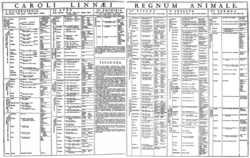
In Europe, the Renaissance sparked a revolution through empiricism—the theory that knowledge comes primarily from sensory experience and experimentation. Naturalists like Carl Linnaeus began the massive task of classifying the diversity of life, while Antonie van Leeuwenhoek’s work with microscopes revealed a previously unknown world of microorganisms. This discovery, supported by Robert Hooke, led to the development of cell theory, the understanding that all living organisms are composed of cells.
The Evolutionary Revolution
In the 19th century, zoology transitioned from a hobby for "gentlemen naturalists" into a professional scientific discipline. Explorers like Alexander von Humboldt laid the groundwork for biogeography (the study of the distribution of species) and ecology. The most significant shift occurred in 1859 with the publication of Charles Darwin’s theory of evolution by natural selection. Darwin provided a framework for understanding how species change over time and how they are related through common descent.
This era also saw the birth of modern genetics through Gregor Mendel’s work with pea plants in 1865. By the 20th century, the combination of population genetics and natural selection created the field of evolutionary biology. The 1953 discovery of the double-helical structure of DNA by Francis Crick, James Watson, and Rosalind Franklin further transformed the field, opening the door to molecular biology.
The Scope and Classification of Animals
Taxonomy and Systematics
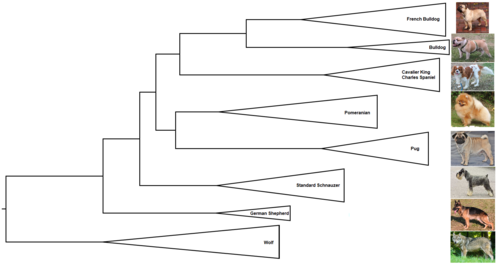
A central task in zoology is identifying and grouping organisms based on their characteristics, a field known as taxonomy. While early scientists believed species were unchanging, Darwin’s theories led to the development of cladistics. This method studies the relationships between different groups, or clades, to understand their evolutionary history, known as phylogeny. These relationships are often visualized using a cladogram, a diagrammatic representation of evolutionary branching.
Vertebrates vs. Invertebrates
Zoology is broadly divided into two main categories:
- Vertebrate Zoology: The study of animals with a backbone, including fish, amphibians, reptiles, birds, and mammals. Specialized fields include ornithology (birds) and ichthyology (fish).
- Invertebrate Zoology: The study of the vast and diverse remainder of the animal kingdom, such as molluscs, arthropods, worms, and sponges.
Major Branches of Zoology
Structural and Functional Studies
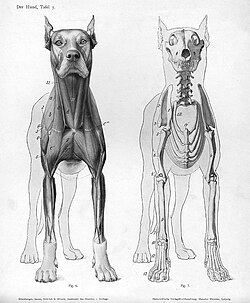
Structural zoology focuses on the physical makeup of animals. This includes cell biology, which examines life at the microscopic and molecular levels, and anatomy, which studies macroscopic structures like organs and organ systems. Comparative anatomy allows scientists to see the similarities and differences in the bodies of different species, providing clues about their evolutionary history.
In contrast, physiology focuses on function. It investigates the mechanical, physical, and biochemical processes that allow an organism to operate as a whole, such as how the respiratory or nervous systems function.
Behavior and Ecology
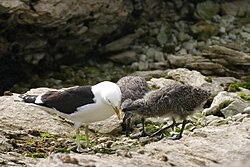
Ethology is the objective study of animal behavior in natural conditions. Unlike behaviorism, which often relies on laboratory settings, ethologists look at how behavior evolves through natural selection. A subfield, behavioral ecology, seeks to answer questions regarding the survival value and developmental history of specific behaviors. Another area, animal cognition, explores the intelligence and learning capabilities of animals.
Biogeography complements this by studying how animals are distributed across the Earth, considering factors like climate change, migration, and plate tectonics.
Molecular and Evolutionary Biology
Modern zoology is increasingly driven by molecular biology, which studies the genetic mechanisms of inheritance. By using DNA sequencing, scientists can determine the precise degrees of relationship between different organisms. This has revolutionized systematics, the study of the diversification of living forms.
Reproduction in the Animal Kingdom
Most animals reproduce through sexual reproduction, where a male and female gamete (reproductive cell) unite during fertilization to create a genetically unique offspring. However, some species are capable of parthenogenesis, a form of asexual reproduction where an embryo develops from an unfertilized egg. This process has been observed in various snakes, lizards, and amphibians.
Summary of Zoological Disciplines
| Branch | Primary Focus |
|---|---|
| Anatomy | Macroscopic structures and organ systems |
| Physiology | Mechanical and biochemical functions of living systems |
| Ethology | Animal behavior in natural environments |
| Evolutionary Biology | Processes of natural selection and speciation |
| Molecular Biology | Genetic mechanisms and DNA structure |
| Biogeography | Spatial distribution of organisms across Earth |
Frequently Asked Questions
What is the difference between vertebrate and invertebrate zoology?
Vertebrate zoology focuses on animals that possess a backbone, such as mammals, birds, and reptiles. Invertebrate zoology covers all other animals, including much larger and more diverse groups like insects, molluscs, and sponges.
How many animal species are estimated to exist?
While scientists have described approximately 1.5 million species, it is estimated that as many as 8 million animal species may actually exist on Earth.
What is the difference between ethology and behaviorism?
Ethology is the study of animal behavior under natural, real-world conditions, often focusing on evolutionary significance. Behaviorism typically focuses on studying behavioral responses within a controlled laboratory setting.
What is parthenogenesis?
Parthenogenesis is a type of asexual reproduction where an embryo develops from an unfertilized egg. This has been documented in several groups, including certain lizards, snakes, and amphibians.
How does DNA influence modern zoology?
The study of DNA allows zoologists to use molecular phylogenetics to understand the evolutionary relationships between species. DNA sequencing helps clarify how different organisms are related through common descent.