Understanding the Biological Kingdom: Organizing the Diversity of Life
Ever wondered how scientists organize the millions of species on Earth? To make sense of the staggering variety of life, biologists use a system of classification called taxonomy. At the heart of this system is the kingdom, a primary rank used to group living organisms based on shared characteristics.
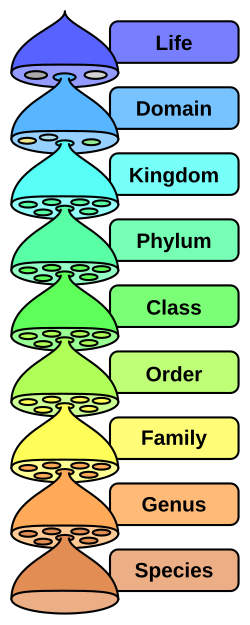
In the modern taxonomic hierarchy, a kingdom is the second-highest rank, sitting just below the domain and above phyla (singular: phylum). While the concept of a kingdom has been central to biology for centuries, the way we define and divide these groups has evolved as our understanding of genetics and evolution has grown.
The Evolution of Biological Classification
The quest to categorize life began in antiquity. Aristotle (384–322 BC) focused on animals, while his student Theophrastus (c. 371–c. 287 BC) documented plants. However, the foundation of modern nomenclature was laid in 1735 by Carl Linnaeus. He originally proposed two kingdoms: Regnum Animale (animals) and Regnum Vegetabile (plants). Interestingly, Linnaeus also included a third kingdom, Regnum Lapideum, for minerals, though these are not considered living organisms today.
The Expansion to Three and Four Kingdoms
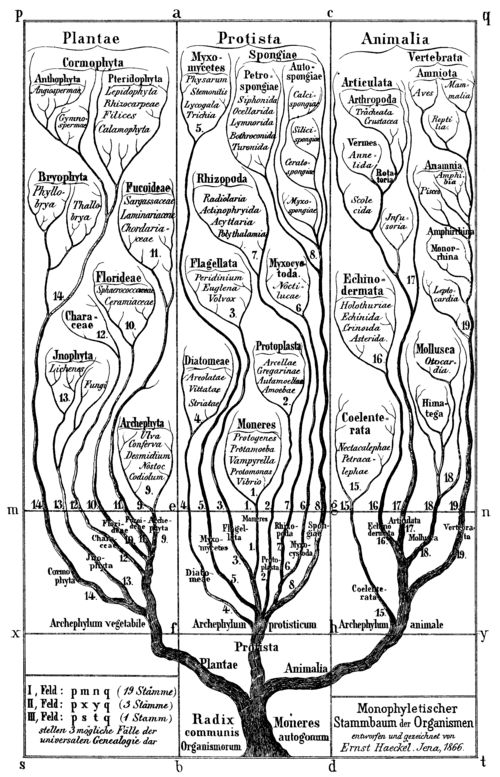
As microscopy improved, scientists discovered organisms that didn't fit neatly into "plant" or "animal." In 1866, Ernst Haeckel proposed the kingdom Protista to house "primitive" or neutral organisms, primarily unicellular life. By 1938, Herbert F. Copeland introduced a fourth kingdom, Monera, to separate prokaryotic organisms (cells without a nucleus), such as bacteria and archaea, from the eukaryotic organisms (cells with a nucleus) found in other kingdoms.
The Five and Six Kingdom Models
In 1969, Robert Whittaker popularized the five-kingdom system, which added Fungi as a distinct kingdom, separating them from plants due to their different methods of nutrition. This system—comprising Monera, Protista, Fungi, Plantae, and Animalia—became a staple of biological education.
Over time, further refinements led to a six-kingdom model. This version typically splits the Monera kingdom into two separate groups: Bacteria (Eubacteria) and Archaea (Archaebacteria), recognizing the deep genetic differences between these two types of prokaryotes.
Modern Shifts: From Kingdoms to Domains
The most significant shift in classification occurred in 1990 when Carl Woese introduced the rank of domain above the kingdom. Based on rRNA (ribosomal RNA) data, Woese proposed that life is divided into three primary domains: Bacteria, Archaea, and Eukarya.
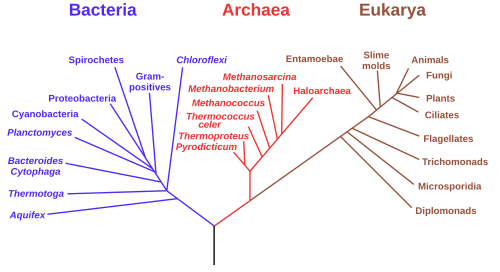
This shift reflects the rise of cladistics, a method of classification based on common ancestry. Some modern biologists have moved away from the term "kingdom" entirely because some traditional kingdoms are not monophyletic—meaning they do not include all the descendants of a single common ancestor.
Eukaryotic Supergroups
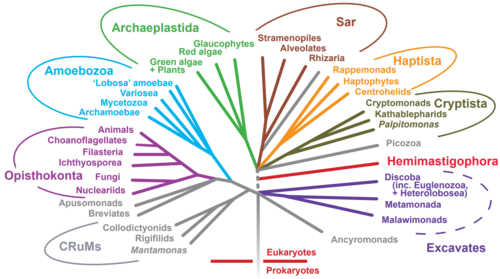
Within the domain Eukarya, the traditional kingdoms (Protista, Fungi, Plantae, and Animalia) are often viewed as too simplistic. Instead, researchers now identify several "supergroups," such as:
- Archaeplastida: Including land plants, green algae, red algae, and glaucophytes.
- Opisthokonta: Including animals and fungi.
- Amoebozoa: Most lobose amoeboids and slime moulds.
- Excavata: Various flagellate protozoa.
- Rhizaria: Foraminifera, Radiolaria, and other amoeboid protozoa.
- Chromalveolata: Including brown algae, diatoms, and Alveolata.
Key Facts
- Hierarchy: The kingdom rank sits below the domain and above the phylum.
- Regional Differences: US and Canadian textbooks often use a six-kingdom system, while other regions (like the UK and India) frequently use five.
- Terminology: The terms flora (plants), fauna (animals), and funga (fungi) are used to describe life in specific regions or time periods.
- Prokaryotes vs. Eukaryotes: The fundamental divide in early classification was between cells without a nucleus (prokaryotes) and cells with a nucleus (eukaryotes).
- The Three-Domain System: Modern science primarily recognizes the domains Bacteria, Archaea, and Eukarya.
Classification Summary Table
The following table tracks how the top-level classification of life has changed over time.
| Scientist/Year | Top-Level Rank | Number of Groups | Key Groups Included |
|---|---|---|---|
| Linnaeus (1735) | Kingdom | 2 (Life) | Animalia, Vegetabilia |
| Haeckel (1866) | Kingdom | 3 | Protista, Plantae, Animalia |
| Copeland (1938) | Kingdom | 4 | Monera, Protista, Plantae, Animalia |
| Whittaker (1969) | Kingdom | 5 | Monera, Protista, Fungi, Plantae, Animalia |
| Woese (1990) | Domain | 3 | Bacteria, Archaea, Eukarya |
| Cavalier-Smith (1998) | Kingdom | 6 | Protozoa, Chromista, Plantae, Fungi, Animalia, Bacteria |
Frequently Asked Questions
What is the difference between a domain and a kingdom?
A domain is the highest taxonomic rank of organisms. A kingdom is a subdivision of a domain. For example, the domain Eukarya contains several kingdoms, including Animalia, Plantae, and Fungi.
Why is the kingdom Protista often considered problematic?
Protista is often seen as a "catch-all" group for eukaryotes that do not fit into plants, animals, or fungi. Because many protists are not closely related to one another, the group is not monophyletic, leading many modern scientists to replace it with several eukaryotic supergroups.
What are prokaryotes and eukaryotes?
Prokaryotes are simple, single-celled organisms that lack a nucleus (such as Bacteria and Archaea). Eukaryotes are organisms whose cells contain a nucleus and other membrane-bound organelles (such as plants, animals, fungi, and protists).
What does "monophyletic" mean in taxonomy?
A group is monophyletic if it consists of an ancestral species and all of its descendants. Modern cladistics prioritizes monophyletic groups to ensure that classification accurately reflects evolutionary history.
Are viruses included in these kingdoms?
Viruses are generally excluded from the traditional kingdom and domain systems because they are not considered fully "alive" in the cellular sense; they cannot reproduce on their own and lack a cellular structure.