Hydra: The Biological Marvel of Regeneration and Immortality
In the quiet corners of freshwater ecosystems lives a creature that defies the conventional laws of aging and injury. The Hydra, a genus of small, freshwater polyps belonging to the phylum Cnidaria, is more than just a simple aquatic organism; it is a cornerstone of regenerative biology. Known for its ability to rebuild its entire body from fragments and its apparent lack of senescence, the Hydra provides scientists with a unique window into the mechanisms of immortality and cellular renewal.
These organisms are classified under the class Hydrozoa and the order Anthoathecata. While they may appear simple, their biological complexity—ranging from specialized stinging cells to a highly dynamic genome—makes them an invaluable model for studying evolution, immunity, and aging.
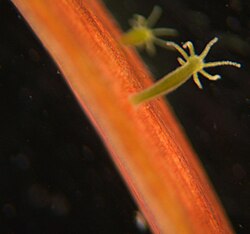
Key Facts
- Diploblastic Structure: Possesses two primary body layers: the outer epidermis and the inner gastrodermis.
- Regenerative Power: Can regenerate a full body from a small slice; the "head" can grow a "foot" and vice versa.
- Biological Immortality: Exhibits non-senescence, meaning it does not age in the traditional sense, driven by the FoxO transcription factor.
- Genetic Complexity: Contains over 20,000 genes, sharing at least 6,071 genes with humans.
- Stem Cell Driven: Composed of 50,000 to 100,000 cells maintained by three distinct stem cell populations.
Morphology and Biological Structure
The Hydra is diploblastic, meaning its body is organized into two main cellular layers. The outer layer, the epidermis, serves as the primary barrier, while the inner layer, the gastrodermis, lines the stomach. These two layers are separated by the mesoglea, a gel-like substance that provides structural support.
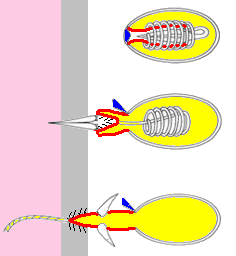
To protect itself from infection, the Hydra produces hydramacin, a potent bactericide that guards the outer epidermal layer. The organism's body is anchored by a "foot" and topped with a "head" featuring tentacles. These tentacles are equipped with nematocysts—specialized stinging organelles used for prey capture and defense.
The Power of Regeneration
One of the most striking features of the Hydra is its capacity for total tissue regeneration. If a Hydra is cut in half, each piece can regenerate the missing part to form a complete, smaller individual. If sliced into multiple segments, the middle sections are capable of regenerating both a head and a foot simultaneously. This process is fueled by the continuous renewal of stem cells within the body column.
Genetics and the Secret to Immortality
The Hydra's ability to avoid senescence (the process of biological aging) has made it a focal point of gerontology. Research indicates that Hydra stem cells possess a capacity for indefinite self-renewal. A critical driver of this process is the transcription factor forkhead box O (FoxO). When FoxO is downregulated in experiments, population growth is drastically reduced, highlighting its role in maintaining the organism's "immortal" state.
Genome Diversity: Green vs. Brown Hydras
The genus is divided into two primary clades: the green hydras (such as H. viridissima) and the brown hydras (such as H. oligactis and H. vulgaris). There is a significant difference in their genetic architecture:
- Green Hydras: Have a smaller genome of approximately 300 Mb (megabases).
- Brown Hydras: Possess a much larger genome of approximately 1 Gb.
This expansion in brown hydras is caused by LINEs (Long Interspersed Nuclear Elements), specifically a single family of the CR1 class of transposable elements. This makes the Hydra an ideal subject for studying how genome expansions drive speciation.
Reproduction and Life Cycle
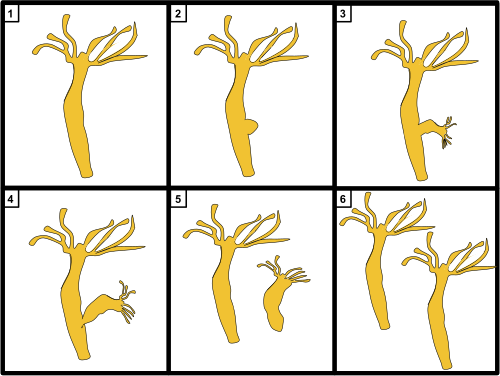
Hydra primarily reproduce asexually through a process called budding. During this process, a new individual grows directly out of the parent's body column as a bud, eventually cleaving off to become a genetically identical clone.
Feeding and Environmental Response
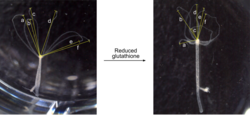
Hydra are predatory organisms that rely on their nematocysts to paralyze prey. Their feeding response is closely linked to chemical signals. For instance, the reduction of glutathione—a powerful antioxidant—has been shown to reduce the spread of the Hydra's tentacles, impacting its ability to feed.
| Feature | Description |
|---|---|
| Body Layers | Diploblastic (Epidermis and Gastrodermis) |
| Cell Count | 50,000 to 100,000 cells |
| Key Protein | Hydramacin (Bactericide) |
| Aging Regulator | FoxO Transcription Factor |
| Genome Size | 300 Mb (Green) to 1 Gb (Brown) |
| Reproduction | Asexual Budding (Cloning) |
Frequently Asked Questions
Is the Hydra truly immortal?
While the term "immortal" is used, it specifically refers to non-senescence. Their stem cells, regulated by the FoxO factor, allow for indefinite self-renewal, meaning they do not experience the gradual cellular decline associated with aging in humans.
How does Hydra regenerate from a small piece?
Hydra possess three specific stem cell populations that continually renew themselves. These cells can reorganize and differentiate to replace any missing body part, whether it be the head or the foot.
What is the difference between green and brown hydras?
Beyond color, the primary difference is genomic. Brown hydras have a genome roughly three times larger than green hydras due to the expansion of transposable elements called LINEs.
What are nematocysts?
Nematocysts are specialized stinging cells found in the tentacles of the Hydra. They discharge toxins (including actinoporin-like toxins) to capture prey and defend against predators.
How many genes do Hydra share with humans?
Ortholog comparison analysis has demonstrated that Hydra share a minimum of 6,071 genes with humans, making them a useful model for studying the evolution of innate immunity.