Nerve Nets: The Simplest Nervous Systems in Multicellular Organisms
In the vast diversity of animal life, the ability to sense and respond to the environment is a critical survival trait. While humans rely on a complex brain and spinal cord, many marine organisms utilize a far more primitive structure known as a nerve net. A nerve net is a diffuse network of interconnected neurons that lacks a centralized brain or cephalization (the concentration of nerve tissue at the anterior end of an organism).
Typically associated with animals exhibiting radial symmetry, nerve nets are the most basic form of nervous systems found in multicellular organisms. Unlike the centralized systems of mammals, where neurons are tightly grouped, the neurons in a nerve net are spread apart across the body, allowing the organism to detect stimuli from any direction.
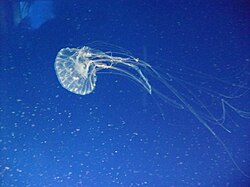
Key Facts
- Definition: A diffuse network of neurons without a centralized brain or nerve cord.
- Primary Phyla: Found predominantly in Cnidaria (jellyfish, anemones), Ctenophora (comb jellies), and Echinodermata (sea stars).
- Symmetry: Most commonly associated with radial symmetry, though also present in some bilaterally symmetrical animals like Xenoturbellida.
- Function: Enables basic responses to physical contact and chemical stimuli, though it cannot pinpoint the exact source of a stimulus.
- Evolutionary Role: Serves as the precursor to the complex central nervous systems (CNS) seen in advanced animals.
Anatomy and Distribution
The structure of a nerve net varies depending on the organism's biological needs. In Cnidarians, such as the Hydra, the nerve net is distributed throughout the entire body. This allows the organism to respond to touch or chemicals, although the motor output is often the same regardless of where the stimulus occurs.
In contrast, Echinoderms like sea stars exhibit a more specialized arrangement. They possess a nerve net in each arm, which is connected by a central radial nerve ring. This configuration allows for more complex and coordinated movements than a completely diffuse net.
Types of Neurons in the Nerve Net
Using the Hydra as a model, researchers have identified two primary categories of nerve cells:
- Sensory Cells: These detect external stimuli such as light, sound, temperature, or touch. In Hydra, these are often concentrated around the mouth (hypostome).
- Ganglion Cells: These act as intermediary connections between different neurological structures, facilitating the transmission of signals.
Evolutionary Emergence
Nerve nets appeared early in animal evolution. Coelenterates (Cnidaria and Ctenophora) diverged approximately 570 million years ago, prior to the Cambrian explosion. They were among the first phyla to develop nervous systems that differentiate during development and communicate via synaptic conduction (the transmission of signals across a synapse).
The Role of Ion Channels
The emergence of true nervous tissue is closely linked to voltage-gated sodium (Nav) channels. These channels allow action potentials to propagate over long distances, enabling rapid communication between cells. While Porifera (sponges) lack a true nervous system and Nav channels, they do possess voltage-gated calcium (Cav) channels, which allow for simpler intercellular signaling.
From Nets to Cords
The nerve net is the evolutionary precursor to the central nervous system. Through a process of condensation, the diffuse net evolved into longitudinal nerve cords in the Bilateria (animals with bilateral symmetry). This transition occurred multiple times independently across different phyla, eventually leading to the development of the brain in more advanced species.
Physiology and Function
The physiology of a nerve net is based on the intensity of the stimulus. A stronger stimulus activates more receptors in the sensory cells, which in turn triggers a more powerful motor response via chemical synapses. However, these systems are significantly slower than those of higher vertebrates. For example, an unmyelinated axon in a nerve net conducts signals at roughly 5 meters per second, whereas a myelinated human nerve fiber can reach 120 meters per second.
Interestingly, while hormones such as steroids and neuropeptides have been found in cnidarian tissues, their exact function remains poorly understood. It is also noted that the nematocyst (stinging cell) response in cnidarians is not controlled by nerve activity.
| Feature | Nerve Net | Central Nervous System (CNS) |
|---|---|---|
| Organization | Diffuse/Spread apart | Condensed/Centralized |
| Brain Presence | Absent | Present (in most) |
| Symmetry | Typically Radial | Typically Bilateral |
| Stimulus Localization | Cannot detect source | Can pinpoint source |
| Example Organisms | Jellyfish, Sea Stars | Humans, Insects, Fish |
Frequently Asked Questions
Do all animals with nerve nets lack a brain?
Yes, by definition, a nerve net is a system of interconnected neurons that lacks a centralized brain or cephalization.
Can a nerve net tell where a touch is coming from?
No. While a nerve net allows an organism to respond to its environment, it generally does not enable the organism to detect the specific source of the stimulus, often resulting in a uniform motor response regardless of the point of contact.
Which animals possess nerve nets?
Nerve nets are primarily found in the phyla Cnidaria, Ctenophora, and Echinodermata. They also appear in the subphylum Xenoturbellida and alongside more complex systems in chordates, annelids, and flatworms.
How does a nerve net differ from a human nervous system in speed?
Nerve nets are much slower. Action potentials in a typical unmyelinated axon of a nerve net travel at about 5 meters per second, while myelinated human fibers can conduct signals at approximately 120 meters per second.
What is the evolutionary relationship between nerve nets and the brain?
The nerve net is the evolutionary precursor to the central nervous system. The condensation of the diffuse net into longitudinal nerve cords eventually led to the evolution of the brain in bilaterally symmetrical animals.