Cnidaria: The Ancient Phylum of Jellyfish, Corals, and Anemones
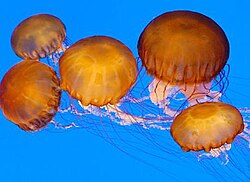
The phylum Cnidaria represents one of the most ancient lineages of animals on Earth. From the drifting bells of true jellyfish to the rigid architecture of stony corals, these organisms are defined by a unique biological weapon: the cnidocyte. These specialized cells allow cnidarians to capture prey and defend themselves, marking a significant evolutionary step in the history of animal life.
Cnidarians are characterized by a simple body plan consisting of two main cell layers with a jelly-like substance known as mesoglea sandwiched between them. Unlike more complex animals, they lack a centralized brain, instead utilizing a simple nervous system to respond to their environment.
Key Facts
- Ancient Origins: Fossils date back to approximately 580 million years ago, though molecular data suggests they may have emerged as far back as 741 million years ago.
- Defining Feature: They possess cnidocytes, specialized stinging cells containing organelles called nematocysts.
- Body Forms: They typically exist as either a sessile polyp (fixed in one place) or a motile medusa (free-swimming).
- Diverse Habitats: While primarily marine, some species like Hydra inhabit freshwater environments.
- Size Range: They vary from microscopic parasitic myxozoans to the lion's mane jellyfish, which can reach 75 meters in length.
Classification and Diversity
The phylum is divided into several subphyla and classes based on their morphology and life cycles. The most prominent groups include the Anthozoa, which encompass corals and sea anemones, and the Medusozoa, which include various types of jellyfish.
Subphylum Anthozoa
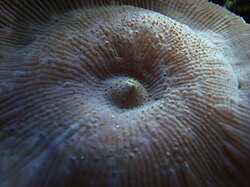
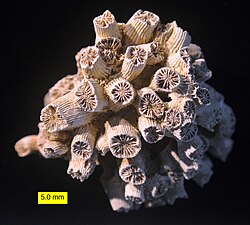
This group consists exclusively of polyps and lacks a medusa stage. It is divided into Hexacorallia (stony corals and sea anemones) and Octocorallia (soft corals and sea fans).
Subphylum Medusozoa
Medusozoans typically feature a medusa phase in their life cycle. This subphylum includes:
- Scyphozoa: The "true" jellyfish.
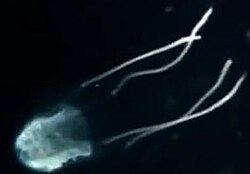
- Cubozoa: Box jellyfish and sea wasps, some of which are highly venomous.
- Hydrozoa: A diverse group including hydroids and siphonophores.
- Staurozoa: Stalked jellyfish that remain sessile.
Subphylum Endocnidozoa
Unlike their free-living relatives, these are specialized parasites, including the classes Myxozoa and Polypodiozoa.
The Biology of the Sting: Cnidocytes
The most distinctive feature of all cnidarians is the cnidocyte. Inside this cell is a nematocyst, a complex organelle that acts like a pressurized spring. When a trigger cilium is stimulated, the operculum (lid) opens, and a barbed thread is fired into the victim's tissue, delivering potent venom.
![A hydra's nematocyst, before firing. "trigger" cilium[11]](/images/53/6c/536c94cd48465167f6692f3e8d2540ce680ab70ec3669590d46ea34a57cb2f29.png)
![Firing sequence of the cnida in a hydra's nematocyst[11] Operculum (lid) "Finger" that turns inside out/ / / Barbs Venom Victim's skin Victim's tissues](/images/0d/47/0d47c95fbd6218585defcb75569601e336933a6b6e7e4e32d69ebda853192e0b.png)
Ecology and Distribution
Cnidarians are found globally, though their distribution is often dictated by their biological needs. Many corals rely on endosymbiotic algae—algae that live inside their tissues—for nutrients, restricting them to shallow, clear tropical waters between 30°N and 30°S where sunlight is abundant.
However, other species have adapted to extreme environments. Some sea anemones live near hydrothermal vents more than 10 kilometers below sea level, while others thrive in the freezing waters of the Arctic.

Comparative Summary of Cnidarian Classes
| Class | Example | Medusa Phase | Cells in Mesoglea | Approx. Species |
|---|---|---|---|---|
| Hydrozoa | Hydra | In some species | No | 3,600 |
| Scyphozoa | True Jellyfish | Yes | Yes | 228 |
| Cubozoa | Box Jellyfish | Yes | Yes | 42 |
| Anthozoa | Sea Anemones | No | Yes | 6,100 |
| Myxozoa | Myxobolus cerebralis | No | No | 1,300 |
Evolutionary History
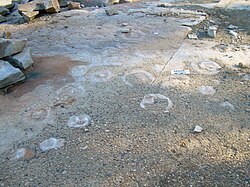
The fossil record provides a glimpse into the longevity of this phylum. Fossils from the Ediacaran period suggest a presence 580 million years ago, preceding the Cambrian Explosion. Some evidence indicates that corals were present shortly before 490 million years ago. Molecular clock analysis suggests an even deeper history, potentially placing the crown group of cnidarians around 741 million years ago.
Frequently Asked Questions
What is the difference between a polyp and a medusa?
A polyp is a sessile (stationary) form, typically shaped like a cylinder with tentacles facing upward, such as a sea anemone. A medusa is a motile (swimming) form, typically shaped like a bell or umbrella, such as a jellyfish.
How do cnidarians feed?
They use their stinging cnidocytes to paralyze or kill prey, which is then moved into a central gastrovascular cavity for digestion. Some, like reef-building corals, also obtain nutrients from symbiotic algae.
Are all jellyfish dangerous to humans?
Not all, but some are extremely hazardous. For example, certain species of box jellyfish (Cubozoa) can cause Irukandji syndrome, a severe systemic reaction to their venom.
Do cnidarians have a brain?
No, they do not have a centralized brain. Instead, they possess a simple, decentralized nervous system (often called a nerve net) that allows them to coordinate movements and respond to stimuli.
Can cnidarians live in freshwater?
Yes. While the vast majority are marine, some hydrozoans, most notably the genus Hydra, are found in freshwater environments.