Triple Entente: The Strategic Coalition That Shaped World War I
The Triple Entente (from the French word for "friendship" or "understanding") was an informal diplomatic arrangement between the Russian Empire, the French Third Republic, and the United Kingdom of Great Britain and Ireland. Established in 1907, this coalition served as a critical counterweight to the Triple Alliance—comprising the German Empire, the Austro-Hungarian Empire, and the Kingdom of Italy.
Unlike traditional military treaties, the Triple Entente was not a formal alliance of mutual defense. Instead, it was a series of bilateral agreements and shared strategic interests that evolved into a powerful coalition. This partnership eventually formed the core of the Allied Powers during World War I.
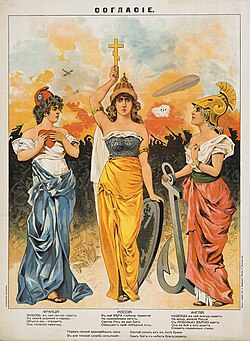
Key Facts
- Members: France, Russia, and the United Kingdom.
- Duration: 1907 to 1917.
- Nature: An informal mutual understanding rather than a binding mutual defense treaty.
- Primary Goal: To balance the power of the Triple Alliance (Germany, Austria-Hungary, and Italy).
- Outcome: The members fought together as the Allied Powers against the Central Powers in World War I.
The Road to Coalition: The Alliance System
The roots of the Triple Entente lie in the aftermath of the Franco-Prussian War (1870–71). Following France's defeat, the Treaty of Frankfurt forced the cession of Alsace-Lorraine to the new German Empire, leaving France with a deep desire for recovery and a fear of German military expansion.
Initially, Germany sought to isolate France through the League of the Three Emperors (1873) with Austria-Hungary and Russia. However, tensions between Russia and Austria-Hungary over the Balkans—fueled by rising nationalism and the decline of the Ottoman Empire—fractured this relationship. While German Chancellor Otto von Bismarck attempted to maintain a secret Reinsurance Treaty with Russia to ensure neutrality, the agreement lapsed in 1890 after Bismarck's resignation and Kaiser Wilhelm II's shift toward Weltpolitik (world politics), an aggressive imperialist policy to expand German global influence.
The Franco-Russian Alliance (1894)
Feeling diplomatically isolated and fearing German aggression, Russia joined France in 1894. This alliance was mutually beneficial: France sought protection against Germany and the return of Alsace-Lorraine, while Russia sought economic support and a strategic partner to counter the Triple Alliance.
The Entente Cordiale (1904)
For decades, Britain maintained a policy of "splendid isolation," focusing on its overseas empire. However, the rapid growth of German power forced London to seek allies. In 1904, Britain and France signed the Entente Cordiale, a series of agreements that resolved colonial disputes in North Africa. This was not a military pact, but a "frame of mind" that ended centuries of rivalry.
The Anglo-Russian Entente (1907)
The final piece of the puzzle fell into place in 1907. Britain and Russia resolved their long-standing rivalry in Central Asia—known as "The Great Game"—by settling disputes over Persia, Afghanistan, and Tibet. This agreement also addressed British concerns regarding the Baghdad Railway and German expansion in the Near East.
Strategic Tensions and the Naval Race
While the Entente grew, relations between Britain and Germany deteriorated due to a fierce naval arms race. Britain, fearing the expansion of the German navy, invested heavily in Dreadnought technology (advanced all-big-gun battleships) to maintain naval supremacy.
Attempts to reduce friction, such as Lord Haldane's 1912 mission to Berlin, failed because Germany demanded a British promise of neutrality in certain conflicts. Britain refused, as such a promise would have undermined the very system of ententes they had spent years building. This competition created an atmosphere of mutual distrust that limited the possibilities for peaceful diplomacy.
The Entente in Operation
The coalition was often fragile. Russian conservatives distrusted secular France and British diplomatic maneuvers, while British and French elites were often repulsed by the reactionary nature of the Tsarist regime. Despite these internal frictions, the strategic necessity of countering the Central Powers held the group together.
At the outbreak of World War I in 1914, the members of the Triple Entente entered the conflict as the Allied Powers. On September 4, 1914, they issued a joint declaration pledging not to conclude a separate peace, ensuring they would only accept terms agreed upon by all three parties.
| Agreement | Year | Primary Parties | Main Purpose |
|---|---|---|---|
| Franco-Russian Alliance | 1894 | France & Russia | Mutual defense against Germany |
| Entente Cordiale | 1904 | France & UK | Resolution of colonial disputes |
| Anglo-Russian Entente | 1907 | UK & Russia | Ending the "Great Game" in Central Asia |
Frequently Asked Questions
Was the Triple Entente a formal military alliance?
No. Unlike the Triple Alliance, the Triple Entente was an informal mutual arrangement and a "frame of mind" regarding general policy. While it led to military cooperation, it did not initially carry the same binding mutual defense obligations as a formal treaty.
How did the naval race contribute to the outbreak of war?
The naval competition between Britain and Germany created a climate of hostility and distrust. While it may not have been the sole cause of the war, it narrowed the space for diplomacy and made a peaceful resolution to European tensions much more difficult.
What was "The Great Game"?
The Great Game refers to the strategic rivalry between the British Empire and the Russian Empire in Central Asia during the 19th century, primarily focusing on influence over Afghanistan, Persia, and Tibet.
Why did France and Russia align despite their differences?
Both nations shared a profound fear of German military and economic dominance. France wanted to regain Alsace-Lorraine and prevent a German attack, while Russia sought to avoid diplomatic isolation and protect its interests in the Balkans.
When was the Triple Entente dissolved?
The arrangement effectively ended in 1917, coinciding with the Russian Revolution and the subsequent collapse of the Russian Empire's involvement in the war.