Trinity College Dublin: A Legacy of Academic Excellence
Standing at the heart of Ireland's capital, Trinity College Dublin (TCD), also known as the University of Dublin, is a beacon of higher education and historical prestige. Founded by royal charter on March 3, 1592, by Queen Elizabeth I, this ancient university has spent over four centuries shaping the intellectual landscape of Ireland and the world. Its Latin name, Collegium Sanctae et Individuae Trinitatis Reginae Elizabethae juxta Dublin, reflects its royal origins and its dedication to the Holy Trinity.
The college is guided by the motto Perpetuis futuris temporibus duraturam, which translates to "It will last into endless future times"—a sentiment that rings true as the institution continues to evolve in the 21st century.
A Campus of Architectural Splendor
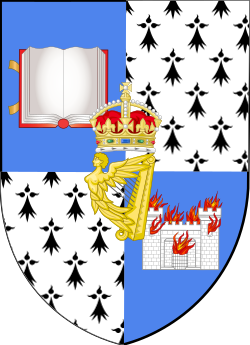
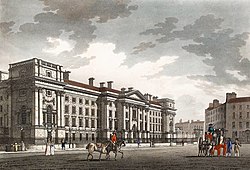
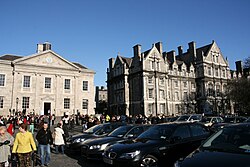
The grounds of Trinity College Dublin are a living museum of architectural evolution. The majority of the campus features Neoclassical architecture, a style inspired by the classical symmetry and grandeur of ancient Greece and Rome. This is complemented by the oldest buildings on site, which showcase Georgian architecture, characterized by the balanced proportions and brickwork typical of the 18th century. A smaller portion of the campus exhibits Ruskinian Gothic architecture, known for its ornate, nature-inspired stone carvings.
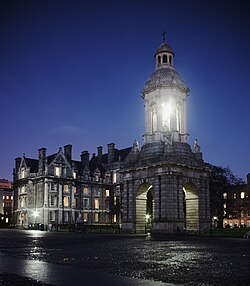
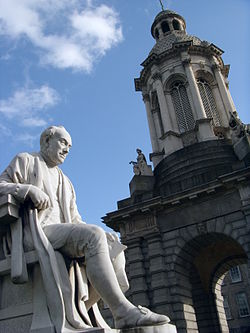
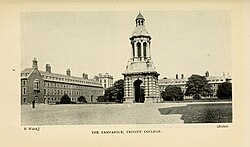
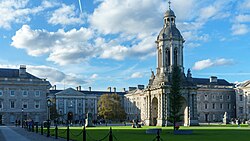
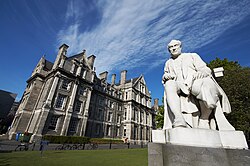
One of the most iconic landmarks is the Campanile, the college's bell tower, which stands prominently in Parliament Square alongside the statue of former Provost George Salmon.
Visitors and students alike often gather in College Park, a serene green space that provides a tranquil escape from the bustle of the city, regardless of the season.
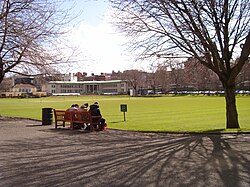
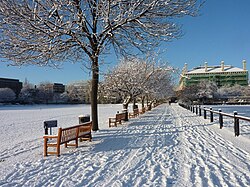
Other notable structures include the Old Dining Hall, designed by Richard Cassels in 1743, and the main entrance gateway on College Green, which serves as the primary portal to the university.
![The Old Dining Hall, designed by Richard Cassels in 1743[110]](/images/34/a7/34a7cbdb781722bea375b2c39abf59a7d1686c0fac39c77bfa00c58dc32636c3.jpg)
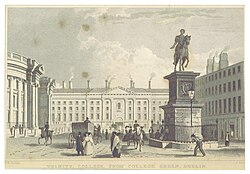
The Treasures of the Old Library
The Old Library is perhaps the most world-renowned aspect of the college. It is home to the Long Room, a breathtaking space that houses thousands of ancient texts and serves as a symbol of the university's commitment to knowledge.
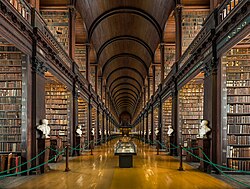
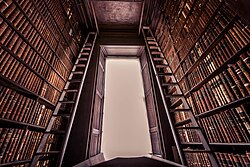
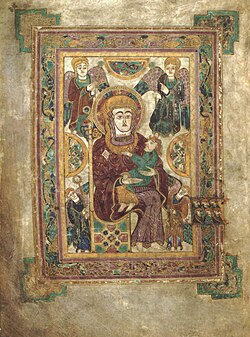
Within the library lies the Book of Kells, a masterpiece of Western calligraphy and the most famous volume in the collection. The library's significance is further highlighted by its status as a legal deposit library, meaning it receives a copy of every book published in Ireland and the UK.
Academic Structure and Global Standing
Trinity College Dublin is a leading research university with a robust academic profile. Since a major restructuring in 2008, the college has been organized into three primary academic faculties:
- Arts, Humanities and Social Sciences
- Science, Technology, Engineering, and Mathematics
- Health Sciences
The academic year is divided into three distinct terms: the Michaelmas term (October to December), the Hilary term (January to March), and the Trinity term (April to June).
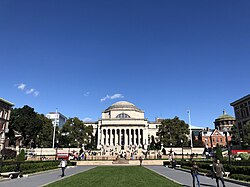
The university maintains a strong global presence, consistently ranking among the top institutions worldwide. As of the 2026 QS World University Rankings, it holds the 75th position globally. It also maintains prestigious partnerships, including a dual BA program with Columbia University in the United States.
University Quick Facts
| Category | Details |
|---|---|
| Established | March 3, 1592 |
| Founder | Queen Elizabeth I |
| Current Provost | Linda Doyle |
| Undergraduate Students | 14,085 (2023/24) |
| Postgraduate Students | 6,405 (2023/24) |
| Endowment | €302.9 million (2024) |
| Primary Colors | Trinity Blue, Spindle, Dark Abbey, Iron |
Governance and Institutional Affiliations
The college is led by the Provost, who also serves as the President. Linda Doyle currently holds this position, making history as the first woman provost in the institution's 429-year history. The university is governed by a Board comprising the Provost, Vice-Provost, Senior Lecturer, Registrar, Bursar, six Fellows, two professors, three non-academic staff members, and four students.
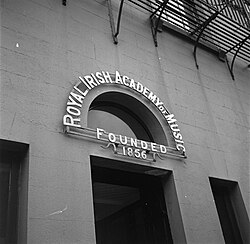
TCD is also deeply integrated with the healthcare system through its teaching and affiliated hospitals, which include St. James's Hospital, Tallaght University Hospital, and the Rotunda Hospital, among others. Additionally, it is associated with institutions such as the Royal Irish Academy of Music and The Lir Academy.
Modern Facilities and Innovation
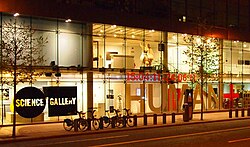
While rooted in tradition, Trinity is a forward-looking institution. The Science Gallery, opened in 2008, serves as a hub for the intersection of art and science. The campus also features the modern Trinity Business School and the Eavan Boland Library, the latter of which is adorned with Arnaldo Pomodoro's "Sphere Within Sphere" sculpture.
![Arnaldo Pomodoro's Sphere Within Sphere sculpture stands outside the Eavan Boland Library.[112]](/images/fb/ac/fbac42fcc19f998767ae9cefe8953961448e87529abc74e0dbdaa6b64c4fbd99.jpg)
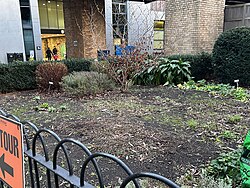
For those interested in botany, the modern Herb or Physic Garden, established in 2011 off Pearse Street, offers a specialized space for plant study.
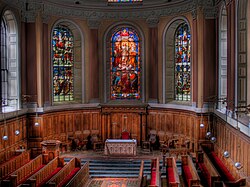
The university also maintains spiritual and community spaces, including the Trinity College Chapel.
Student Life and Traditions
Student life at Trinity is defined by a vibrant array of societies and clubs. The Graduates Memorial Building (GMB) is the center for intellectual debate, hosting the University Philosophical Society, the College Historical Society, and the College Theological Society.
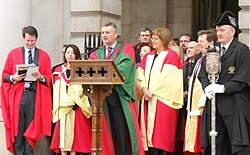
The college is known for its rich traditions, such as Trinity Monday, where Fellows and Scholars are announced, and the annual Trinity Week. Student expression is further fostered through various publications, including Trinity News, The University Times, The Piranha, and Icarus.
A Legacy of Notable Figures
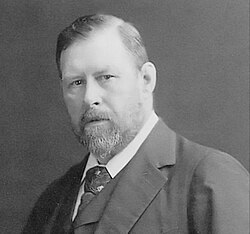
Trinity College Dublin has been the alma mater or employer of some of the most influential figures in literature, science, and politics. Its alumni include Nobel Laureates such as Samuel Beckett (Literature), Ernest Walton (Physics), and William Campbell (Medicine), as well as renowned authors like Oscar Wilde and Bram Stoker.
The university's influence extends to global leadership, having produced various Presidents of Ireland, Prime Ministers, and distinguished scholars like Erwin Schrödinger and Jonathan Swift.
Global Connections
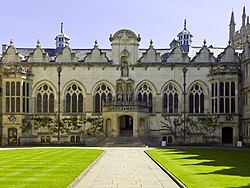
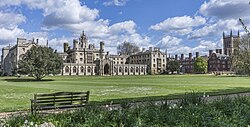
Trinity maintains strong international ties through its sister colleges, including Oriel College, Oxford, and St John's College, Cambridge. It is also a member of several prestigious academic networks, such as the Coimbra Group and the League of European Research Universities (LERU).