Exploring the National Museum of Natural History: A Journey Through Earth's Legacy
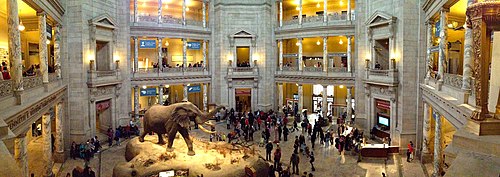
Located on the iconic National Mall in Washington, D.C., the National Museum of Natural History (NMNH) stands as one of the world's most prestigious institutions dedicated to the natural world. Administered by the Smithsonian Institution, the museum offers free admission and welcomes millions of curious minds annually, providing a comprehensive look at the evolution of life, the complexity of the planet, and the history of human origins.

Key Facts
- Established: 1910
- Location: National Mall, Washington, D.C.
- Collection Size: Approximately 148 million specimens
- Annual Visitors: 3.3 million (2025)
- Current Director: Kirk Johnson
- Admission: Free
A History of Growth and Architecture
The roots of the museum date back to 1846, when the United States National Museum was founded as part of the Smithsonian Institution. Initially housed in the Smithsonian Institution Building (the "Smithsonian Castle"), the collection quickly outgrew its space. This led to the opening of a formal exhibit hall in 1858 and the later construction of the Arts and Industries Building in 1881, which cost $310,000 at the time.

By the early 20th century, the need for a dedicated facility for research and national collections became evident. Congress authorized a new structure in 1902, and the Natural History Building—now known as the National Museum of Natural History—opened its doors on March 17, 1910. Designed in the Neoclassical style, the building was the first structure on the north side of the National Mall under the 1901 McMillan Commission plan. The facility spans 1.5 million square feet, with 325,000 square feet dedicated to public exhibition spaces.

World-Class Research and Collections
The NMNH houses 90% of the Smithsonian Institution's total collections, making it one of the most comprehensive natural history repositories on Earth. With roughly 146 to 148 million artifacts and specimens, the museum serves as a critical hub for global scientific research.
The vast collection includes:
- Insects: 30 million specimens.
- Plants: 4.5 million preserved in the herbarium.
- Fish: 7 million specimens stored in liquid-filled jars.
- Amphibians and Reptiles: Over 580,000 records as of 2020.
- Cultural Artifacts: 2 million items, including 400,000 photographs in the National Anthropological Archives.
While many items are on display, the majority are stored in non-public research areas or at the Museum Support Center in Suitland, Maryland. The institution also maintains a marine science center in Ft. Pierce, Florida, and field stations in Kenya, Alaska, and Belize.
Must-See Exhibitions
The Janet Annenberg Hooker Hall of Geology, Gems, and Minerals
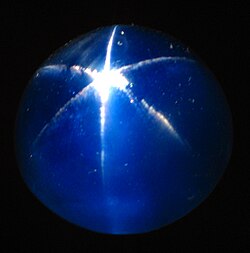
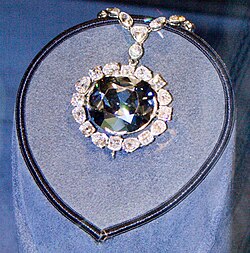
This gallery is home to some of the most famous gemstones in existence. The collection includes over 15,000 individual gems, 350,000 minerals, and 300,000 rock and ore samples. Notable highlights include the Hope Diamond, the Star of Asia (a 330-carat star sapphire), and the Carmen Lúcia Ruby.
The David H. Koch Hall of Human Origins
Opened in 2010, this 15,000-square-foot exhibit explores the question, "What Does It Mean To Be Human?" It features 76 human skulls from various species within the Homo genus, including Homo heidelbergensis and Homo floresiensis. Visitors can explore an interactive family tree spanning six million years of evolution and view replicas created by paleoartist John Gurche.
The Deep Time Exhibit (Fossil Hall)
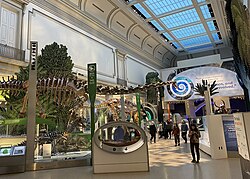
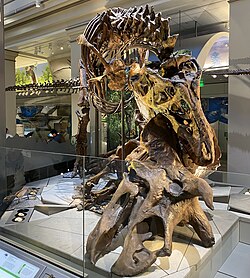
The dinosaur hall underwent a $45 million upgrade, reopening in 2019. The centerpiece of this exhibit is the "Nation's T. rex," also known as the Wankel rex. This 35-foot-long skeleton, which is 85% complete, was obtained via a 50-year lease from the U.S. Army Corps of Engineers.
The Sant Ocean Hall
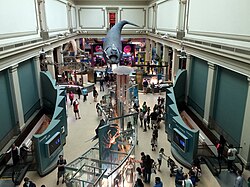
The Ocean Hall is one of the museum's largest renovations, featuring 674 marine specimens and models. Key attractions include a North Atlantic right whale, a giant squid (both male and female), a 1,500-gallon live coral and fish aquarium, and a Basilosaurus (an ancient whale).
Mammals and Bone Halls
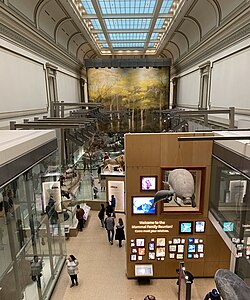
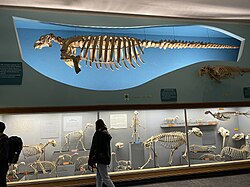
The museum boasts the world's largest collection of vertebrate specimens. The Hall of Mammals showcases a vast array of species, while the Bone Hall displays vertebrate skeletons grouped by their evolutionary relationships, including specimens of the extinct Steller's sea cow.
Interactive Learning and Facilities
Since 2013, the museum has hosted Q?rius, an interactive educational area where visitors can use microscopes and touch screens. The "collection zone" allows the public to personally handle over 6,000 different specimens and artifacts.
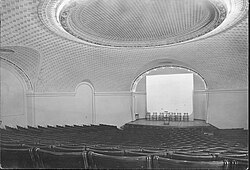
Architecturally, the museum is noted for the Baird Auditorium, located beneath the rotunda. Completed in 1909, it features a Catalan vault (a structural tile ceiling) designed by the R. Guastavino Company. This space has hosted historic events, including the 1920 "Great Debate" regarding the size of the universe.
Museum Summary
| Feature | Details |
|---|---|
| Total Specimens | ~148 Million |
| Key Gems | Hope Diamond, Star of Asia |
| Star Fossil | The Nation's T. rex (Wankel rex) |
| Building Style | Neoclassical |
| Annual Visitors | 3.3 Million (2025) |
Frequently Asked Questions
Is admission to the National Museum of Natural History free?
Yes, admission to the museum is free for all visitors.
What is the "Nation's T. rex"?
The Nation's T. rex, also known as the Wankel rex, is an 85% complete Tyrannosaurus rex skeleton on a 50-year lease from the U.S. Army Corps of Engineers. It serves as the centerpiece of the Deep Time exhibit.
How many specimens does the museum hold?
The museum houses approximately 148 million specimens, including 30 million insects and 7 million fish.
What is special about the Baird Auditorium?
The Baird Auditorium is renowned for its "daring geometry" and its Catalan vault tile ceiling, which spans 90 feet with a shallow dome.
Which famous gemstones are on display?
The museum's National Gem and Mineral Collection features the Hope Diamond, the Star of Asia sapphire, and the Carmen Lúcia Ruby.