National Museum of Natural History: A Legacy of Science and Discovery
Located on the National Mall in Washington, D.C., the National Museum of Natural History stands as one of the world's most prestigious institutions dedicated to the natural world. Since its opening in 1910, it has served as a critical hub for both public education and advanced scientific research, housing a staggering collection of 148 million specimens.
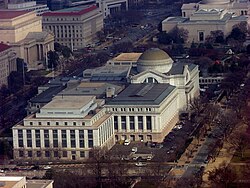
The museum's main building is a masterpiece of Neoclassical architecture, spanning 1.5 million square feet. Of this area, 325,000 square feet are dedicated to public exhibition spaces where millions of visitors annually encounter the wonders of geology, biology, and paleontology.
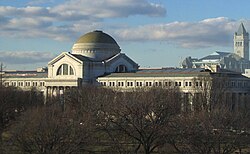
Key Facts
- Established: 1910 (as a dedicated building); founded in 1846 as part of the Smithsonian Institution.
- Collection Size: 148,000,000 specimens.
- Annual Visitors: 3.3 million (2025).
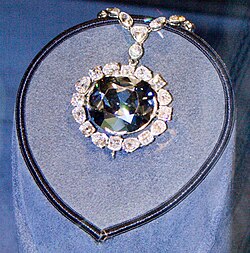
- Notable Exhibits: The Hope Diamond, the Nation's T. rex, and the Sant Ocean Hall.
- Location: National Mall, Washington, D.C.
A History of Growth and Expansion
The roots of the museum date back to 1846. Initially, the United States National Museum was housed within the Smithsonian Institution Building, commonly known as the Smithsonian Castle. As the collections grew, a formal exhibit hall opened in 1858, followed by the construction of the Arts and Industries Building in 1881, which cost $310,000 (approximately $10.3 million in 2025).
The current Natural History Building opened on March 17, 1910, and was fully completed by June 1911. Built at a cost of $3.5 million (roughly $121 million today), it was the first structure on the north side of the National Mall under the 1901 McMillan Commission plan. In its early years, the facility was a multipurpose space, housing not only natural history but also art, culture, and American history collections.

Leadership and Modernization
The museum has been shaped by various directors and significant philanthropic gifts. Between 1989 and 1994, Frank Talbot, an ichthyologist (a scientist who studies fish), became the first Australian to lead the institution. In 1997, Kenneth E. Behring donated $20 million to modernize the facilities.
Under the leadership of Director Cristián Samper (2003–2012), the museum underwent massive expansions, including the $100 million Behring Hall of Mammals and the Sant Hall of Oceans. Since 2012, the museum has been led by Kirk Johnson, who has overseen the implementation of a five-year strategic plan released in 2021.
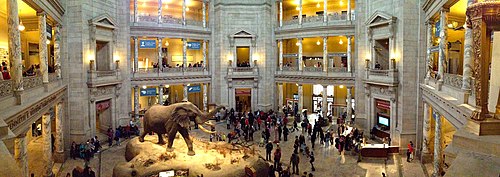
World-Class Exhibitions
The museum is organized into specialized halls that categorize the vast diversity of life and the physical history of the Earth.
The Hall of Geology, Gems, and Minerals
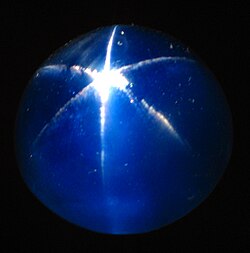
The Janet Annenberg Hooker Hall is home to some of the most famous gemstones in existence. The collection was built through the generosity of donors like Washington Roebling and Isaac Lea. Two of the most prominent highlights include the Hope Diamond and the Star of Asia, a 330-carat cabochon-cut star sapphire.
Deep Time and the Nation's T. rex
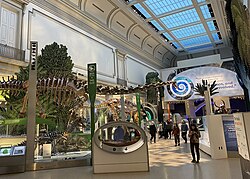
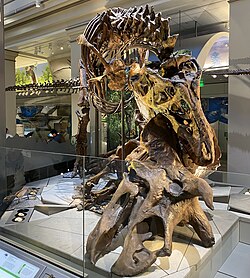
The Deep Time exhibit, a $45 million upgrade to the former dinosaur hall, explores the history of life on Earth. The centerpiece of this exhibit is the Nation's T. rex, a 35-foot-long skeleton that is 85 percent complete. This specimen, also known as the "Wankel" or "Devil" rex, was discovered in Montana in 1988 and arrived at the museum in 2014 after a 50-year lease from the U.S. Army Corps of Engineers.
Ocean and Mammal Halls
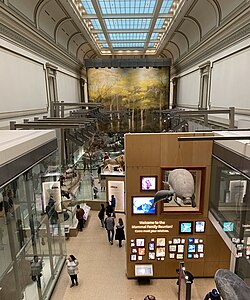
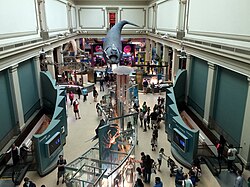
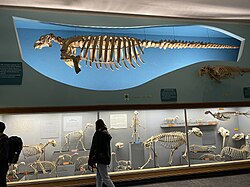
The Sant Ocean Hall, opened in 2008, is the largest renovation in the museum's history. It features 674 marine specimens and models. Similarly, the Hall of Mammals provides a comprehensive look at mammalian diversity, while the Bone Hall displays vertebrate skeletons grouped by their evolutionary relationships, including the extinct Steller's sea cow.
Human Origins
The David H. Koch Hall of Human Origins opened in 2010 to mark the museum's centennial. This $20.7 million exhibit focuses on the evolutionary journey of humans, supported by the research of experts like Rick Potts.
Museum Overview
| Category | Detail |
|---|---|
| Total Area | 1.5 million square feet |
| Public Exhibition Space | 325,000 square feet |
| Total Specimens | 148 million |
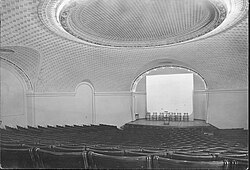
| Key Facilities | Baird Auditorium, Rotunda, Various Specialized Halls |
| Staffing (2023) | 352 staff and 108 interns |
Frequently Asked Questions
What is the most famous gemstone in the museum?
The Hope Diamond is the most famous gemstone, though the collection also features the Star of Asia, a massive 330-carat star sapphire.
Where did the Nation's T. rex come from?
The T. rex skeleton was found in 1988 on land owned by the U.S. Army Corps of Engineers in the Charles M. Russell National Wildlife Refuge in Montana.
How many specimens does the museum hold?
The museum houses a total of 148 million specimens, making it one of the largest natural history collections in the world.
When did the current museum building open?
The current building on the National Mall opened to the public on March 17, 1910, and was fully completed in June 1911.
Who is the current director of the museum?
The museum is currently led by Director Kirk Johnson, who took office on October 29, 2012.