Treaty of Triple Alliance and the Paraguayan War
The Treaty of Triple Alliance, signed on May 1, 1865, in Buenos Aires, Argentina, formalized a military coalition between the Empire of Brazil, the Republic of Argentina, and the Oriental Republic of Uruguay. This alliance was formed to combat Paraguay during a conflict that has been described as the bloodiest inter-state war in the world between the end of the Napoleonic Wars in 1815 and the start of World War I in 1914.
Key Facts
![Xenophobia may have been a cause of the war.[58] Brazilian prisoners caricatured as hideous Afro-Americans in a Paraguayan government propaganda cartoon (El Centinela, 1867).](/images/aa/a1/aaa1ff2b3ae67d72ff5041a1fd71ceb624b896173f5903ab9f9cd1cad8062dfa.png)
- Signatories: Empire of Brazil, Argentina, and Uruguay.
- Date Signed: May 1, 1865.
- Primary Cause: Disputes over river navigation, territorial boundaries, and regional political influence.
- Paraguayan Strength: At its peak, Paraguay had between 48,000 and 150,000 men on a war footing.
- Long-term Impact: Led to the professionalization of the Brazilian army and significant territorial settlements in the Chaco region.
The Strategic Importance of River Arteries
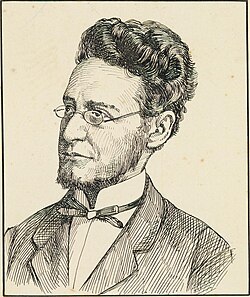
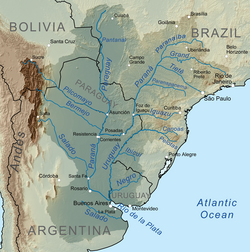
In the mid-19th century, South America lacked developed roads and railways. Consequently, navigable rivers served as vital arteries for trade and communication. The Paraná and Paraguay river systems were especially critical, allowing large ships to travel 1,870 miles (3,010 km) from Buenos Aires deep into the Brazilian Mato Grosso province.
For landlocked Paraguay, these rivers were the only lifeline for international trade. For Brazil, the river route was the only practical way to access Mato Grosso, as overland travel by horse-drawn cart could take up to three months.
Paraguay's Military Modernization
Between 1854 and 1864, under the supervision of Francisco Solano López, Paraguay underwent a rapid, military-oriented modernization. Believing that global powers—including Brazil, Argentina, the United States, and the British Empire—disrespected the nation, López invested heavily in infrastructure.
Paraguay imported approximately 200 foreign technicians, primarily from Britain, to establish an iron foundry, a shipyard, an arsenal, a telegraph system, and a railway. This buildup extended to medicine, with a British-trained military medical corps. By the time López became ruler in September 1862, Paraguay had emerged as a significant regional power with a full treasury and high military preparedness.
The Path to Conflict
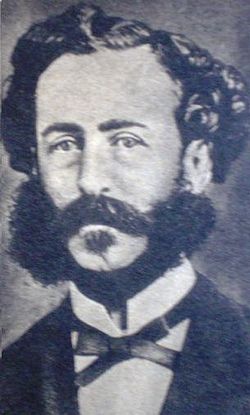
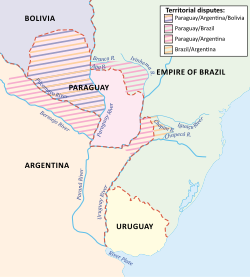
Tensions escalated due to a combination of territorial disputes and political intrigues. López suspected that Buenos Aires intended to seize the Argentine provinces of Corrientes and Entre Ríos, as well as Martín García Island. In response, Paraguay conscripted all able-bodied men aged 16 to 50 for intensive military training.
The spark for open war occurred in Uruguay. Brazil complained that the ruling Blanco party in Uruguay was mistreating Brazilian nationals in northern Uruguay. When Brazil sent a naval squadron and massed troops on the border in May 1864, Paraguay warned Brazil against such action. In November 1864, Paraguay seized the Brazilian government ship Marquês de Olinda and invaded the Brazilian province of Mato Grosso, followed by an invasion of Rio Grande do Sul.
The War and the Triple Alliance
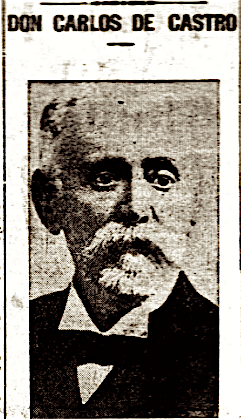
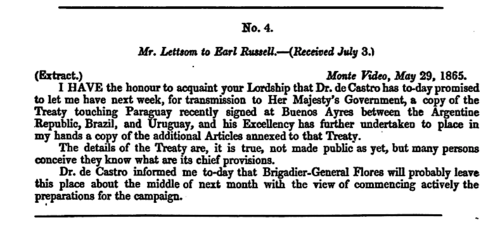
The conflict expanded when Paraguay also invaded the Argentine province of Corrientes. This aggression drove the traditional enemies, Brazil and Argentina, into an alliance with Uruguay. The resulting Treaty of Triple Alliance was ratified in secret sessions in Argentina on May 24, 1865, and instruments of ratification were exchanged in June 1865.
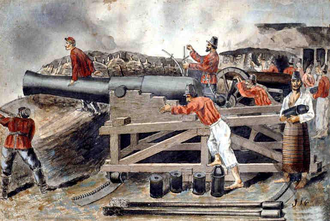
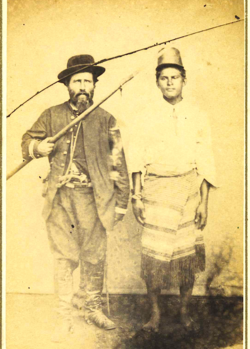
The war was characterized by brutal fighting and significant technological clashes. While the Brazilian navy provided essential transport and ironclads, Paraguayan forces were noted for their courage, despite often fighting barefoot and wearing kilts.
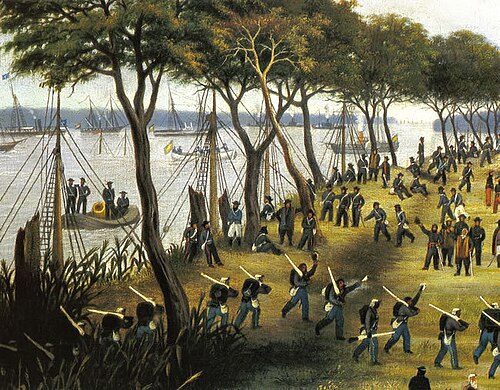
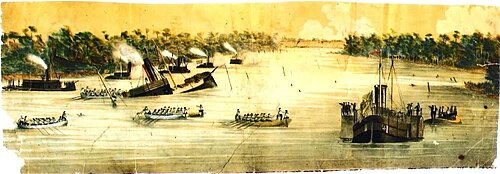
One of the most notable naval engagements involved the sinking of the 1,000-ton Brazilian ironclad Rio de Janeiro by a Paraguayan mine at Curuzú, located 1,200 km from the nearest ocean.
Aftermath and Consequences
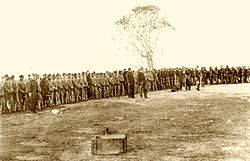
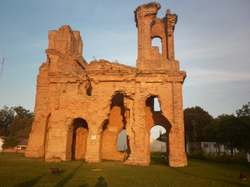
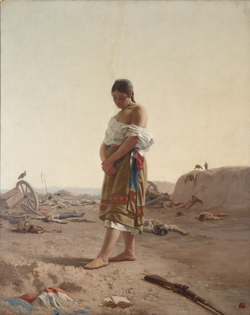
The war left Paraguay utterly devastated. The formidable fortress of Humaitá was razed according to the treaty terms, and the nation's population was decimated.
Impact on Brazil
The conflict led to the creation of a modern, professional Brazilian army. This new military force began to seek a political role in government, contributing to the questão militar of the 1870s and 80s, and eventually the military coup of November 1889 that replaced the Empire with a republic.
Impact on Argentina and Bolivia
For Argentina, the war aided in national consolidation. While the conflict settled many boundary disputes in the Chaco, tensions remained between Paraguay and Bolivia. These unresolved borders eventually contributed to the Chaco War in 1931, though the boundaries were not finally resolved until a treaty in 2009.
| Feature | Details |
|---|---|
| Allied Powers | Brazil, Argentina, Uruguay |
| Opposing Power | Paraguay |
| Key Leader (Paraguay) | Francisco Solano López |
| Primary Strategic Goal | Control of Paraná and Paraguay rivers |
| Major Outcome | Devastation of Paraguay; Brazilian Republic established (1889) |
Frequently Asked Questions
Why were the Paraná and Paraguay rivers so important?
They were the primary "vital arteries" for transport in a region without roads or railways. They provided landlocked Paraguay with trade access and allowed Brazil to reach its distant Mato Grosso province.
How did Paraguay become a regional power before the war?
Under Francisco Solano López, Paraguay imported British technicians to build an iron foundry, shipyard, and railway, while conscripting nearly its entire adult male population for military training.
What was the role of the Treaty of Triple Alliance?
The treaty formalized the military cooperation between Brazil, Argentina, and Uruguay to defeat Paraguay, establishing the legal and strategic framework for their joint campaign.
What were the long-term political effects in Brazil?
The war created a professional army that became politically active, which eventually led to the military coup of 1889 and the end of the Brazilian Empire.
Did the war resolve all territorial disputes in the region?
While it settled many disputes in the Chaco, it did not resolve the boundary between Paraguay and Bolivia, which later led to the Chaco War in 1931.