Treaty of Sèvres: The Partition of the Ottoman Empire
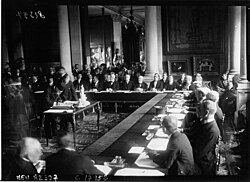
The Treaty of Sèvres, signed on August 10, 1920, was a peace agreement between the Allied Powers and the Ottoman Empire following World War I. Signed at the Manufacture nationale de Sèvres porcelain factory in France, the treaty sought to formally dismantle the Ottoman Empire, imposing terms far more severe than those placed upon Germany in the Treaty of Versailles.
While the treaty was signed by the representatives of the Ottoman government in Istanbul, it sparked intense hostility and fueled a surge of Turkish nationalism. This tension led to the Turkish War of Independence, eventually rendering the Treaty of Sèvres unratified and obsolete, as it was superseded by the Treaty of Lausanne in 1923.
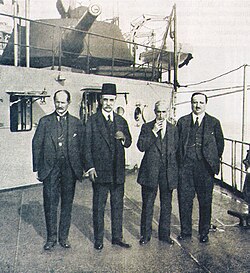
Key Facts
- Date Signed: August 10, 1920.
- Location: Sèvres, France.
- Primary Outcome: Massive territorial losses for the Ottoman Empire and strict financial/military controls.
- Fate: Never ratified; replaced by the Treaty of Lausanne (1923).
- Key Figure: Mustafa Kemal Pasha, who led the opposition to the treaty.
The Road to Sèvres: Negotiations and Conflict
The draft of the treaty was prepared during the San Remo Conference in April 1920. When the draft reached the Ottoman government, former Grand Vizier Tevfik Pasha described the terms as incompatible with the concepts of independence and statehood. Despite attempts by an Ottoman commission to suggest edits, the Allied powers refused any significant changes.
In an attempt to distribute the political burden of the agreement, Sultan Mehmed VI convened a Sultanate Council on July 22, 1922. This council consisted of 57 delegates, including high-ranking officers and bureaucracy members, but notably excluded those affiliated with the Turkish National Movement.
Major Provisions of the Treaty
Financial and Military Restrictions
The treaty stripped the Ottoman Empire of its financial autonomy. The Allies were granted the power to supervise the national budget and control the Ottoman Bank. Additionally, the capitulations—special legal and economic privileges granted to foreign nationals—which had been abolished in 1914, were restored.
Military restrictions were equally stringent. Furthermore, Article 230 required the Ottoman Empire to hand over individuals responsible for massacres committed during the war, specifically targeting those responsible for the Armenian genocide. However, these prosecution attempts were eventually suspended.
Foreign Zones of Influence
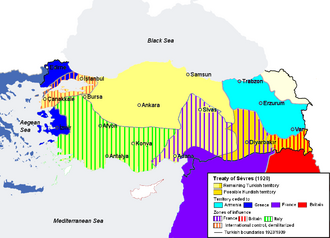
The treaty established several spheres of influence for the victorious powers:
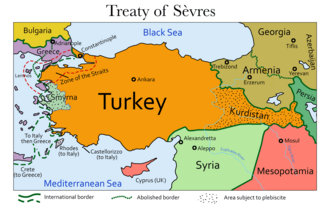
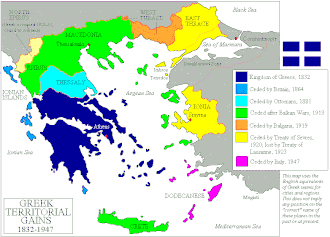
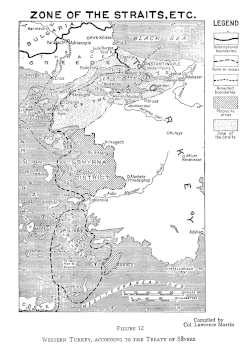
- Greece: Administered the occupation of Smyrna. While the region remained under Turkish sovereignty, it was to be governed by a local parliament, with a plebiscite after five years to determine if it would join Greece.
- Italy: Formally received the Dodecanese Islands and was granted a zone of influence in southern and west-central Anatolia, including Antalya and Konya.
Territorial Partitioning
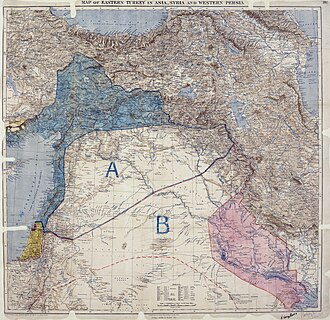
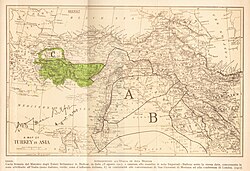
The Treaty of Sèvres drastically reduced the size of the Ottoman Empire, partitioning its lands among various states and mandates.
| Entity | Estimated Area (sq mi / km²) |
|---|---|
| Ottoman Empire (1914) | 613,724 sq mi / 1,589,540 km² |
| Ottoman Empire (1918 Treaty) | 174,900 sq mi / 453,000 km² |
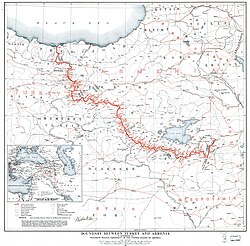
| Wilsonian Armenia | 60,000 sq mi / 160,000 km² |
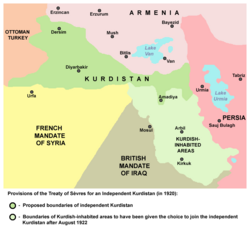
| Independent Kurdish State | 143,000 sq mi / 370,000 km² |
| Syria | 136,000 sq mi / 350,000 km² |
| Hejaz | 100,000 sq mi / 260,000 km² |
Mandates and New States
The treaty formalized several mandates under the League of Nations:
- British Mandate for Iraq: Included the Mosul Province, where oil concessions were granted to the Turkish Petroleum Company (later the Iraq Petroleum Company).
- British Mandate for Palestine: Adopted the Balfour Declaration, supporting the establishment of a national home for the Jewish people while protecting the rights of non-Jewish communities.
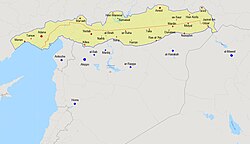
- French Mandate for Syria and Lebanon: Divided the region into five governments, including Aleppo, Damascus, Greater Lebanon, the Alawite State, and the Jabal Druze State.
- Kingdom of Hejaz: Granted international recognition as an independent kingdom on the Arabian Peninsula.
The Collapse of Sèvres and the Rise of Turkey
The Treaty of Sèvres was never fully implemented. While the Istanbul government signed it, the Turkish National Movement, led by Mustafa Kemal Pasha in Ankara, rejected it entirely. The Grand National Assembly declared all treaties signed by the Istanbul government after March 16, 1920, to be invalid.
Following the Turkish War of Independence and the Armistice of Mudanya in October 1922, the Allies were forced to renegotiate. This resulted in the Treaty of Lausanne (1923), which recognized the Republic of Turkey, restored significant territories in Anatolia and Thrace, and removed the foreign zones of influence established at Sèvres.
Frequently Asked Questions
Why was the Treaty of Sèvres never ratified?
The treaty was rejected by the Turkish National Movement led by Mustafa Kemal Pasha. The resulting Turkish War of Independence forced the Allied Powers to negotiate a new agreement, the Treaty of Lausanne, which replaced Sèvres.
What happened to the proposed independent Kurdistan?
Although the Treaty of Sèvres provided for an independent Kurdish state, these provisions were never realized because the treaty was superseded by the Treaty of Lausanne, which did not include such a state.
How did the treaty affect the region of Palestine?
The treaty entrusted the administration of Palestine to a British Mandate and formally adopted the Balfour Declaration, which aimed to establish a national home for the Jewish people.
What was the 'Smyrna Zone'?
The Smyrna Zone was an area in western Anatolia administered by Greece. While the treaty technically left the region under Ottoman sovereignty, it allowed Greek administration and a future plebiscite to determine its final status.
What was the difference between the Treaty of Sèvres and the Treaty of Lausanne?
The Treaty of Sèvres was a punitive document that partitioned the Ottoman Empire into many small states and mandates. The Treaty of Lausanne was a more negotiated settlement that recognized the sovereignty of the modern Republic of Turkey and restored much of its territory.