Toruń History: From Medieval Stronghold to Architectural Gem
Toruń stands as a testament to resilience and cultural synthesis, having evolved from a prehistoric settlement into one of Poland's most significant historical centers. Situated along the Vistula river, the city has navigated centuries of shifting borders, religious transformations, and wartime tragedies, all while preserving an architectural landscape that spans from the Gothic era to the 20th century.
Key Facts
- Founding: Established by the Teutonic Knights in 1233 under Kulm law.
- Trade Power: Became a vital medieval trade hub as a member of the Hanseatic League in 1280.
- Famous Resident: Birthplace of the renowned astronomer Nicolaus Copernicus (1473).
- Political Significance: Site of the Second Peace of Thorn (1466), which solidified its status as part of Poland.
- Architectural Preservation: Remarkably avoided major bombing or battle damage during both World Wars.
The Middle Ages: Knights and Trade
Archaeological evidence suggests human activity in the Toruń area as early as 1100 BC during the Lusatian culture. By the 7th to 13th centuries, a Slavonic settlement existed at a ford of the Vistula river. This site later became a fortified stronghold under the Piast dynasty before being destroyed by a Prussian raid at the turn of the 12th and 13th centuries.
The trajectory of the city changed in 1227–1228 when Konrad I of Masovia invited the Teutonic Knights to the Chełmno Land to combat the Prussians. In 1233, the city charters for Toruń and Chełmno were signed, introducing Kulm law—a municipal legal framework based on Silesian precedents.
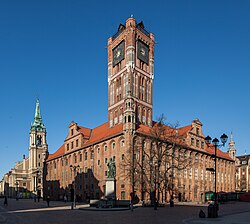
Due to flooding, the settlement moved to its current Old Town location in 1236. The city expanded rapidly, with the New Town founded in 1264 to accommodate a growing population of German-speaking artisans. By 1280, Toruń joined the Hanseatic League, a powerful mercantile confederation that transformed the city into a major trade center.
The Struggle for Polish Sovereignty
The 14th and 15th centuries were marked by conflict between the Teutonic Knights and the Polish Kingdom. Although recaptured by Poland in 1410 during the Polish–Lithuanian–Teutonic War, the city returned to the Order after the First Peace of Thorn in 1411. However, resentment grew, leading the local gentry to co-found the Prussian Confederation in 1440.
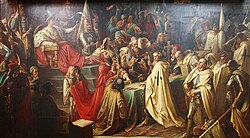
In 1454, the Confederation rose against the Monastic state, petitioning King Casimir IV Jagiellon to reclaim the region. This sparked the Thirteen Years' War. During this period, citizens dismantled the Teutonic castle, leaving only the Gdanisko tower. The conflict ended in 1466 with the Second Peace of Thorn, which officially recognized Toruń as part of Poland.
The Early Modern Period: Renaissance and Reformation
The 15th and 16th centuries saw Toruń flourish as a royal city. It is most famously the birthplace of Nicolaus Copernicus in 1473. The city became a center of learning with the founding of a gymnasium in 1568 and the establishment of its first museum (Musaeum) in 1594.
Toruń also became a focal point for religious dialogue. While the city adopted Protestantism in 1557, the arrival of Jesuits in 1595 promoted the Counter-Reformation. Despite these tensions, King Władysław IV Vasa hosted the Colloquium Charitativum in 1645, a landmark three-month congress for Catholics, Lutherans, and Calvinists to engage in interreligious dialogue.
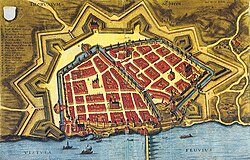
By the early 18th century, the population was split roughly equally between German-speaking Protestants and Polish-speaking Catholics. However, the Tumult of Thorn in 1724 significantly diminished Protestant influence in the city.
Late Modern Era and the Prussian Partition
Following the Second Partition of Poland in 1793, Toruń was annexed by Prussia. It briefly served as the temporary capital of the Duchy of Warsaw in 1809. After returning to Prussian rule in 1815, the city faced intense Germanisation, which in turn fueled a strong Polish resistance movement. This era saw the rise of the Toruń Scientific Society (1875) and the growth of a vibrant Jewish community, marked by the inauguration of the first synagogue in 1847.
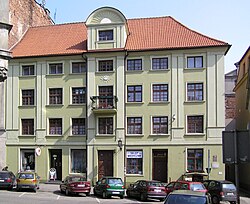
World War II and the Darkest Hours
From September 7, 1939, to February 1, 1945, Toruń was under German occupation. The period was characterized by the Intelligenzaktion, a campaign targeting Polish elites. Many teachers, priests, and officials were arrested and held in the pre-war prison or the notorious Fort VII.
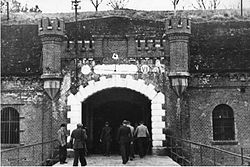
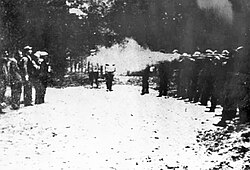
One of the most harrowing events was the Barbarka massacre, where over 1,100 Poles—including doctors, students, and craftsmen—were murdered. The Germans attempted to hide these crimes by burning the bodies in mass graves.
The city also hosted the Stalag XX-A prisoner-of-war camp and the Umsiedlungslager Thorn transit camp, where approximately 1,000 Poles, including 400 children, died due to inhuman conditions. Despite this, Toruń remained a hub for the Polish resistance, serving as a seat for the Union of Armed Struggle.
Historical Summary
| Period | Key Event/Status | Significance |
|---|---|---|
| 1233 | City Charter signed | Establishment under Kulm law by Teutonic Knights |
| 1280 | Joined Hanseatic League | Became a major medieval trade center |
| 1466 | Second Peace of Thorn | Permanent incorporation into the Kingdom of Poland |
| 1473 | Birth of Nicolaus Copernicus | Global scientific legacy |
| 1793 | Second Partition of Poland | Annexation by Prussia |
| 1939-1945 | German Occupation | Massacres at Barbarka and imprisonment at Fort VII |
Frequently Asked Questions
What is Kulm law?
Kulm law was a set of municipal rights established in 1233 for the towns of Toruń and Chełmno. It was modeled on Silesian legal precedents and governed the administration and rights of the city's early inhabitants.
Why is the Second Peace of Thorn significant?
Signed in 1466, this treaty ended the Thirteen Years' War and forced the Teutonic Order to renounce its claims to Toruń, officially recognizing the city as part of the Polish Kingdom.
What was the Colloquium Charitativum?
Held in 1645 on the initiative of King Władysław IV Vasa, it was a three-month congress that brought together Catholics, Lutherans, and Calvinists for interreligious dialogue during a period of widespread European religious conflict.
How did Toruń preserve its historic architecture?
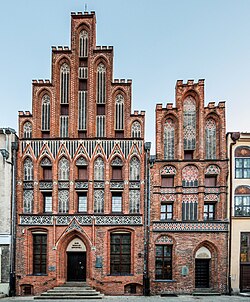
Unlike many other Polish cities, Toruń avoided major battles and bombings during both World War I and World War II, allowing its Gothic, Renaissance, and Baroque buildings to remain intact.
What happened at Fort VII during WWII?
Fort VII served as a German prison where Polish elites, teachers, and priests were held. Many prisoners were either murdered on-site or deported to concentration camps.