Titanosaurs: The Colossal Giants of the Cretaceous
Among the vast array of creatures that walked the Earth, few capture the imagination like the Titanosauria. These massive sauropod dinosaurs—characterized by their immense size and long necks—dominated the terrestrial landscapes of the Cretaceous period. From the plains of South America to the forests of Asia and Africa, titanosaurs represented the pinnacle of dinosaurian gigantism.
Belonging to the clade Macronaria (large-nosed sauropods) and the group Somphospondyli, titanosaurs evolved into a diverse array of forms. While some reached sizes that challenge our understanding of biological limits, others were smaller, more specialized herbivores that adapted to various ecological niches across the globe.
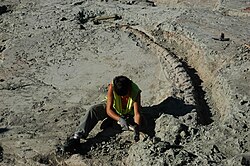
Key Facts
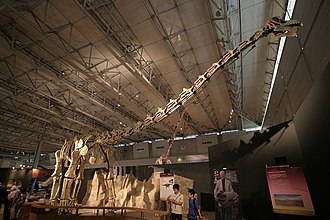
- Temporal Range: Lived during the Cretaceous period, approximately 140 to 66 million years ago (Ma).
- Global Distribution: Fossils have been found worldwide, including South America, Africa, Europe, Asia, Australia, and Antarctica.
- Defining Feature: Many species possessed osteoderms, which are bony plates embedded in the skin for protection.
- Extreme Size: Includes some of the largest land animals to ever exist, such as Argentinosaurus and Patagotitan.
- Classification: Part of the Saurischia (lizard-hipped) lineage within the Sauropoda.
Anatomy and Physical Characteristics
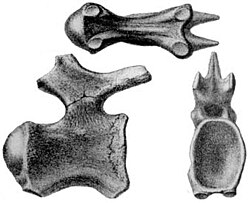
Head and Neck
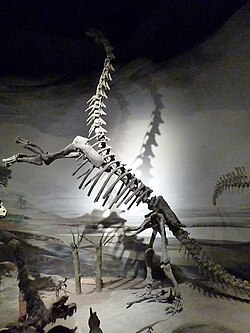
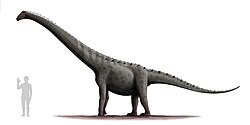
Titanosaurs are known for their elongated necks, which allowed them to browse vegetation from a wide range of heights. While complete skulls are rare in the fossil record, specimens like Tapuiasaurus macedoi provide critical insights into their cranial structure.
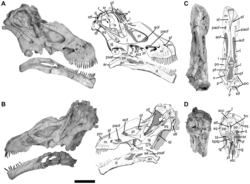
Torso and Limbs
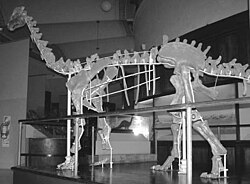
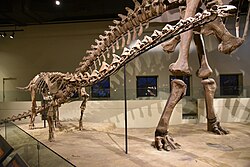
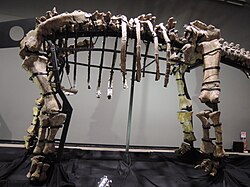
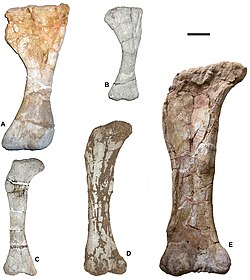
The torso of a titanosaur was a massive engine of digestion, required to process the vast quantities of plant matter needed to sustain their bulk. Their limbs were pillar-like to support immense weight. Interestingly, the structure of the hand and hindfoot varied across species, reflecting different adaptations to their environments.
Integument and Armor
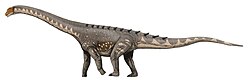
Unlike many other sauropods, several titanosaur groups developed osteoderms. These bony deposits acted as a form of biological armor. For example, Ampelosaurus is depicted with these plates arranged in distinct rows along its back.
Classification and Diversity
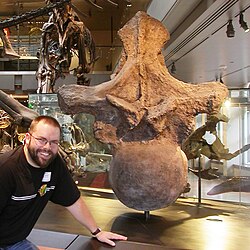
The classification of Titanosauria has evolved as new fossils are discovered. Modern phylogenetic frameworks often divide them into several key groups, including the Lithostrotia and the Lognkosauria. The latter group includes some of the most massive individuals, such as Futalognkosaurus and Puertasaurus.
Notable Genera
The diversity of titanosaurs is staggering. While Titanosaurus indicus serves as the name-bearing genus for the group, other significant dinosaurs include:
- Argentinosaurus: One of the heaviest known land animals.
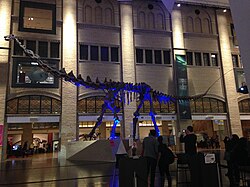
- Patagotitan: A giant from Patagonia whose cast is displayed at the American Museum of Natural History.
- Opisthocoelicaudia: Known for its well-preserved posterior skeleton.
- Rinconsaurus: A derived titanosaur with unique caudal (tail) vertebrae that altered the tail's articular surfaces.

Paleobiology and Behavior
Diet and Ecology
As herbivores, titanosaurs played a crucial role in their ecosystems by shaping the vegetation. Their sheer size allowed them to reach food sources unavailable to other herbivores, though they likely competed with other sauropods and hadrosaurs.
Nesting and Reproduction
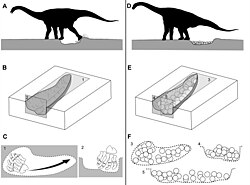
Evidence from nesting sites suggests that titanosaurs laid eggs in clusters. Excavations have revealed how these animals managed their offspring, with some species likely utilizing communal nesting grounds to increase the survival rate of their young.
Titanosaur Summary Table
| Feature | Description |
|---|---|
| Time Period | Cretaceous (140–66 Ma) |
| Diet | Herbivorous |
| Key Groups | Lithostrotia, Lognkosauria |
| Distinctive Trait | Presence of osteoderms (bony armor) |
| Global Range | Cosmopolitan (All major continents) |
Frequently Asked Questions
What makes a titanosaur different from other sauropods?
Titanosaurs are distinguished by several anatomical features, most notably the presence of osteoderms (bony skin plates) and specific modifications to their limb and vertebrae structures that supported their massive weight.
Which titanosaur was the largest?
While estimates vary, Argentinosaurus and Patagotitan are among the largest known. These animals reached lengths and weights that make them some of the biggest land animals in Earth's history.
Where did titanosaurs live?
They had a global distribution. Fossil evidence has been found in South America, North America, Europe, Africa, Asia, Australia, and even Antarctica, indicating they were highly successful across various climates.
Did all titanosaurs have armor?
No, not all titanosaurs possessed osteoderms. While common in groups like the Lithostrotia, armor was not a universal trait across every single genus within the Titanosauria clade.
When did titanosaurs go extinct?
Titanosaurs persisted until the end of the Cretaceous period, approximately 66 million years ago, when they vanished during the Cretaceous-Paleogene (K-Pg) extinction event.