Sauropods: The Colossal Giants of the Mesozoic
Among the vast array of creatures that walked the Earth, none capture the imagination quite like the sauropods. These long-necked, long-tailed herbivores dominated the landscape from the Early Jurassic to the Late Cretaceous (approximately 199 to 66 million years ago). Known for their staggering scale, sauropods represent some of the largest land animals to have ever existed, evolving a specialized body plan that allowed them to reach heights and lengths previously thought impossible for terrestrial life.
While they are often grouped together by their immense size, sauropods exhibited a surprising range of diversity in their anatomy and ecology, from the towering brachiosaurids to the whip-tailed diplodocids.
Key Facts
- Temporal Range: Early Jurassic to Late Cretaceous (199–66 Ma).
- Defining Features: Extremely long necks, long tails, and pillar-like limbs.
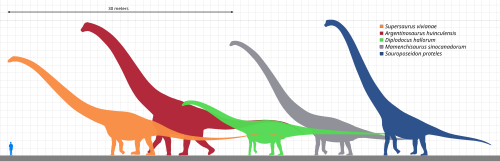
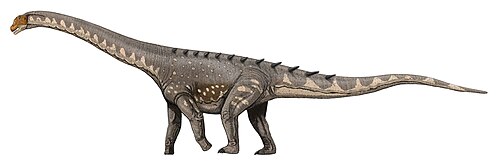
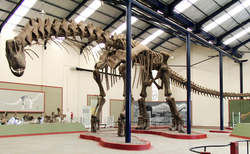
- Maximum Length: Argentinosaurus huinculensis is among the longest known from reasonable fossil material (35–36 meters).
- Maximum Height: Certain Barosaurus specimens may have reached 22 meters in height.
- Evolutionary Trend: Gigantism evolved independently multiple times across different lineages.
- Diet: Herbivorous, utilizing long necks to access high-canopy vegetation.
The Spectrum of Sauropod Size
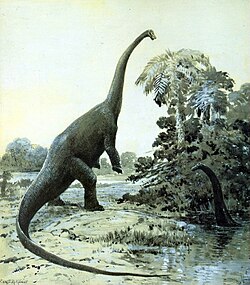
The body structure of sauropods remained relatively consistent due to the mechanical constraints of their massive size, yet they displayed significant variety. The diplodocids, for instance, were characterized by tremendously long tails. Some researchers suggest these tails could be cracked like a whip to signal others, deter predators, or even create sonic booms.
In terms of length, Supersaurus reached 33 to 34 meters. While historical estimates for Amphicoelias fragillimus (now Maraapunisaurus) suggested lengths of up to 58 meters, 2015 research indicates these figures may have been highly exaggerated. Currently, Argentinosaurus huinculensis is considered one of the largest known, with length estimates between 35 and 36 meters, though some Barosaurus specimens might have reached 45 to 48 meters.
Conversely, not all sauropods were giants. Some species experienced insular dwarfism—a biological process where large animals evolve smaller sizes when isolated on islands with limited resources. Examples include the dwarf titanosaur Magyarosaurus (6 meters) and the dwarf brachiosaurid Europasaurus (6.2 meters). Additionally, Brachytrachelopan was uniquely short-necked, with a neck shorter than its backbone, contrasting with other sauropods whose necks could be four times the length of their backs.
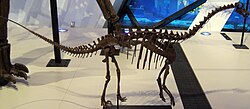
Anatomy and Biological Adaptations
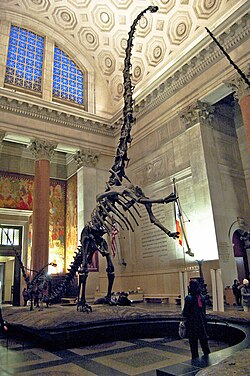
Necks and Posture
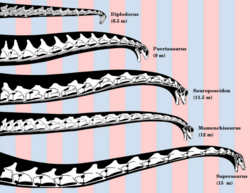
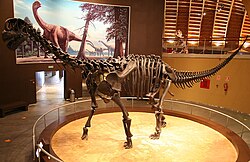
The most striking feature of the sauropod is the neck. These structures allowed them to forage across vast areas without moving their heavy bodies. However, the exact posture of these necks—whether they were held horizontally or vertically—remains a subject of scientific study. Some species, like the brachiosaurids, had high shoulders that naturally inclined their necks upward.
Air Sacs and Weight Management
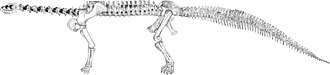
Early paleontologists in the 19th century believed sauropods were too heavy for land and must have been aquatic. This theory was debunked in the 1950s when it was realized that water pressure would have collapsed their lungs. The secret to their size was a system of air sacs—pneumatic structures that permeated their skeletons, reducing overall body density and making their massive frames more manageable.
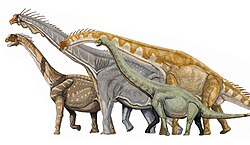
Locomotion and Footprints
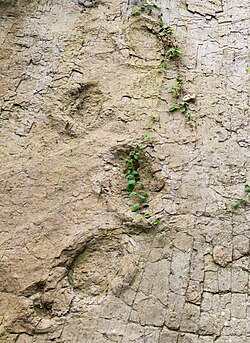
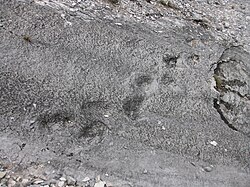
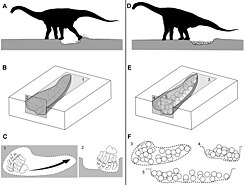
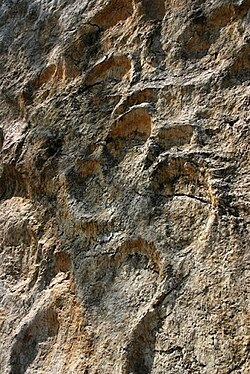
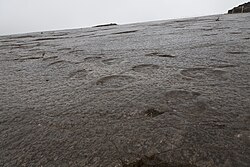
Sauropods moved on pillar-like limbs designed to support immense weight. Evidence of their movement is preserved in trackways found globally. In 2017, a massive footprint measuring 1.7 meters was discovered in Western Australia, leading researchers to estimate the animal weighed approximately 72 tonnes and measured 31 meters in length.
Palaeobiology and Social Behavior
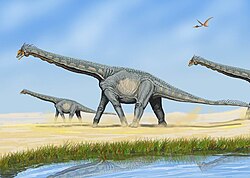
Evidence suggests that many sauropods were gregarious, meaning they lived in social groups. Some species, such as Alamosaurus sanjuanensis, likely formed herds that were segregated by age, a common trait in many modern large herbivores.
Parental care also played a role in their survival. Titanosaurs are known to have nested their eggs in clutches, ensuring the next generation could survive in competitive environments.
Summary of Notable Sauropod Groups
| Group | Key Characteristic | Example Genus | Notable Trait |
|---|---|---|---|
| Diplodocids | Extreme length | Diplodocus | Whip-like tails |
| Brachiosaurids | Extreme height | Brachiosaurus | High shoulders |
| Titanosaurs | Massive bulk | Argentinosaurus | Independent gigantism |
| Primitive Sauropods | Smaller size | Ohmdenosaurus | Early evolutionary forms |
Frequently Asked Questions
Were sauropods aquatic animals?
No. While early theories suggested they lived in water to support their weight, evidence of air sacs in their bones and the physical impossibility of their lungs functioning under deep-water pressure prove they were terrestrial animals.
What was the largest sauropod?
While estimates vary, Argentinosaurus huinculensis is one of the most widely accepted giants based on reasonable fossil evidence, reaching 35 to 36 meters. Some specimens of Barosaurus may have been even longer.
Why did some sauropods become dwarfs?
This occurred through insular dwarfism, where populations isolated on islands evolved smaller bodies to adapt to limited food supplies and space, as seen in Europasaurus.
How did sauropods use their long tails?
In groups like the diplodocids, the long tails may have served as communication tools, deterrents against predators, or weapons capable of producing sonic booms when cracked.
Did sauropods live in herds?
Yes, fossil evidence indicates that many sauropods were social and lived in herds, sometimes with age-based segregation, similar to modern elephants.