Argentinosaurus: The Colossal Titan of the Cretaceous
Among the vast array of prehistoric creatures that once roamed the Earth, few capture the imagination like Argentinosaurus. A member of the Titanosauria—the dominant group of sauropods during the Cretaceous period—this giant lived approximately 106.2 million years ago during the Early Cretaceous (Albian stage) in what is now modern-day Argentina.
Known primarily from fragmentary remains, Argentinosaurus represents one of the most extreme examples of biological scale in land animal history. Its sheer size makes it a focal point for paleontological study, as scientists work to understand how such massive organisms functioned, grew, and moved.
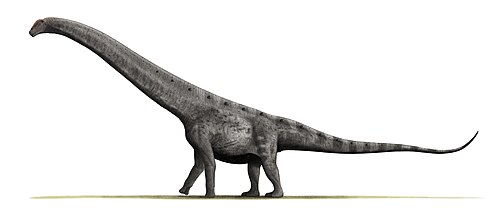
Key Facts
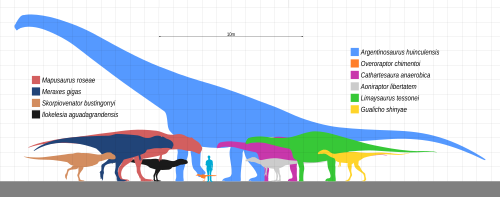
- Estimated Length: 30–35 meters (98–115 feet).
- Estimated Weight: 65–80 tonnes (72–88 short tons).
- Classification: A basal member of the Lognkosauria clade within Titanosauria.
- Time Period: Early Cretaceous, approximately 106.2 Ma.
- Location: Found in the Huincul Formation of Argentina.
The Debate Over Size and Mass
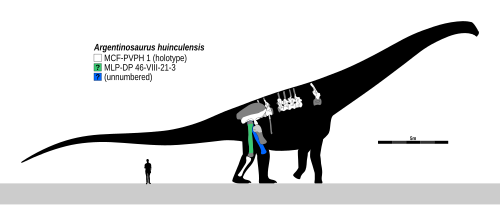
Determining the exact dimensions of Argentinosaurus is a complex task because the fossil record is incomplete. While it is widely accepted as one of the largest land animals of all time, its status as the absolute largest titanosaur is a subject of ongoing scientific debate.
Several other titanosaurs, including Puertasaurus, Futalognkosaurus, Dreadnoughtus, Paralititan, "Antarctosaurus" giganteus, and Alamosaurus, have been suggested as comparable in size. In 2017, some researchers proposed that Patagotitan was larger based on the area enclosed by the neural spine and other vertebral features. However, a 2019 study countered this, suggesting Argentinosaurus remained larger due to a considerably longer dorsal column.
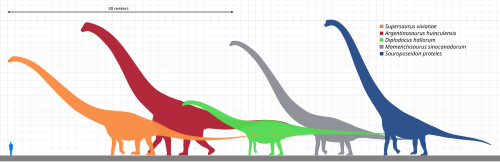
Beyond titanosaurs, other sauropods like Maraapunisaurus and certain giant mamenchisaurids may have been larger, though they are known only from very scant remains. Additionally, diplodocids such as Supersaurus and Diplodocus may have exceeded Argentinosaurus in total length, even if they lacked its massive bulk. Despite these terrestrial giants, the blue whale remains the heaviest known animal, with masses exceeding 150 tonnes.
Anatomy and Skeletal Structure
Vertebrae and Axial Skeleton
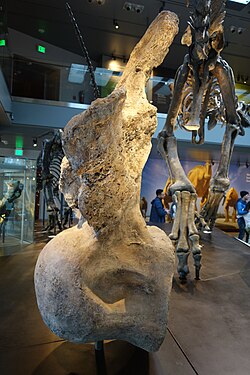
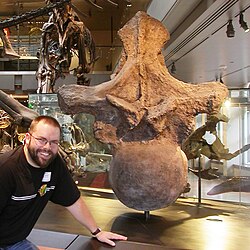
The most significant remains of Argentinosaurus consist of its massive vertebrae. These bones provide the primary evidence for its size and classification. The dorsal vertebrae (backbones) are particularly telling, showing the immense structural support required to hold up such a massive body.
Limbs and Support
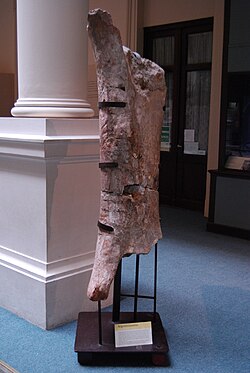
The limbs of Argentinosaurus were built for weight-bearing rather than speed. The femur (upper thigh bone) is a critical piece of evidence used to estimate the animal's overall mass and height.
Scientific Classification and Evolution
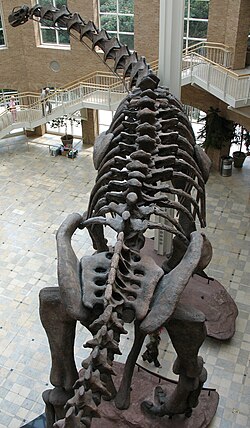
The taxonomic history of Argentinosaurus has evolved as more titanosaur fossils were discovered. Early studies in 1997 and 2002 linked it to Opisthocoelicaudia. By 2003, researchers began moving away from groups like Titanosauridae and Andesauridae, arguing they were based on primitive features (plesiomorphies) rather than newly evolved shared traits (synapomorphies).
In 2004, the group Lithostrotia was introduced to categorize more evolved titanosaurs; Argentinosaurus was placed outside this group, marking it as a more basal, or primitive, member of the lineage. More recently, it has been classified within Lognkosauria, a clade it shares with Futalognkosaurus and Patagotitan.
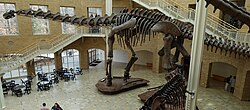
Summary of Argentinosaurus Characteristics
| Feature | Details |
|---|---|
| Scientific Name | Argentinosaurus huinculensis |
| Clade | Lognkosauria (Titanosauria) |
| Estimated Length | 30–35 meters |
| Estimated Mass | 65–80 tonnes |
| Temporal Range | Early Cretaceous (Albian) |
| Primary Region | Argentina (Huincul Formation) |
Frequently Asked Questions
Was Argentinosaurus the largest dinosaur ever?
It is one of the largest known land animals, but its title is contested. While it is more massive than many other titanosaurs, some extinct sauropods known from fragmentary remains may have been longer or heavier.
How does Argentinosaurus compare to a blue whale?
While Argentinosaurus was a terrestrial giant, the blue whale is significantly heavier, with a mass that can exceed 150 tonnes, far surpassing any known sauropod.
What does the name Argentinosaurus mean?
The name translates to "lizard from Argentina," reflecting the location where its fossils were discovered.
What is a basal titanosaur?
A basal titanosaur is one that branched off early in the evolutionary history of the Titanosauria group, possessing more primitive characteristics compared to the more derived members of the Lithostrotia clade.