Timothy M. Caro and the Science of Zebra Stripes
In the world of evolutionary ecology—the study of how organisms adapt to their environments over time—few questions are as visually striking as why zebras possess their iconic stripes. For decades, this mystery inspired folklore and various scientific guesses. However, British evolutionary ecologist Timothy M. Caro has dedicated a significant portion of his career to applying rigorous quantitative testing to solve this biological puzzle.
Key Facts
- Primary Finding: Zebra stripes serve to reduce biting by tabanid flies.
- Methodology: Caro evaluated and excluded 17 of 18 proposed hypotheses through experimental studies.
- Academic Background: Holds a degree in zoology from Cambridge University and a doctorate in psychology from the University of St Andrews.
- Career Path: Former professor at the University of California, Davis; currently a professor of biology at the University of Bristol.
- Broad Expertise: Specializes in conservation biology, animal behavior, and anti-predator defenses.
The Academic Journey of Timothy M. Caro
Born in 1951 to artists Anthony Caro and Sheila Girling, Timothy M. Caro developed a multidisciplinary approach to science. After earning his bachelor's degree in zoology from Cambridge University in 1973, he pursued a doctorate in psychology at the University of St Andrews, completing it in 1979. This foundation in both biological and behavioral sciences paved the way for his extensive research into how animals interact with their surroundings.
Throughout his career, Caro has held prestigious positions, including serving as a professor of wildlife biology at the University of California, Davis, within the departments of population biology and wildlife and fish conservation biology. He currently continues his research and teaching as a professor of biology at the University of Bristol.
Beyond zebras, Caro's research interests are diverse. He has investigated the color polymorphism (the occurrence of two or more clearly different color forms in the same population) of coconut crabs, the conservation of forest fragments, and the general function of coloration in mammals.
Solving the Mystery of Zebra Stripes
For years, the scientific community debated whether zebra stripes were used for camouflage, heat management, social interaction, or predator avoidance. Caro took a systematic approach to these claims, devising quantitative tests to compare 18 different hypotheses. Through these experimental studies, he was able to exclude all but one explanation.
The evidence revealed that the primary function of the stripes is to reduce the biting of tabanid flies (a family of biting flies). While other theories remained popular in folklore—such as the "just-so stories" popularized by Rudyard Kipling—Caro's data provided no reliable support for them.
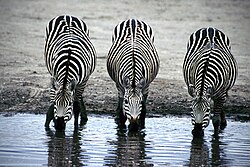
Caro's findings were detailed in his 2006 book, Zebra Stripes. The work has been praised by peers like evolutionary ecologist Tim Birkhead as an "exemplary study," comparing its structured argument to the depth of Darwin's On the Origin of Species. To conduct his fieldwork, Caro utilized various methods, including the use of zebra pelts and the pelts of unstriped wildebeests to observe fly behavior in the Tanzanian bush.
Summary of Research and Publications
| Year | Publication/Focus | Core Subject |
|---|---|---|
| 1994 | Cheetahs of the Serengeti Plains | Group living in asocial species |
| 1998 | Behavioral Ecology and Conservation Biology | Integration of behavior and conservation |
| 2005 | Antipredator Defenses in Birds and Mammals | Animal defense mechanisms |
| 2010 | Conservation by Proxy | Indicator, umbrella, and keystone species |
| 2016 | Zebra Stripes | The function of zebra coloration |
Frequently Asked Questions
Why do zebras have stripes according to Timothy M. Caro?
Based on his experimental research, Caro concluded that zebra stripes function primarily to reduce the number of bites from tabanid flies.
Did Caro find evidence for camouflage or heat management?
No. After evaluating 18 different hypotheses, Caro found no reliable support for the theories that stripes are used for camouflage, predator avoidance, heat management, or social interaction.
What is Timothy M. Caro's academic background?
He holds a bachelor's degree in zoology from Cambridge University (1973) and a doctorate in psychology from the University of St Andrews (1979).
What other animals has Timothy M. Caro studied?
In addition to zebras, Caro has studied cheetahs in the Serengeti, coconut crabs, and various birds and mammals regarding their anti-predator defenses.
Where does Timothy M. Caro currently teach?
He is currently a professor of biology at the University of Bristol.