Taxis: How Organisms Navigate Their Environment
In the natural world, survival often depends on an organism's ability to move toward resources or away from danger. This innate behavioral response is known as taxis (from the Ancient Greek táxis, meaning arrangement or order). Taxis is the directed movement of an organism in response to a specific external stimulus, such as light, chemicals, or gravity.
It is important to distinguish taxis from other biological responses. Unlike tropism, which often involves growth (such as a plant stem growing toward light), taxis requires motility—the ability of an organism to move independently. It also differs from kinesis, which is a non-directional change in activity levels in response to a stimulus. Taxis is always directional: it is positive when the organism moves toward the stimulus and negative when it moves away.
Key Facts
- Taxis is an innate, directional movement toward or away from a stimulus.
- Positive taxis moves toward the source; negative taxis moves away.
- It requires motility, distinguishing it from growth-based tropisms.
- Responses are classified by the type of stimulus (e.g., light, chemicals, temperature).
- Movement mechanisms vary from simple cell sampling (klinotaxis) to paired organ comparison (tropotaxis).
Classification of Taxis by Stimulus
Scientists categorize taxes based on the environmental trigger that prompts the movement. These triggers can range from physical forces to chemical gradients.
| Term | Stimulus | Example |
|---|---|---|
| Phototaxis | Light | Euglena moving toward light |
| Chemotaxis | Chemicals | E. coli following a sugar gradient |
| Gravitaxis | Gravity | Planktonic larvae moving upward |
| Thermotaxis | Temperature | Nematodes seeking optimal soil heat |
| Rheotaxis | Fluid Flow | Fish facing into a current |
| Thigmotaxis | Physical Contact | Rats running along walls |
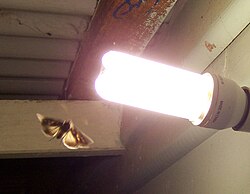
For instance, phototaxis is the response to light. A cockroach exhibiting negative phototaxis will scurry away from a light source, while phototrophic organisms use positive phototaxis to maximize their light intake for photosynthesis.
Other Specialized Stimuli
- Aerotaxis: Response to oxygen levels, common in aerobic bacteria.
- Anemotaxis: Response to wind; used by moths and polar bears to locate food or pheromones.
- Electrotaxis (Galvanotaxis): Movement along an electric field, potentially aiding in wound repair and tissue regeneration.
- Magnetotaxis: The ability to sense magnetic fields. In some "magnetic bacteria," this is a physical rotation caused by the Earth's magnetic field rather than a sensory behavior.
- Durotaxis: Movement of a cell along a stiffness gradient.
Mechanisms of Directional Movement
Organisms use different sensory strategies to determine which direction to move. These are classified based on the sensory organs involved.
Klinotaxis and Tropotaxis
Klinotaxis occurs in organisms without paired receptor organs. They sample the environment by moving their heads or bodies side-to-side to compare stimulus intensity. Blowfly and butterfly larvae are primary examples. In contrast, tropotaxis involves paired receptor cells that simultaneously compare signal strength, allowing the organism to turn toward the strongest signal, as seen in fish lice and grayling butterflies.
Telotaxis, Menotaxis, and Mnemotaxis
Telotaxis also uses paired receptors but involves balancing multiple stimuli to find a target; bees use this to land on flowers by balancing signals from the sun and the bloom. Menotaxis is the maintenance of a constant angular orientation, such as ants navigating relative to the sun. Finally, mnemotaxis is the use of memory to follow previously established trails.
Frequently Asked Questions
What is the difference between taxis and tropism?
Taxis involves the actual movement of a motile organism toward or away from a stimulus. Tropism refers to a growth response, where an organism (typically a plant) grows toward or away from a stimulus.
Can an organism exhibit both positive and negative taxis?
Yes. Different organisms respond differently to the same stimulus. For example, some insects show positive phototaxis (attracted to light), while others, like cockroaches, show negative phototaxis (repelled by light).
How does chemotaxis work in bacteria?
Bacteria like E. coli detect a chemical concentration gradient. They move toward chemoattractants (like sugar) or away from chemorepellents to find optimal environments for survival.
What is thigmotaxis in mammals?
Thigmotaxis is a response to physical contact. In rodents, this often manifests as a preference for staying close to vertical surfaces, such as walls, often using their whiskers (vibrissae) to navigate in low light.
What is the role of energy taxis?
Unlike chemotaxis, which responds to external chemicals, energy taxis is an internal response. Bacteria sense their own internal energetic conditions, such as proton motive force, to move toward conditions that optimize metabolic activity.