Selfish Herd Theory: How Animals Use Grouping to Minimize Predation Risk
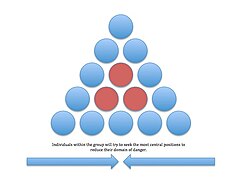
In the natural world, survival often depends on where you stand. While many assume that animals form groups for the mutual benefit of the entire population, the selfish herd theory suggests a more individualistic motivation. Proposed by W. D. Hamilton in 1971, this theory posits that individuals within a population attempt to reduce their own risk of being eaten by positioning other members of their species between themselves and a predator.
This behavior leads to the formation of aggregations, where the safest place to be is typically the center, while those on the periphery face the highest danger. By understanding this mechanism, biologists can better explain why many species exhibit gregarious behavior and how social structures evolve.
Key Facts
- Origin: Proposed by W. D. Hamilton in his 1971 paper "Geometry for the Selfish Herd."
- Core Concept: Individuals reduce predation risk by using conspecifics (members of the same species) as shields.
- Domain of Danger: The specific area surrounding an individual where they are the closest target to a predator.
- Risk Distribution: Predation risk is highest at the edges of a group and lowest at the center.
- Movement: Animals move toward the center to shrink their personal "domain of danger."
The Concept of the Domain of Danger
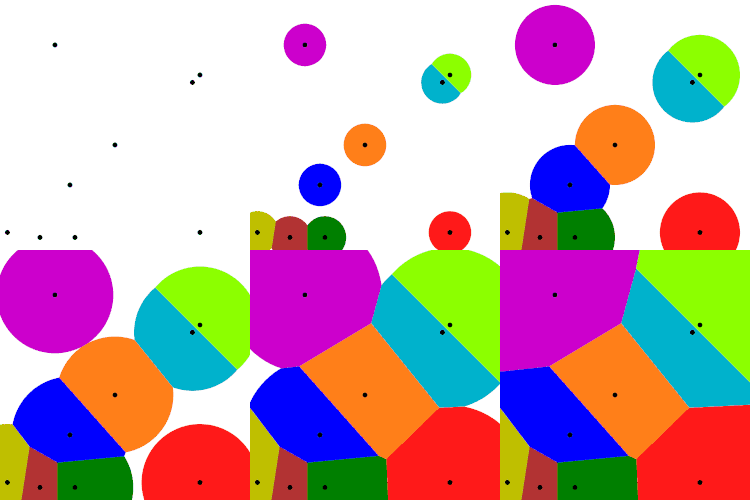
A central pillar of Hamilton's theory is the domain of danger. This is defined as the area of ground in which every point is closer to a particular individual than to any other individual in the group. If a predator attacks from within this specific area, the individual is the most likely target.
To visualize this, scientists use a Voronoi diagram—a mathematical method of partitioning a plane into regions. In a Voronoi diagram, each region (or convex polygon) surrounds an individual, and every point within that polygon is closer to that individual than to any other member of the group. The larger an individual's polygon, the larger their domain of danger, and consequently, the higher their risk of predation.
Marginal Predation
The theory is closely linked to marginal predation, which suggests that predators tend to attack the prey closest to them, typically those located on the outer edges of an aggregation. This creates a strong evolutionary pressure for individuals to move toward the center of a group to minimize their exposure.
How Animals Move: The Dilemma of the Selfish Herd
Identifying the exact rules animals use to navigate toward the center is known as the "dilemma of the selfish herd." While simple rules are easy to follow, they may not always result in efficient groups. Conversely, highly efficient rules might be too complex for an animal's biological capabilities. Researchers have identified three primary movement rules:
- Nearest Neighbor Rule: Individuals move toward their closest neighbor. While this was Hamilton's original suggestion, it may not be effective in very small groups.
- Time Minimization Rule: Individuals move toward the neighbor that can be reached in the shortest amount of time, accounting for biological constraints and spatial orientation.
- Local Crowded Horizon Rule: Individuals consider the positions of many or all members of the population to guide their movement.
Factors such as population density, the predator's attack strategy, and an individual's level of vigilance can all influence which rule is utilized. For instance, less vigilant members may start moving later, making it harder for them to secure a small domain of danger.
Leadership and Escape Strategies
When a predator attacks, the group must decide on an escape route. Interestingly, the safest position is not always the center; in some scenarios, the front of the herd may be safer. This introduces complex dynamics regarding herd leadership. A leader's choice of direction can be categorized into five types:
- Seemingly cooperative: The route benefits the entire herd.
- Openly selfish: The route minimizes the leader's risk but does not minimize the total risk for the group.
- Seemingly altruistic: The route favors the majority but may be difficult for the fastest members to follow.
- Seemingly populist: The route is easier for the slowest members but harder for others.
- Apparently spiteful: The route is difficult for everyone and nearly impossible for the slowest members.
Even seemingly altruistic leadership can be a selfish act, as maintaining a stable, cohesive herd reduces the overall predation risk for the leader.
Summary of Selfish Herd Dynamics
| Position in Group | Domain of Danger Size | Predation Risk Level | Typical Occupants |
|---|---|---|---|
| Center | Small | Low | Dominant/Fast individuals |
| Periphery (Edges) | Large | High | Subordinate/Slow individuals |
Real-World Examples
The selfish herd theory is observed across various species in nature:
- Fiddler Crabs: When threatened, they move toward the center of forming aggregates.
- Fish: Species like minnows school specifically to reduce predation risk.
- Penguins: Adelie penguins often wait to form a group before jumping into the water to avoid seals.
- Birds: Redshanks in widely spaced groups are 35% more likely to be targeted by sparrowhawks.
- Mammals: Sheep move toward the center of a herd when a predator is present.
- Insects: Gregarious caterpillars, such as the forest tent moth, forage in groups to stay safe.
Evolutionary Trade-offs and Limitations
While grouping offers protection, it is not without costs. Aggregations can make prey more conspicuous to predators and increase intraspecific competition (competition between members of the same species). Additionally, those in the center may experience lower feeding rates or reduced vigilance.
The theory also has limitations. It may not fully explain grouping in 3D environments, such as flying birds or aquatic animals, where predators can attack from above or below. In some cases, the confusion hypothesis—where a group's movement confuses a predator—may be a more accurate explanation, particularly in smaller groups of 2 to 7 members.
Frequently Asked Questions
Is the selfish herd theory about animals helping each other?
Not necessarily. Unlike theories based on mutual benefit, the selfish herd theory suggests that animals group together primarily to reduce their own individual risk by using others as shields.
What is a domain of danger?
A domain of danger is the specific area around an individual where they are the closest potential target for a predator. The smaller this area, the lower the risk of being attacked.
Why are animals on the edge of a group more at risk?
Animals on the periphery have larger domains of danger because there are no other individuals between them and the predator, making them the most accessible targets.
Does this theory apply to all animals?
While widely accepted for many species, it may not fully explain the behavior of animals moving in three-dimensional space, such as birds in flight, where attacks can come from any direction.
What are the downsides of living in a group?
Grouping can increase competition for food and make the entire group more visible to predators. Central members may also have less access to food or spend more time being less vigilant.