Ethology: The Science of Animal Behavior
Ethology is a specialized branch of zoology dedicated to the scientific study of non-human animal behavior. By blending laboratory research with field observations, ethologists seek to understand why animals act the way they do, drawing deep connections between neuroanatomy, ecology, and evolutionary biology.
The term itself finds its roots in the Greek words ethos (meaning "character") and logia (meaning "the study of"). While the concept of studying animal behavior is old, the term was popularized in 1902 by the American entomologist William Morton Wheeler.
Key Facts
- Core Focus: The study of non-human animal behavior through the lens of evolution and natural selection.
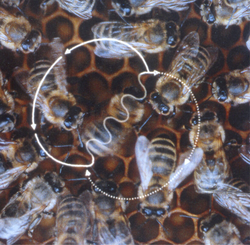
- Nobel Recognition: The field was solidified by the work of Konrad Lorenz, Nikolaas Tinbergen, and Karl von Frisch, who shared the 1973 Nobel Prize in Physiology or Medicine.
- Methodology: Uses ethograms—comprehensive catalogs of a species' behavioral patterns—to maintain objective data.
- Interdisciplinary Nature: Integrates findings from evolutionary biology, neuroanatomy, and comparative psychology.
The Evolution of Ethology
Foundations and Early Pioneers
The scientific groundwork for ethology was laid by Charles Darwin. His 1872 work, The Expression of the Emotions in Man and Animals, significantly influenced the field by suggesting that behavior is subject to the same evolutionary pressures as physical traits.
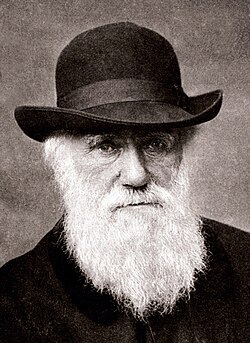
While some early researchers, like George Romanes, used anecdotal cognitivism (an anthropomorphic approach), other pioneers such as Charles O. Whitman, Oskar Heinroth, and Wallace Craig focused on instinctive behaviors. These are actions that occur consistently across all members of a species under specific conditions.
The Rise of Modern Ethology
The discipline flourished in continental Europe before World War II, primarily through the efforts of Konrad Lorenz and Niko Tinbergen. Following the war, the field expanded into the UK, gaining momentum at the University of Oxford and the University of Cambridge through the work of William Thorpe, Robert Hinde, and Patrick Bateson.
By the 1970s, ethology had evolved into a globally recognized science with dedicated academic journals and the establishment of the International Society for Human Ethology in 1972.
Expanding the Scope: From Individuals to Societies
In 1972, ethologist John H. Crook introduced a critical distinction between comparative ethology, which examines animals as individuals, and social ethology, which focuses on the behavior of social groups and their internal structures.
This shift toward social dynamics was further accelerated by E. O. Wilson's 1975 book, Sociobiology: The New Synthesis. Influenced by the work of Robert Trivers and W. D. Hamilton, the field began to integrate behavioral ecology, creating a broader spectrum of approaches that now include comparative psychology. More recently, in 2020, researchers Tobias Starzak and Albert Newen postulated that animals may possess beliefs.
Tinbergen's Four Questions
To ensure a comprehensive understanding of any behavior, Nikolaas Tinbergen proposed that ethologists must address four distinct but complementary questions:
- Function: How does the behavior aid the animal's survival and reproduction?
- Causation: What immediate stimuli trigger the response, and how has learning modified it?
- Development: How does the behavior change as the animal ages, and what early experiences are required?
- Evolutionary History: How does the behavior compare to related species, and how did it evolve through phylogeny?
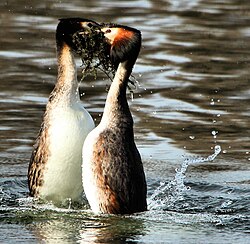
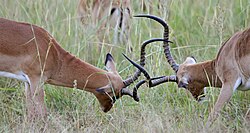
For example, eating serves the function of acquiring nutrients. The immediate causation is the feeling of hunger. This drive is an evolutionary trait found across many species and develops very early in an organism's life.
Summary of Ethological Frameworks
| Perspective | Primary Focus | Key Influence/Figure |
|---|---|---|
| Comparative Ethology | Individual animal behavior | Early 20th-century pioneers |
| Social Ethology | Group dynamics and social structure | John H. Crook |
| Sociobiology | Evolutionary basis of social behavior | E. O. Wilson |
| Behavioral Ecology | Behavior in relation to the environment | Modern synthesis |
Frequently Asked Questions
What is the difference between ethology and comparative psychology?
While they overlap, ethology traditionally emphasizes the study of animals in their natural environments and focuses heavily on evolutionary history and instinctive behaviors, whereas comparative psychology often utilizes controlled laboratory settings.
What is an ethogram?
An ethogram is a comprehensive, objective description or catalog of the main types of behavior exhibited by a species, including how often those behaviors occur.
Who won the Nobel Prize for developing ethology?
Konrad Lorenz, Nikolaas Tinbergen, and Karl von Frisch were jointly awarded the Nobel Prize in Physiology or Medicine in 1973.
Why are Tinbergen's four questions important?
They prevent researchers from oversimplifying behavior. By requiring explanations for function, causation, development, and evolution, they ensure a holistic understanding of why a behavior exists and how it works.
What is sociobiology?
Sociobiology is a field popularized by E. O. Wilson that examines the biological and evolutionary basis of social behavior in animals.