Tiglath-Pileser III: The Architect of the Neo-Assyrian Empire
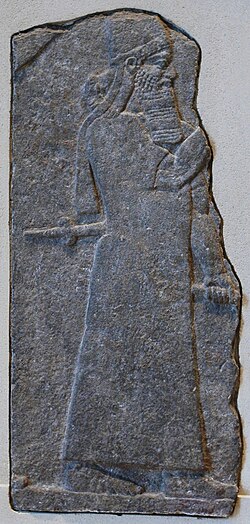
Tiglath-Pileser III was a transformative figure in ancient history, serving as the King of Assyria, Babylon, and Sumer and Akkad. Often hailed as the "King of the Universe" and "King of the Four Corners of the World," his reign from 745 to 727 BC marked a pivotal shift in the trajectory of the Neo-Assyrian Empire. By centralizing royal authority and expanding territorial boundaries, he transitioned Assyria from a struggling regional power into a dominant imperial force.
His legacy is characterized by a ruthless efficiency in governance and a sophisticated approach to warfare that redefined the geopolitical landscape of the ancient Near East.
Key Facts
- Reign: 745–727 BC.
- Dynasty: Adaside dynasty.
- Major Achievement: Defeated the Urartian king Sarduri II in 743 BC.
- Political Impact: Curbed the power of generals and officials to increase royal authority.
- Historical Significance: First Assyrian king mentioned in the Hebrew Bible.
The Rise to Power: Mystery and Controversy

The exact nature of Tiglath-Pileser III's accession to the throne remains a subject of historical debate due to conflicting ancient sources. While the Assyrian King List identifies his father as his immediate predecessor, Ashur-nirari V, Tiglath-Pileser's own inscriptions claim he was the son of Adad-nirari III, which would make him Ashur-nirari's brother.
Evidence suggests his rise may have been the result of a coup d'etat. The Eponym Chronicle—a record of years named after influential officials—notes a revolt in the capital city of Nimrud in 746/745 BC. Historians, including Stefan Zawadzki, argue that Tiglath-Pileser may have orchestrated or consented to this rebellion to seize power, noting that the first official he appointed as an eponym holder in 744 BC was Bel-dan, the governor of Nimrud.
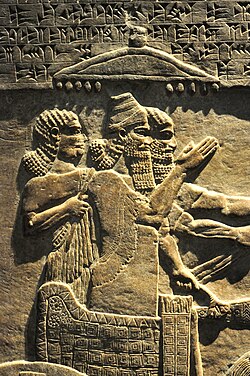
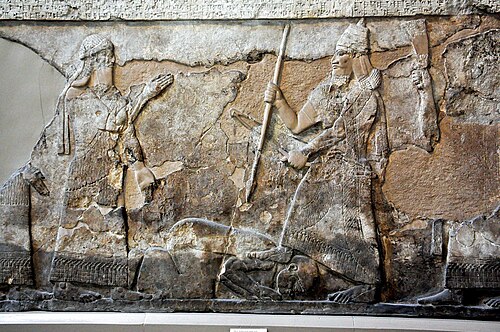
![A wall painting from Til Barsip depicting Tiglath-Pileser (sitting) holding court. The official closest to him to the right is his son Shalmaneser V.[2]](/images/d4/44/d444a621c69f897f371d581394abf6087110a0258148675a45afa386ab686899.jpg)
Assyria Before the Imperial Shift
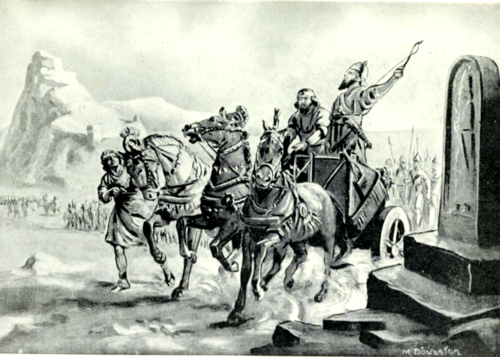
To understand the magnitude of Tiglath-Pileser's impact, one must look at the state of Assyria prior to his reign. After the decline of the Middle Assyrian Empire, the state had shrunk to its heartland. Although the Neo-Assyrian Empire began to rebuild under Ashur-dan II and Adad-nirari II, and reached a peak under Ashurnasirpal II and Shalmaneser III, the empire eventually entered a period of stagnation.
The three kings preceding Tiglath-Pileser III experienced a low point in royal authority. During the reign of Shalmaneser IV, the turtanu (commander-in-chief) Shamshi-ilu became so powerful that he credited military victories to himself rather than the king. Ashur-nirari V was similarly inactive, conducting few campaigns and no major building projects.
![A map of the Neo-Assyrian Empire before (purple) and after (purple and blue) Tiglath-Pileser's reign[62]](/images/7f/8f/7f8fcef7f30398f70376fdc96d38989501ace99f656dba1a8342096b5593e05b.png)
Military Conquests and Strategic Victories
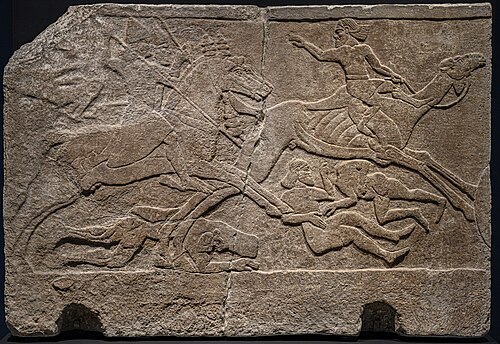
Tiglath-Pileser III immediately set about restoring Assyrian prestige. His early campaigns were focused on neutralizing threats and expanding influence. A defining moment occurred in 743 BC near Arpad, where he defeated Sarduri II, the king of Urartu. This victory was critical because Urartu had previously equaled Assyria in power and had defeated Ashur-nirari V eleven years prior.
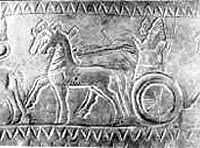
Following the defeat of Urartu, Tiglath-Pileser expanded his reach into the Levant and Babylonia. His military machine was characterized by advanced siege tactics and a professionalized army, as evidenced by the reliefs found in his palace at Nimrud.
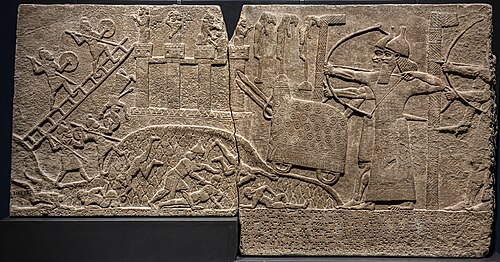
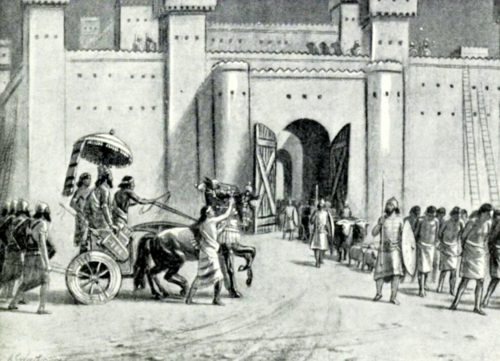
His campaigns were not merely about conquest but about the systematic integration of defeated territories into the Assyrian administrative fold. This included the capture of Damascus in 732 BC, a move that solidified Assyrian control over the region.
Administration, Family, and Legacy
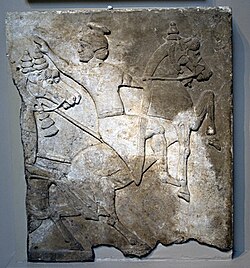
Tiglath-Pileser III was as much a reformer as he was a conqueror. He systematically reduced the influence of provincial governors and generals to ensure that all power flowed directly to the crown. This centralization allowed for more efficient tax collection and military mobilization.
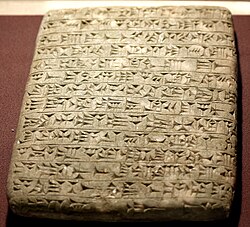
In his personal life, he was married to Queen Iaba, whose funerary stone tablet was discovered at Nimrud in 1989. His successors included Shalmaneser V and potentially Sargon II.
The historical legacy of Tiglath-Pileser III is often described as a "watershed" moment. He is the first Assyrian monarch to appear in the Hebrew Bible and the Babylonian Chronicles, providing historians with external perspectives on his reign. His policies laid the groundwork for the peak of Assyrian imperialism, transforming the state into the undisputed superpower of the ancient world.
| Category | Details |
|---|---|
| Reign Period | 745–727 BC |
| Key Adversary | Sarduri II of Urartu |
| Capital City | Nimrud |
| Major Reforms | Centralization of royal power; curbing of official influence |
| Successor | Shalmaneser V |
Frequently Asked Questions
How did Tiglath-Pileser III come to power?
His accession is disputed. While some records list him as the son of Ashur-nirari V, others suggest he was a usurper who took the throne following a revolt in Nimrud in 746/745 BC, possibly via a coup d'etat.
Who was Sarduri II and why was he important?
Sarduri II was the king of Urartu, a powerful rival state. His defeat by Tiglath-Pileser III in 743 BC near Arpad was a major turning point, as it ended Urartu's period of parity with Assyria.
What was the 'turtanu' and why was it a problem?
The turtanu was the commander-in-chief of the Assyrian army. Before Tiglath-Pileser III, some turtanus, such as Shamshi-ilu, had become so powerful that they eclipsed the king's authority, claiming military victories for themselves.
Why is Tiglath-Pileser III significant in biblical history?
He is the first Assyrian king mentioned in the Hebrew Bible. The biblical accounts record his impact on the Kingdom of Israel and the perspective of the southern Kingdom of Judah during his reign.
What were the main goals of his internal reforms?
His primary goal was to increase royal power and authority. He achieved this by curbing the influence of prominent generals and officials, ensuring the king remained the sole center of power.