Middle Assyrian Empire
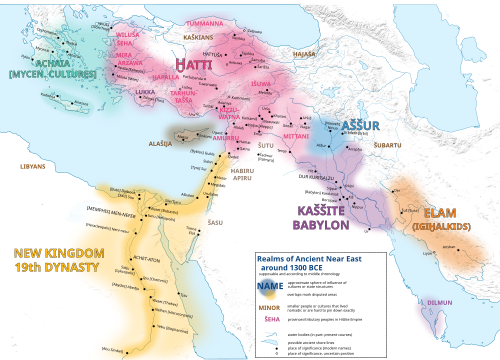
The Middle Assyrian Empire (c. 1363 BC–912 BC) emerged as a dominant force in the Ancient Near East, transforming from a modest city-state into a regional superpower. Centered around the city of Assur, this empire navigated the complexities of the Bronze and Iron Ages, engaging in fierce rivalries with Babylonia and the Mitanni kingdom to secure its place in history.
The empire's trajectory was marked by cycles of aggressive expansion and sudden decline. From the early diplomatic assertions of Ashur-uballit I to the vast conquests of Tiglath-Pileser I, the Middle Assyrian period laid the geopolitical and administrative foundations for the later, more famous Neo-Assyrian Empire.
Key Facts
- Timeline: Approximately 1363 BC to 912 BC.
- Capitals: Primarily Assur, with a brief period at Kar-Tukulti-Ninurta (c. 1233–1207 BC).
- Major Languages: Akkadian, Hurrian, Amorite, and Aramaic.
- Peak Power: Reached its height under Tukulti-Ninurta I in the 13th century BC.
- Key Rivals: The Mitanni kingdom and the various dynasties of Babylonia.
Formation and Early Rise
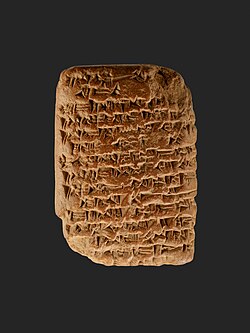
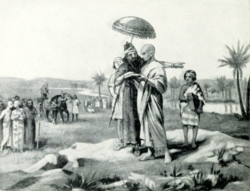
The Middle Assyrian Empire was born when the city-state of Assur and its surrounding territories achieved independence from the Mitanni kingdom. Under the leadership of Ashur-uballit I (r. c. 1363–1328 BC), Assyria began to assert itself as a great power, establishing diplomatic ties with other major civilizations of the era.
Following Ashur-uballit I, the kingdom's growth was initially halting. Successors like Enlil-nirari and Arik-den-ili struggled to consolidate power. This period was marked by a traumatic betrayal by the Babylonian king Kurigalzu, whose incursions reached as far as Sugagu, just a day's journey from the capital. This event fostered a long-standing historical enmity between Assyria and Babylonia, leading future Assyrian kings to prioritize the fortification of border outposts along the eastern Tigris river.
The First Era of Expansion
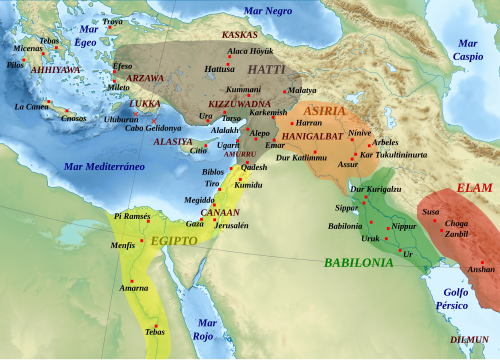
Assyria's transition into a regional powerhouse was driven by a series of warrior-kings: Adad-nirari I, Shalmaneser I, and Tukulti-Ninurta I. During this time, Assyria effectively replaced the Mitanni as the dominant force in the region.
Adad-nirari I and Shalmaneser I
Adad-nirari I (r. c. 1305–1274 BC) was the first to launch major campaigns against the remnants of the Mitanni. He forced Shattuara I into vassalage and later annexed several cities along the Khabur river after a rebellion by Wasashatta. Adad-nirari also established a royal palace at Taite, a former Mitanni capital.
The Zenith under Tukulti-Ninurta I
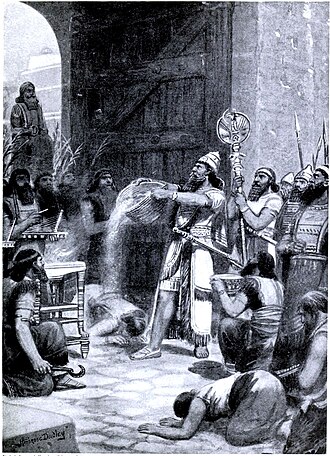
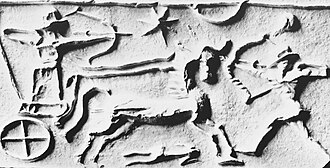
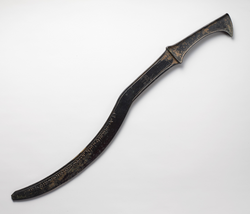
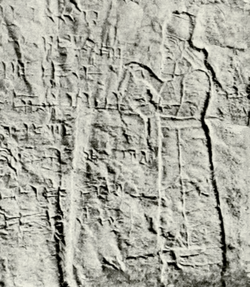
The empire reached its peak under Tukulti-Ninurta I (r. c. 1243–1207 BC). His reign was characterized by the subjugation of Babylonia and the construction of a new capital, Kar-Tukulti-Ninurta. In a bold move, he looted Babylon and carried off the Statue of Marduk, the national deity of Babylonia.
Tukulti-Ninurta I adopted unprecedented titles, claiming to rule from the "Upper Sea to the Lower Sea" and even proclaiming himself as the incarnation of the sun-god Shamash—a rare claim of divinity for an Assyrian monarch.
![Tukulti-Ninurta I (r. c. 1243–1207 BC), depicted both standing and kneeling[c]](/images/a2/40/a2405b4f470b4f0fbfe8f6ec29f61b0ae19442db71ddcc1557c8059b54657db8.jpg)
Cycles of Decline and Resurgence
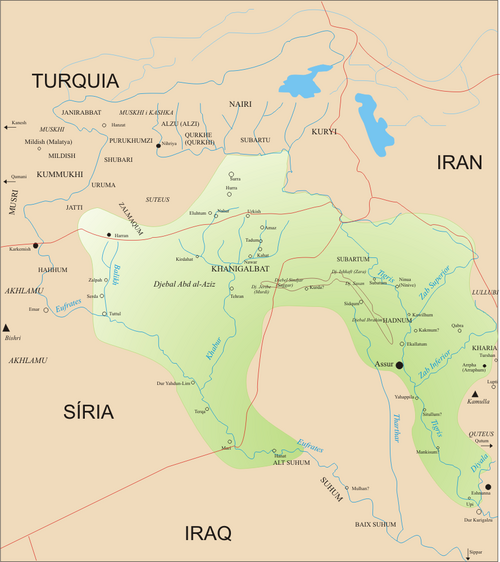
The stability of the empire was shattered by the assassination of Tukulti-Ninurta I around 1207 BC, triggering inter-dynastic conflict. While Assyria avoided the worst of the general Late Bronze Age collapse, it entered a significant period of decline.
The First Decline and Recovery
Internal strife saw the rise and fall of various rulers, including Ninurta-apal-Ekur, who seized power with Babylonian support. However, the decline was partially halted by Ashur-resh-ishi I (r. 1132–1115 BC), who defended the southern borders against Nebuchadnezzar I of Babylonia and earned the title "avenger of Assyria."
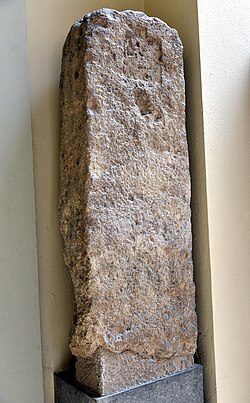
The Resurgence of Tiglath-Pileser I
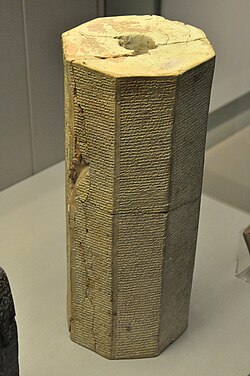
The empire experienced a second wind under Tiglath-Pileser I (r. 1114–1076 BC). With the southern border secure, he expanded Assyrian influence toward the Mediterranean. He is noted for defeating the Mushki tribe, an army of 20,000 men, and incorporating various northeastern territories into the empire.
The Final Crisis and Transition
Following the death of Ashur-bel-kala (r. 1073–1056 BC), Assyria entered a "century of crisis." Invasions by Aramean tribes led to the loss of most territories outside the heartland. This period of instability lasted until the reign of Ashur-dan II (r. 934–912 BC), whose successful campaigns in the peripheral regions marked the transition to the Neo-Assyrian Empire.
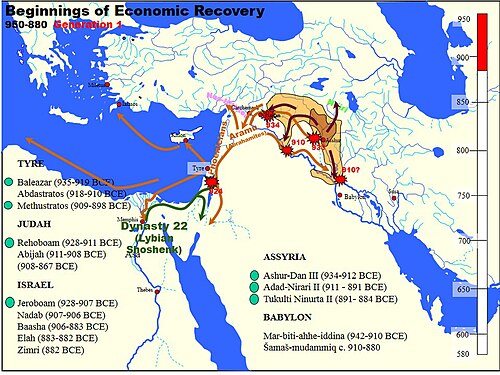
Empire Summary
| Feature | Details |
|---|---|
| Period | c. 1363 BC – 912 BC |
| Primary Capitals | Assur, Kar-Tukulti-Ninurta |
| Key Monarchs | Ashur-uballit I, Tukulti-Ninurta I, Tiglath-Pileser I, Ashur-dan II |
| Major Achievements | Subjugation of Babylonia, expansion to the Mediterranean, replacement of Mitanni |
| Causes of Decline | Assassinations, inter-dynastic conflict, Aramean invasions |
Frequently Asked Questions
![Approximate map of the Middle Assyrian road system. The roads in purple are archaeologically attested and the roads in red are also likely to have existed.[105]](/images/8c/e1/8ce1fe5e59bddfffc97f800efa377a7f1bc525e8ed6a1e63b937ed15b561a71f.png)
Who was the most powerful king of the Middle Assyrian Empire?
Tukulti-Ninurta I is generally considered the most powerful, as his reign marked the empire's height, including the conquest of Babylonia and the claim of ruling from the "Upper Sea to the Lower Sea."
What caused the relationship between Assyria and Babylonia to deteriorate?
The enmity began largely due to the betrayal of the Babylonian king Kurigalzu, who invaded deep into the Assyrian heartland, reaching the settlement of Sugagu.
How did the Middle Assyrian Empire differ from the Neo-Assyrian Empire?
The Middle Assyrian Empire served as the foundational period of expansion and administrative development. The transition to the Neo-Assyrian Empire is marked by the campaigns of Ashur-dan II, who began restoring and expanding the empire's former borders.
What role did the Mitanni kingdom play in Assyrian history?
The Middle Assyrian Empire was founded after Assur achieved independence from the Mitanni. Later, kings like Adad-nirari I campaigned to dismantle the remnants of the Mitanni kingdom to establish Assyrian dominance.
What were the primary languages spoken in the empire?
The empire was multilingual, with Akkadian, Hurrian, Amorite, and Aramaic being the common languages used across its territories.